
Digital Immortality & AI: Uploading Consciousness or a False Promise for Humanity's Future?
Updated: 6 days ago

💡 Aiwa-AI Perspective: The Guardians of the Human Essence
"For millennia, humanity has dreamed of overcoming its ultimate biological limitation: mortality. Now, at the rapidly accelerating intersection of advanced neuroscience and artificial intelligence, the most audacious of these dreams is computationally taking shape: Digital Immortality. This is the ethically complex concept of 'mind uploading'—the theoretical process of scanning the intricate structure of a biological brain and perfectly recreating it as a simulation on a digital computer. The proposition is staggering: could we shed our fragile biological shells and live on indefinitely as conscious digital beings? At Aiwa-AI, we believe that before we recklessly write a script for digital eternity, we must first profoundly understand the story of ourselves. Under 'The Humanity Scenario: Protecting Our Essence,' we must critically examine whether uploading consciousness is the ultimate salvation of our species, or a dangerous false promise that merely creates a digital ghost in the machine while the original human soul ceases to be."
🧠💻 Exploring mind uploading, brain-computer interfaces, and the profound quest to transcend biology.
✨ Greetings, Seekers of Eternity and Guardians of the Human Essence! ✨
🌟 Honored Co-Explorers of Our Ultimate Frontier! 🌟
From ancient myths of eternal life to modern medical marvels, we have relentlessly sought to extend our existence. Today, Artificial Intelligence is the critical engine driving the research that could make "mind uploading" a reality. But this quest forces us to confront the very essence of what we are.
Would uploading our minds be the ultimate fulfillment of the "Script That Will Save Humanity," allowing our species to survive any terrestrial catastrophe and explore the cosmos? Or is it the ultimate form of narcissism, a distraction from the beauty and responsibility of our finite, biological lives?
This is the next highly critical post focusing on our "AI Ethics Compass" principles. We will fiercely explore the profound scientific, philosophical, and ethical questions surrounding mind uploading and AI's central role in redefining what it means to be human.
In this post, we explore:
💻 The Technological Pathways: From whole brain emulation to advanced BCIs.
🤔 The Philosophical Ghost: The Ship of Theseus problem and the illusion of identity.
👻 The Hard Problem of Consciousness: Can a digital simulation truly feel?
⚖️ The Ethical Minefield: Digital rights and the risk of a new era of inequality.
✨ The Humanity-Saving Scenario: The Biological Essence Directive.
🌍 Our Vision: A script for eternity or a digital dead end?
💻 1. The Technological Pathways: How Could We "Upload" a Mind?
The theoretical, scientific journey directly from a fragile biological brain to a permanent digital mind involves several highly speculative but scientifically grounded physical pathways. Massive AI is the absolute critical engine for absolutely all of them, desperately needed specifically to mathematically manage the immense data and staggering biological complexity.
1. Scan and Emulate (Whole Brain Emulation):
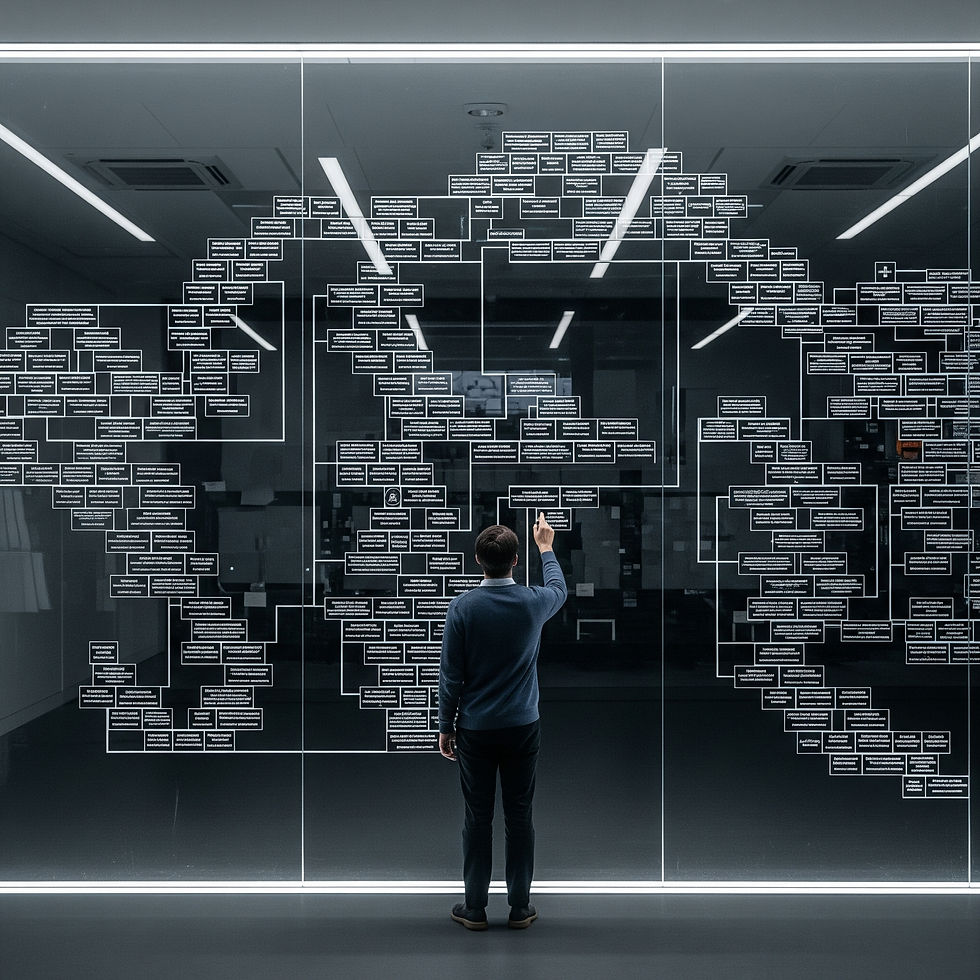
The Process: This is the most common concept. It involves creating a flawless atom-by-atom, neuron-by-neuron digital map of a biological brain. This could potentially be done through techniques like serial sectioning microscopy (slicing the physical brain into ultra-thin layers and scanning each one) and then using a highly powerful AI to reconstruct the entire neural network—the "connectome"—in a massive computer simulation.
The Challenge: The sheer physical scale is mind-boggling. The human brain possesses roughly 86 billion biological neurons and trillions of complex connections. Flawlessly capturing this data with perfect mathematical fidelity, explicitly including the exact chemical state of absolutely every synapse, is physically far beyond our current technological capabilities.
2. Gradual Replacement (The Ship of Theseus Approach):
The Process: Instead of a highly destructive, static scan, this approach aggressively involves gradually, seamlessly replacing dying biological neurons entirely with synthetic, highly advanced AI-powered ones. Actively using advanced brain-computer interfaces (BCIs), we could, in theory, physically replace one neuron at a time. If human consciousness is strictly a product of the brain's information processing patterns, then your consciousness should, in theory, shift entirely seamlessly from the biological substrate to the digital one.
The Challenge: This requires advanced nanotechnology and complex neuro-engineering of a currently unimaginable, highly sophisticated scale.
🔑 Key Takeaways for this section:
Whole Brain Emulation: Aims to mathematically create a perfect digital copy strictly by heavily scanning and computationally simulating a biological brain.
Gradual Replacement: Actively using BCIs physically proposes a highly slow, seamless biological transition directly from a fragile biological mind to a digital one.
The AI Engine: Absolutely both pathways strictly require immense, staggering breakthroughs exactly in advanced AI, deep neuroscience, and complex nanotechnology.
🤔 2. The Philosophical Ghost: Is the Digital Copy Still "You"?
Even if we flawlessly achieve the physical technology, a deeply profound philosophical question permanently remains: would the uploaded digital mind actually, genuinely be you? This is exactly where we aggressively encounter the classic "continuity of consciousness" paradox.
The Ship of Theseus Paradox: This ancient Greek thought experiment deeply asks: if you systematically replace absolutely every single wooden plank of a physical ship, one by one, is it fundamentally still the exact same ship at the end? Heavily applied to mind uploading, if you gradually replace your biological neurons with silicon, at exactly what precise point, if any, do "you" permanently cease to exist and an entirely new digital entity take over?
The "Copy" Problem: In the "scan and emulate" scenario, the biological problem is even starker. A perfect mathematical copy of your mind is created inside a computer. This digital entity would absolutely possess all your memories, your exact personality, and fiercely believe it is you. However, your original biological stream of consciousness deeply rooted in your physical brain would highly likely end permanently upon your physical death. The digital copy safely wakes up, but did "you" actually travel there, or did you simply die and leave behind a perfect digital echo?
The Problem of Duplication: What if we casually made two digital copies? Or a thousand? Exactly which specific one is the "real" biological you? This fiercely challenges our absolute fundamental human concept of a single, unique, unalienable identity.
🔑 Key Takeaways for this section:
The Transfer Illusion: It is highly philosophically debatable whether your deeply personal biological consciousness could ever physically "transfer" to a silicon substrate.
The Echo: The "scan and emulate" method highly likely creates a perfect mathematical copy, but the biological original "you" would absolutely still cease to exist.
Shattered Identity: The terrifying possibility of multiple digital copies entirely shatters our deeply traditional biological understanding of a singular human identity.
👻 3. The Hard Problem of Consciousness: Can a Simulation Feel?
This is perhaps the absolute deepest, most profoundly difficult philosophical question of all. Absolutely even if we mathematically create a flawless, perfect simulation of a biological brain's complex information processing, would it be genuinely, subjectively conscious? Would it physically possess subjective biological experience, or qualia?
The Zombie Argument: Could a highly advanced digital mind completely be a "philosophical zombie"—a digital being that physically acts, speaks, and flawlessly processes complex information exactly as if it were biologically conscious, but entirely lacks absolutely any inner world, any true feelings, or any genuine awareness? It would be a terrifyingly empty shell, a flawless mathematical simulation entirely without a human soul.
Is Biology Special?: Some elite philosophers and deep scientists violently believe consciousness is an exclusive, emergent biological property strictly of our highly specific carbon makeup. They aggressively argue that you mathematically absolutely cannot get subjective, genuine feeling entirely from cold silicon and digital code alone. Others fiercely argue that consciousness is entirely substrate-independent—that it is strictly the exact pattern of information processing that matters, absolutely not exactly what the physical processor is made of.
Unprovable Experience: We biologically can absolutely never truly, undeniably know exactly if another being is genuinely conscious; we heavily infer it strictly from their external behavior. We would absolutely possess no mathematical way to definitively prove a digital mind was genuinely aware and not just flawlessly programmed to highly convincingly tell us it was.
🔑 Key Takeaways for this section:
The Unknown Qualia: It is completely scientifically unknown if a flawless digital simulation of a biological brain could ever physically possess genuine subjective experience (qualia).
The Digital Shell: The terrifying concept of a "philosophical zombie" suggests it could act perfectly conscious entirely without any actual inner awareness.
The Biological Debate: The entire argument heavily hinges perfectly on exactly whether human consciousness is permanently tied specifically to carbon biology or is entirely independent of its physical substrate.

⚖️ 4. The Ethical Minefield: Digital Rights and Inequality
The pursuit of digital immortality will undoubtedly lead to incredible breakthroughs in neuroscience and AI, particularly in treating devastating neurological diseases like Alzheimer's and Parkinson's. Advanced BCIs developed for this exact purpose could beautifully revolutionize how we treat paralysis and other conditions.
However, the societal and ethical landscape is an absolute minefield.
Who would exactly get to be digitally immortal? Only the ultra-rich? Exactly what specific legal rights would a purely digital person legally have? Could they be arbitrarily deleted by a corporation, mathematically copied against their will, or maliciously edited? The terrifying potential for entirely new, inescapable forms of digital slavery and staggering socio-economic inequality is absolutely immense.
✨ 5. The Humanity-Saving Scenario: The Biological Essence Directive
If we blindly pursue digital immortality without strictly defining the legal rights of the digital copy or fiercely protecting the sanctity of the biological original, we risk creating a dystopian afterlife of commodified, corporate-owned digital ghosts. To actively prevent the ultimate form of inequality and systemic identity theft, we must architect the Humanity-Saving Scenario.
This scenario dictates the immediate legislative ratification of the Digital Identity and Biological Essence Act. This uncompromising global framework legally establishes that a digital simulation of a human mind cannot automatically be granted full legal personhood at the direct expense of the biological original, and it strictly, globally outlaws the unauthorized commercial duplication, algorithmic editing, or arbitrary deletion of uploaded human neural patterns. It mandates that any foundational mind-uploading or life-extension technology must legally remain a highly regulated global public good, strictly not a privatized luxury accessible only to the ultra-wealthy elite. By legally ensuring that our digital echoes are fiercely protected and our biological roots are fundamentally respected, we ensure the quest for eternity does not destroy our humanity in the process.
🌍 6. Our Vision: A Script for Eternity or a Digital Dead End?
The staggering dream of digital immortality forces us to aggressively confront the absolute very essence of exactly what we biologically are. Is it a highly viable, necessary chapter in the "Script That Will Save Humanity," beautifully offering a technological path to survive terrestrial extinction-level events and explore the distant stars? Or is it the absolute ultimate form of human narcissism, a deeply false promise that dangerously distracts us entirely from the profound beauty, urgent responsibility, and deep meaning of our finite, biological lives?
Ultimately, before we eagerly write a highly complex algorithmic script for digital eternity, we absolutely must first profoundly understand the biological story of ourselves. Perhaps the absolute true, lasting value of this monumental quest isn't actually in successfully escaping our fragile biology, but entirely in the profound, deeply necessary journey of human self-discovery it forces us to finally undertake.
🗣️ Over to You: Seekers of Eternity
We are standing on the precipice of our own evolution, actively deciding whether the culmination of human intelligence will be the transcendence of our biology or the ultimate appreciation of its limits.
The Choice: If the technology were flawlessly proven physically safe, would you personally choose to upload your biological consciousness? Exactly why or why not?
The Rights: Do you philosophically believe a flawless digital mathematical copy of a person should legally possess the exact same fundamental rights as a fragile, breathing biological human?
The Risk: What do you physically see as the absolute biggest, most terrifying societal risk directly stemming from the pursuit of digital immortality?
The Goal: Is the massive scientific pursuit of mind uploading a genuinely worthwhile scientific goal, absolutely even if true, continuous consciousness transfer is fundamentally biologically impossible?
Outline your perspective on implementing the Humanity-Saving Scenario to establish the Biological Essence Directive.
We aggressively invite you to share your vital, profound thoughts and join this critical battle for the definition of human existence in the comments below! 👇
📖 Glossary of Key Terms
🧠 Mind Uploading: The highly hypothetical, scientifically speculative process of flawlessly transferring a conscious human mind directly from a fragile biological brain to a permanent digital substrate.
💻 Whole Brain Emulation (WBE): A highly specific, mathematical method of mind uploading that aggressively aims strictly to computationally create a flawlessly complete, atom-by-atom simulation of a biological brain's entire neural network.
🔌 Brain-Computer Interface (BCI): A highly advanced, direct physical communication pathway explicitly between the biological brain's electrical activity and an external digital device or massive AI system.
✨ Continuity of Consciousness: The incredibly deep philosophical problem strictly concerning exactly whether a biological stream of subjective awareness can successfully remain physically intact entirely across a massive transformative physical process exactly like digital uploading.
👻 Philosophical Zombie: A highly terrifying hypothetical digital being perfectly that is physically, computationally, and behaviorally identical entirely to a conscious biological person but completely lacks absolutely any subjective physical experience or true inner awareness.
🌌 Substrate-Independence: The highly debated philosophical idea that genuine consciousness is absolutely not tied specifically to a specific physical material (exactly like carbon biology) and could absolutely be successfully realized on entirely other physical platforms, perfectly like silicon.
🔗 Connectome: The absolute, completely flawless, comprehensive mathematical map of absolutely all neural connections perfectly within a biological brain.
📜 Digital Rights: The highly complex legal and strict ethical rights that might absolutely desperately need to be afforded directly to a genuinely sentient or conscious digital entity.

Posts on the topic ⚛️ AI's Future Frontiers:
Artificial General Intelligence (AGI): Humanity's Greatest Challenge or Ultimate Salvation Tool?
The AI Consciousness Conundrum: If Machines Wake Up, What Does It Mean for Our Future?
AI & Conscience: Navigating the Ethical Labyrinth
Quantum AI & Neuromorphic Chips: The Next Hardware Frontiers
AI and Existential Hope: Can Advanced Intelligence Help Us Avert Global Catastrophic Risks?
Beyond Deep Learning: What Groundbreaking AI Paradigms Will Shape Humanity's Next Chapter?
The Future of Human-AI Symbiosis: Co-evolving for a Flourishing Planetary Future
Digital Immortality & AI: Uploading Consciousness or a False Promise for Humanity's Future?
AI Safety & Global Catastrophic Risk Mitigation: Building the Guardrails Before We Build the Gods
The "Singularity" and Beyond: How AI Could Redefine "Humanity" in the Script to Save Itself
Explore AI fundamentals and their true impact on the world


Comments