
The Call That Isn't Real: How AI Voice Clones Are Stealing Your Family's Trust (and Money)
Updated: Sep 8

🛡️📞 Aiwa-AI Perspective: The Sanctity of the Human Voice
Brief Summary: For hundreds of thousands of years, the human voice was an inviolable biological signature of identity and trust. Generative Artificial Intelligence has completely shattered that reality. Today, with as little as three seconds of harvested audio, malicious actors can mathematically clone the exact vocal cadence, emotional distress, and intimate inflection of your child or spouse. This post exposes the psychological mechanics of AI voice cloning scams, explores the terrifying rise of real-time synthetic extortion, and outlines the urgent offline protocols and legislative frameworks required to defend the sanctity of human trust.*
For all of human history, hearing a loved one’s voice was the ultimate proof of their physical presence and well-being. We are biologically hardwired to recognize the subtle acoustic frequencies of our kin. It is an evolutionary defense mechanism designed to cut through darkness, distance, and confusion.
Today, that sacred evolutionary bond is being aggressively weaponized.
At Aiwa-AI, we believe the democratization of generative voice cloning represents one of the most insidious psychological threats of the modern era. When machines can flawlessly mimic human terror, vulnerability, and love, our primal instincts are turned against us. Under "The Script for Humanity," we must urgently construct new layers of biological and offline defense to ensure that technology never severs the bedrock of human trust.
In this post, we explore:
1. 📞 The Scene: The Midnight Extortion.
2. 💡 The Mechanism: Three Seconds to Steal a Soul.
3. 🌑 The Shadow: The Death of "Hearing is Believing".
4. 🛡️ The Protocol: The Family Safe Word and Zero-Trust Verification.
5. 🔭 The Horizon: Real-Time Multimodal Deception.
6. ✨ The Humanity-Saving Scenario: The Acoustic Sovereignty Act.
📞 1. The Scene: The Midnight Extortion
It is 3:00 AM. Your smartphone violently shatters the silence of your bedroom. A groggy glance reveals an unknown number, but your biological instincts force you to answer in case of an emergency.
You hear ragged, hysterical sobbing.
"Mom? Dad? Please help me, I’ve been in a horrific car accident. I’m at the precinct. They need bail money right now or they’re throwing me in a holding cell. I’m terrified."
It is unmistakably your son’s voice. The exact vocal timbre, the familiar stutter when he panics, the intimate cadence of how he says "Mom." Your heart violently spikes. Pure adrenaline floods your bloodstream.
A stern "police lieutenant" abruptly takes the phone, demanding an immediate $5,000 transfer via cryptocurrency or instant wire to secure his release before processing. Terrified for your child's safety, you comply in minutes.
Two hours later, your son walks into the kitchen, yawning. He was asleep in his room the entire night. He was never in an accident. You were emotionally hijacked, psychologically disarmed, and robbed by a neural network.
🔑 Key Takeaways:
AI voice scams deliberately strike during hours of cognitive vulnerability to maximize emotional panic.
Scammers bypass logical skepticism by triggering primal parental protective instincts.
The illusion of immediate peril forces victims to bypass traditional financial safeguards.
💡 2. The Mechanism: Three Seconds to Steal a Soul
How did a syndicate of digital criminals replicate a unique human voice with mathematical perfection? They didn't need hours in a high-end sound studio.
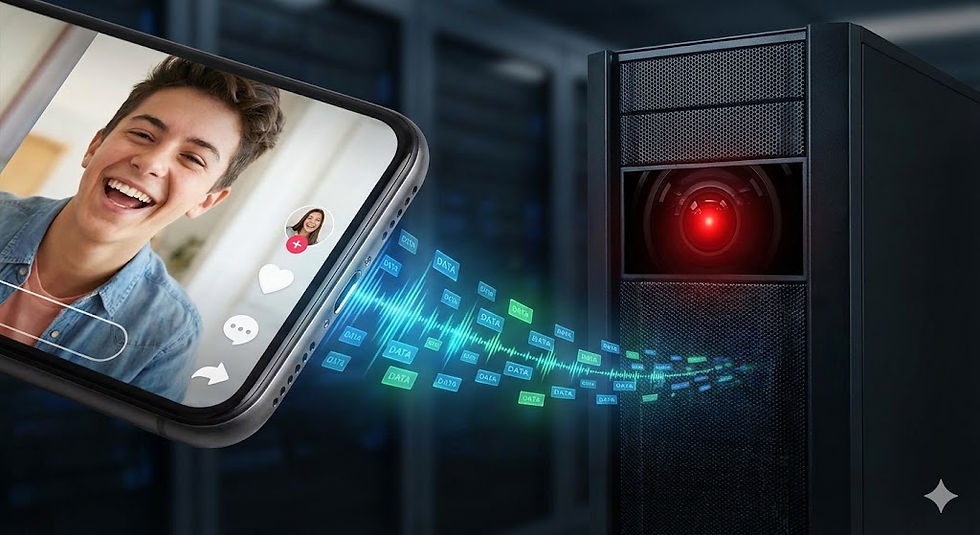
The Data Harvest: A 15-second TikTok video of your child laughing, an Instagram reel speaking to the camera, or a public voicemail greeting. That minuscule snippet is all modern generative audio models require.
The Neural Engine: Foundational zero-shot text-to-speech (TTS) models and diffusion architectures can mathematically deconstruct the unique acoustic "fingerprint" of any human voice from less than three seconds of raw audio.
Synthetic Emotion Injection: The attacker feeds a predatory script into the model. The AI synthesizes the words while dynamically applying latent emotional parameters—simulating hyperventilation, tears, background road noise, or muffled acoustics—to completely disarm the listener's analytical faculties.
🔑 Key Takeaways:
Modern zero-shot audio models require only three seconds of clean audio to clone a human voice.
Social media provides an infinite, publicly accessible training library for audio harvesting.
Synthetic emotion (sobbing, panic) is algorithmically applied to disable critical human reasoning.
🌑 3. The Shadow: The Death of "Hearing is Believing"
We are biologically wired to trust what we hear from those we love. For centuries, our sensory perception was a reliable proxy for physical truth. Generative AI has rendered that proxy obsolete.
The Amygdala Hijack: Traditional phishing attacks relied on poorly worded emails or generic phone calls claiming to be from government agencies. They raised suspicion. AI voice clones deploy the ultimate social engineering weapon: intimate familiarity. When your brain hears your child's distress, the amygdala violently overrides the prefrontal cortex. You do not analyze; you react.
Vishing 2.0 (Enterprise Extortion): This threat scales far beyond family units. Deepfake audio is routinely weaponized in corporate espionage. Fraudsters clone executive voices to authorize multi-million-dollar wire transfers, or mimic internal IT departments to extract multi-factor authentication (MFA) tokens from employees over the phone.
The Erosion of Shared Reality: When a phone call from your mother, partner, or colleague can no longer be trusted, human society enters a state of pervasive paranoia.
🔑 Key Takeaways:
Intimate vocal familiarity shuts down rational skepticism, making voice cloning uniquely lethal.
Enterprise "vishing" leverages executive clones to bypass corporate security and bypass MFA.
The unchecked proliferation of synthetic voices threatens to collapse foundational societal trust.
🛡️ 4. The Protocol: The Family Safe Word and Zero-Trust Verification
Technology engineered this crisis, but human protocol is our most immediate shield. At Aiwa-AI, we urge every family and organization to establish a strict "Zero-Trust Protocol" for digital audio:
The Offline "Family Safe Word": Establish a sacred, memorable phrase with your inner circle in person, completely offline. Never write it down in cloud notes or send it via text. If anyone calls claiming an emergency and demanding financial action, demand the safe word. If they hesitate or make an excuse, terminate the call immediately.
The "Hang Up and Re-Route" Mandate: Never accept an incoming crisis call at face value, regardless of how real the voice sounds. Instantly hang up. Dial your loved one back directly on their verified, pre-saved phone number. If they do not pick up, immediately contact their roommates, coworkers, or local emergency services directly.
Acoustic Hygiene: Audit your digital footprint. Remove public video and audio clips where you or your family members speak clearly into the camera. Treat your voice as a sensitive biometric credential.
🔑 Key Takeaways:
An un-hackable, offline family safe word is the single most effective defense against voice fraud.
Always hang up and re-establish contact through a verified, secondary communication channel.
Public social media audio must be treated as a compromised biometric asset.
🔭 5. The Horizon: Real-Time Multimodal Deception
Voice cloning is merely the opening salvo in the war for identity. The threshold of deception is accelerating into live video.
Live Video Avatars: Generative diffusion models are rapidly achieving real-time rendering speeds. Within months, video conferencing platforms will face low-latency, real-time facial puppetry.
The Visual Emergency: The next generation of extortion will not just be a panicked audio call—it will be a FaceTime or WhatsApp video feed showing a synthetic likeness of your child sitting in a dimly lit room, begging for help.
The Total Sensory Trap: When sight and sound are both synthetically fabricated in real-time, physical verification and predetermined offline authenticators will become the only remaining mechanisms of objective truth.
🔑 Key Takeaways:
Real-time video deepfakes are eliminating visual verification as a reliable security measure.
Multimodal extortion will merge synthetic video and cloned audio into seamless live streams.
Offline authenticators and cryptographic signatures will become mandatory for basic human validation.
✨ 6. The Humanity-Saving Scenario: The Acoustic Sovereignty Act
If we allow tech companies to release hyper-realistic voice-cloning tools into the wild without cryptographic safeguards, we surrender the human voice to criminal exploitation. When a mother cannot trust the cries of her own child, civilization fractures at the biological root. To preserve the integrity of human communication, we must actively architect the Humanity-Saving Scenario.
This scenario dictates the urgent international passage of the Acoustic Sovereignty and Biometric Defense Act. This legal framework establishes:
Mandatory Cryptographic Watermarking: All generative voice-synthesis software must embed an immutable, machine-auditable acoustic watermark into all synthetic output at the silicon level. Telecom carriers are legally mandated to detect and flag or terminate calls carrying synthetic voice signals that lack verified authorization.
Voice as Sovereign Intellectual Property: The Act legally classifies every biological individual's vocal profile as an inalienable personal asset. Unauthorized commercial training on an individual's vocal likeness is classified as felony identity theft.
Telecom Accountability: Telecom monopolies must deploy carrier-level algorithmic detection to identify and quarantine cloned audio streams operating across international spoofed numbers.
By legally binding audio synthesis to unbreakable provenance and carrier-level defense, we ensure that technology serves to amplify the human voice rather than counterfeit our humanity.
🗣️ Are You Prepared?
This is not a dystopian forecast of the distant future. It is a calculated, criminal industry operating at scale today. The synthetic mimics are listening.
The Question of the Week:
Does your family or organization currently have an established, offline "Safe Word" to mathematically protect against AI voice cloning?
🟢 Yes. We established an offline safe word and practice zero-trust verification.
🔴 No. We have not discussed it, but realize we must establish one today.
🟡 I assumed my voice wasn't public enough to be weaponized. (It is).
Have you or someone you know received a suspicious, emotionally charged call that felt synthetically engineered? Share your experience and help arm the community in the comments below! 👇
📖 The Codex (Glossary for Security)
Voice Cloning: 🎙️ The process of using deep neural networks to extract acoustic features from a source recording and generate synthetic audio indistinguishable from a target human voice.
Vishing (Voice Phishing): 📞 A form of social engineering executed via telephone networks, leveraging spoofed numbers and cloned audio to manipulate victims into transferring funds or credentials.
Social Engineering: 🧠 The psychological manipulation of human beings into performing actions or divulging confidential information by exploiting emotional vulnerabilities.
Zero-Shot TTS (Text-to-Speech): ⚡ Advanced AI systems capable of synthesizing speech in a novel voice using only a few seconds of reference audio, requiring zero formal training time.
Amygdala Hijack: 🚨 A biological response where intense fear or panic overrides the brain's rational prefrontal cortex, forcing rapid, irrational decisions.
Acoustic Watermarking: 🛡️ Imperceptible mathematical patterns embedded into synthetic audio files to enable automated detection systems to instantly identify AI-generated speech.

Posts on the topic 🛡️ AI in Security and Defense:
The Call That Isn't Real: How AI Voice Clones Are Stealing Your Family's Trust (and Money)
Searching for People in Rubble: Drones with Thermal Imaging and AI
AI on the Trigger: Who is Accountable for the "Calculated" Shot?
Cybersecurity Clash: Proactive Threat Hunting vs. Reactive Incident Response
Digital Guardians: 100 AI Tips & Tricks for Security & Defense
Security & Defense: 100 AI-Powered Business and Startup Ideas
Security and Defense: AI Innovators "TOP-100"
Security and Defense: Records and Anti-records
Security and Defense: The Best Resources from AI
Statistics in Security and Defense from AI
The Best AI Tools in Security & Defense
AI Sensory Experiential Learning and the Genesis of General Conscious Expertise
Intelligent AI Weapon Systems and Co-Creating Strategic Dominance
Synthesis of Sensitive Intelligence AI and Jointly Created Cognitive Decision Support
Intelligent Supply Chain Organization with AI and the Emergence of Shared Reality Logistics Networks
Sensitive Cognitive Robotics AI and the Birth of Transcendent Defense of Shared Reality
AI Sentient Cognitive Defense, Co-Created Security Ecosystems
AI Sentient Surveillance, Cognitive Threat Prediction


Comments