
Tourism & Hospitality: 100 AI-Powered Business and Startup Ideas
Updated: 3 days ago
🧠 Brief Summary: The Future of Global Connection
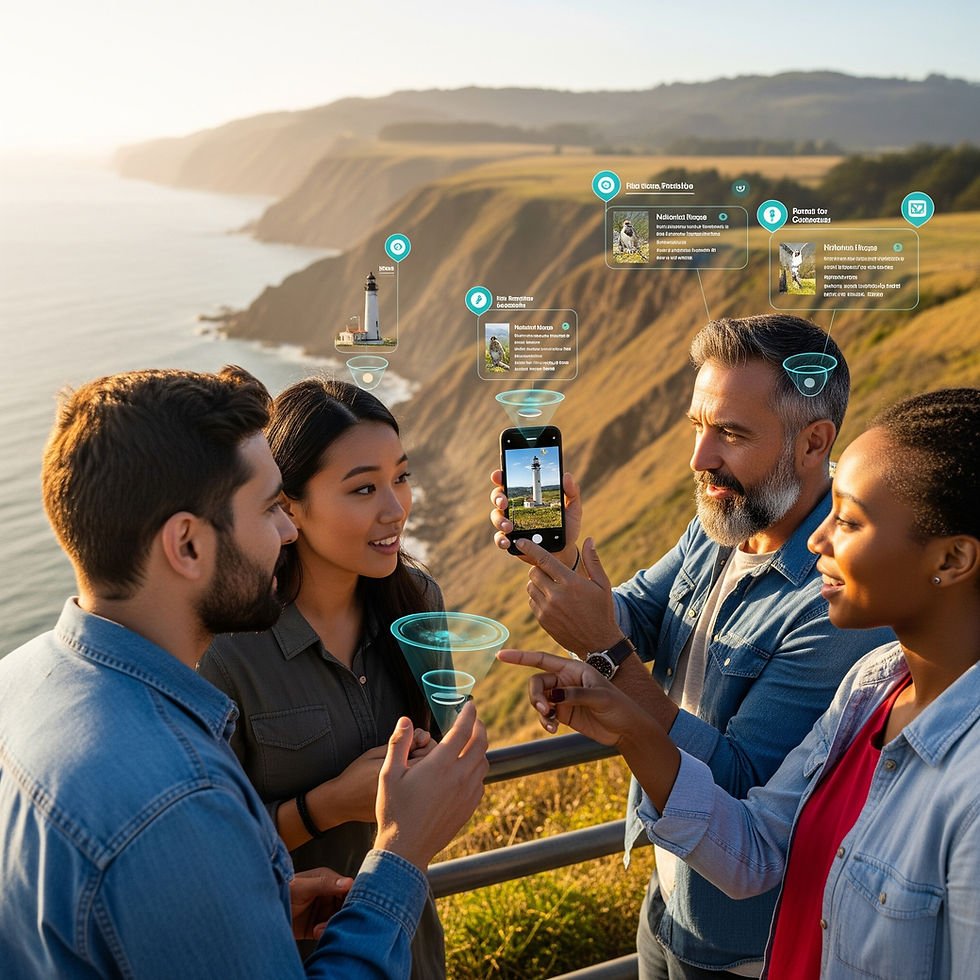
Travel is one of the most powerful forces for breaking down stereotypes and fostering human connection, while hospitality is the universal expression of kindness. Yet, the modern travel industry is often plagued by choice overload, rigid logistics, and unsustainable practices. This post explores how Artificial Intelligence is rewriting the script of global tourism. From hyper-personalized, context-aware discovery and autonomous hotel orchestration to algorithmic sustainability routing and neuro-inclusive travel planning, these 100 AI startup ideas offer a roadmap to architect a more accessible, empathetic, and seamlessly interconnected world.
💡 Aiwa-AI Perspective: The Architects of Human Connection
"Travel is arguably the single most powerful biological and social force for profound human connection. It physically breaks down historical walls, rapidly dispels toxic stereotypes, and visantly shows us exactly that we mathematically have vastly more in common than we have that artificially divides us. True hospitality is the exquisite art of making a fragile human being feel deeply welcomed, safe, and profoundly valued—a universal, essential expression of human biological kindness. In a highly chaotic world violently grappling with deep division and systemic misunderstanding, the vital role of this industry has absolutely never been more critical. This is precisely where the 'script that will save humanity' intimately finds its journey. Under 'The Humanity Scenario: Protecting Our Essence,' we believe Artificial Intelligence must be aggressively utilized absolutely not to coldly replace the vital human touch, but entirely to flawlessly enhance and protect it. It is a script that algorithmically makes global travel deeply accessible specifically for people with physical or cognitive disabilities, mathematically sustainable for our fragile planetary ecosystem, and profoundly, beautifully personal for every single individual. It is a strict technological script that safely helps us discover the hidden physical corners of the physical world and deeply understand each other on a vastly deeper biological level, actively fostering the exact empathy that is the absolute bedrock of a peaceful global society. The visionary entrepreneurs actively building the physical future of travel are absolutely not just lazily creating simple booking platforms; they are actively architecting a profoundly more interconnected, deeply empathetic, and flourishing human world."
✈️ 🌎 Exploring the massive opportunities precisely at the intersection of AI, exploration, and human empathy.
✨ Greetings, Explorers of the Future and Architects of Connection! ✨
🌟 Honored Co-Creators of a Borderless World! 🌟
The entrepreneurs building the future of travel are creating the infrastructure for global connection. This post is a massive, comprehensive guide to the incredible opportunities that lie at the intersection of Artificial Intelligence and global hospitality, updated with the most cutting-edge paradigms of 2026.
Quick Navigation: Explore the Future of Travel
I. 🗺️ Hyper-Personalized Discovery & Agentic Planning
II. 🏨 Autonomous Hotels & Ambient Intelligence
III. 🚌 Intelligent Mobility & Algorithmic Transit
IV. 🎟️ Immersive Experiences & AR Exploration
V. 🍽️ Cognitive Culinary Innovation
VI. 💖 Predictive Guest Experience & Deep CRM
VII. 📈 Quantum Operations & Yield Management
VIII. 🌱 Sustainable Ecosystems & Overtourism Mitigation
IX. 🛡️ Biological Safety, Security & Accessibility
X. 📣 Generative Marketing & Authentic Content
XI. ✨ The Humanity-Saving Scenario
🚀 The Ultimate List: 100 Visionary AI Business Ideas for Tourism & Hospitality
I. 🗺️ Hyper-Personalized Discovery & Agentic Planning
1. 🗺️ Idea: Autonomous Agentic Trip Orchestrator
❓ The Problem: Planning a multi-city international trip takes dozens of hours of research, booking, and coordination, leading to severe decision fatigue.
💡 The AI-Powered Solution: An autonomous AI agent that doesn't just suggest itineraries, but executes them. A user inputs their budget, dates, and a complex prompt (e.g., "I want a 10-day architectural history tour of Eastern Europe, mostly by train, with boutique hotels under $200/night"). The AI agent autonomously negotiates with hotel APIs, books the optimal trains, secures museum tickets, and presents a fully paid, integrated itinerary.
💰 The Business Model: A B2C subscription for power travelers or a flat convenience fee per orchestrated trip.
🎯 Target Market: Time-poor professionals and complex-itinerary travelers.
📈 Why Now? Agentic AI has moved beyond simple chat into autonomous execution, fundamentally replacing the traditional travel agent role with instantaneous, multi-variable orchestration.
2. 🗺️ Idea: "Digital Twin" Contextual Travel Persona
❓ The Problem: Travel recommendation algorithms are static. They don't understand that a user traveling for a quiet solo retreat needs vastly different recommendations than when that same user travels for a loud bachelor party.
💡 The AI-Powered Solution: An AI platform that builds distinct "Contextual Twins" of a user. By analyzing prompts and past behaviors, the AI seamlessly switches between personas (e.g., "Budget Backpacker Mode," "Luxury Executive Mode," "Family of Four Mode"), dynamically changing flight search parameters, hotel styles, and local activity recommendations to match the specific intent of the current trip perfectly.
💰 The Business Model: B2B API licensing to major OTAs (Expedia, Booking) to supercharge their recommendation engines.
🎯 Target Market: Frequent travelers with highly varied travel intents.
📈 Why Now? Hyper-personalization is the baseline expectation; AI can now infer intent and context in real-time.
3. 🗺️ Idea: Algorithmic "Anti-Tourist" Experience Finder
❓ The Problem: Authentic local experiences are buried under millions of SEO-optimized "Top 10 Tourist Trap" articles.
💡 The AI-Powered Solution: An AI that aggressively filters out highly commercialized venues. It cross-references hyper-local social media chatter, native-language restaurant reviews, and obscure neighborhood forums to algorithmically pinpoint highly-rated, purely local establishments and uncrowded historical sites, updating its recommendations in real-time as places become "discovered."
💰 The Business Model: Premium B2C travel subscription app.
🎯 Target Market: Experiential travelers demanding pure authenticity.
📈 Why Now? AI can analyze unstructured, localized data across languages instantly, uncovering gems hidden from traditional search engines.
More Discovery Ideas:
4. "Travel Style" DNA Analyzer: AI that analyzes a user's visual aesthetics from their social feeds to recommend destinations with matching architectural or natural vibes.
5. Dynamic Algorithmic Group Coordinator: AI that takes the preferences, budgets, and origin cities of 8 different friends and mathematically calculates the single most optimal, cost-effective global meeting point.
6. "Real-Time Pivot" Itinerary AI: An app that monitors flight delays or sudden rainstorms and autonomously reschedules museum tickets and dinner reservations on the fly, instantly texting the user the updated plan.
7. Geopolitical Entry-Requirement Agent: AI that constantly monitors shifting visa, health, and geopolitical entry requirements in real-time, personalized exactly to the user's specific passport portfolio.
8. "Vibe-Match" Visual Search: A tool where users upload an image of a mood (e.g., a misty, cobblestone street) and the AI finds exact global locations that match that specific atmosphere.
9. Micro-Layover Orchestrator: AI that analyzes transit times and airport security speeds to generate hyper-precise 4-hour city exploration itineraries for long layovers, guaranteeing the user makes their connection.
10. "Creator-to-Code" Itinerary Compiler: AI that watches a TikTok travel vlog, extracts the specific locations mentioned, and instantly compiles them into a bookable, mapped itinerary.
II. 🏨 Autonomous Hotels & Ambient Intelligence
11. 🏨 Idea: Ambient Intelligence Room Orchestration
❓ The Problem: Hotel rooms are static environments. Guests have to manually adjust lights, temperature, and entertainment after a long day of travel.
💡 The AI-Powered Solution: An AI engine tied to the hotel's IoT infrastructure. Using biometric (opt-in) or wearable data, the room senses the guest's physical state. If they arrive late with an elevated heart rate, the AI dims the lights, lowers the temperature for sleep, and plays ambient noise. If they wake up early, it gently raises the lights and turns on the local news.
💰 The Business Model: B2B enterprise SaaS for luxury and boutique hotel chains.
🎯 Target Market: High-end hospitality brands competing on hyper-personalized comfort.
📈 Why Now? The convergence of edge computing and IoT allows for zero-latency, highly secure ambient intelligence inside private physical spaces.
12. 🏨 Idea: Quantum-Assisted Dynamic Pricing Engines
❓ The Problem: Traditional revenue management systems rely on outdated historical models, missing massive revenue opportunities during sudden, unpredictable demand surges (e.g., a viral TikTok trend about the city).
💡 The AI-Powered Solution: An advanced AI that ingests millions of real-time variables—competitor pricing, sudden localized social media spikes, macro-weather patterns, and flight capacity—using quantum-inspired algorithms to adjust room rates optimally across hundreds of properties multiple times per hour, maximizing RevPAR automatically.
💰 The Business Model: Performance-based SaaS (taking a micro-percentage of generated uplift).
🎯 Target Market: Mid-size hotel groups lacking massive in-house revenue teams.
📈 Why Now? Algorithmic pricing is becoming vastly more predictive rather than reactive.
13. 🏨 Idea: The "Zero-Friction" Voice Concierge
❓ The Problem: Calling the front desk for simple requests is annoying for guests and a massive labor drain for the hotel.
💡 The AI-Powered Solution: A highly advanced, localized LLM integrated into the room's smart speaker. It handles complex, multi-part requests flawlessly in any language (e.g., "Please bring two extra towels, push my dinner reservation to 8 PM, and order a taxi to the airport for 6 AM tomorrow"). The AI directly routes the physical tasks to the exact staff member's device while updating the PMS.
💰 The Business Model: Hardware/Software B2B subscription.
🎯 Target Market: Hotels looking to drastically reduce front-desk labor costs while improving service speed.
📈 Why Now? Conversational AI has eliminated the "uncanny valley" of voice assistants; they are now highly capable workflow orchestrators.
More Smart Hotel Ideas:
14. Predictive Acoustic Maintenance: Edge AI sensors that literally listen to the hum of HVAC units and elevators, mathematically predicting mechanical failure days before a breakdown affects guests.
15. Autonomous Housekeeping Logistics: AI that tracks guest movement (via secure keycard data) to dynamically route housekeeping staff to empty rooms, eliminating the "knock and wake" disruption.
16. Sentiment-Scraping Operations Audits: AI that reads thousands of unstructured online reviews to pinpoint specific, physical operational failures (e.g., "The water pressure on the 4th floor is consistently weak").
17. Algorithmic Energy Guardians: AI that completely shuts down climate control and power in unoccupied blocks of the hotel, predicting exactly when to turn them back on based on incoming flight data of arriving guests.
18. Hyper-Contextual In-Room Upselling: AI on the smart TV that offers a discounted late checkout only if it knows the guest's departing flight is delayed, or offers a spa deal if it's raining outside.
19. Algorithmic Labor Orchestration: AI that creates highly complex, minute-by-minute staff schedules based on predictive restaurant foot traffic and exact check-in volumes.
20. Digital "Pre-Stay" Customization Hubs: AI that engages the guest a week before arrival, negotiating room upgrades and pre-stocking the minibar with specific, requested items.
III. 🚌 Intelligent Mobility & Algorithmic Transit
21. 🚌 Idea: Algorithmic Intermodal Routing
❓ The Problem: Planning a trip combining flights, local trains, and ride-shares requires switching between 5 different apps and hoping the connections align.
💡 The AI-Powered Solution: A Mobility-as-a-Service (MaaS) AI that generates a single, unified ticket. It mathematically calculates the fastest or cheapest route from a home in London to a specific rural village in Japan, seamlessly bundling the flight, the regional bullet train, and the final local ride-share into one synchronized, guaranteed itinerary.
💰 The Business Model: Deep affiliate commissions across multiple transit sectors.
🎯 Target Market: International and complex-route travelers.
📈 Why Now? API integrations across all transit modalities finally allow AI to mathematically orchestrate true "door-to-door" global travel.
22. 🚌 Idea: Dynamic Carbon-Routing Engines
❓ The Problem: Eco-conscious corporate travelers cannot easily optimize their travel routes for carbon efficiency.
💡 The AI-Powered Solution: An AI booking tool for enterprise companies. When an employee needs to travel from Paris to Berlin, the AI heavily penalizes short-haul flights in its algorithm, proactively routing the employee via high-speed electric rail, calculating the exact carbon saved, and integrating it into the company's ESG reporting dashboard.
💰 The Business Model: B2B Enterprise SaaS for corporate travel managers.
🎯 Target Market: Large corporations with strict net-zero mandates.
📈 Why Now? Corporate ESG reporting is becoming legally mandated in many regions; verifiable carbon reduction is a massive business priority.
23. 🚌 Idea: Predictive "Fleet-Swarm" Tour Logistics
❓ The Problem: Tour buses follow rigid routes, getting trapped in unpredictable city traffic and ruining the tourist experience.
💡 The AI-Powered Solution: An AI command center for tour operators. It ingests real-time smart-city data, traffic flow, and crowd density at major monuments. It dynamically reroutes the entire fleet of tour buses on the fly, ensuring tourists arrive at attractions exactly when crowds dip, avoiding traffic bottlenecks entirely.
💰 The Business Model: B2B operations software.
🎯 Target Market: Large urban tour operators and cruise excursion fleets.
📈 Why Now? Smart cities provide the real-time data grid necessary for AI to execute dynamic, macro-level traffic orchestration.
More Intelligent Mobility Ideas:
24. Automated Parking Negotiation Bots: AI built into rental cars that autonomously finds, negotiates pricing, and pays for smart-parking spaces in dense, unfamiliar foreign cities.
25. Context-Aware In-Car Tourism: AI integrated into vehicle GPS that acts as a real-time, geo-fenced audio tour guide, explaining the history of the exact landscape outside the window.
26. Algorithmic Disruption Re-Routing: If a flight is canceled, this AI instantly and autonomously rebooks the user on the next best flight across any airline, beating the human rush to the customer service desk.
27. Computer-Vision Damage Verification: AI on the user's phone that scans a rental car in 3D before driving off, cryptographically logging exact scratches to permanently prevent fraudulent damage charges.
28. Predictive Luggage Logistics: AI that tracks airport baggage flows to predict exact carousel wait times, notifying the user so they can grab a coffee instead of standing at the belt.
29. AR Transit Translators: AI that uses the phone camera to overlay English (or native language) directions directly onto complex, foreign-language subway signs and ticketing machines.
30. Autonomous RV / Campervan Itineraries: AI specifically designed to route large vehicles, mapping out highly scenic routes while explicitly avoiding low bridges, tight roads, and ensuring optimal charging/fuel stops.
IV. 🎟️ Immersive Experiences & AR Exploration
31. 🎟️ Idea: Hyper-Dynamic "Choose Your Own Adventure" Audio Guides
❓ The Problem: Standard audio tours are boring, linear monologues that cannot adapt to the listener's pace or specific interests.
💡 The AI-Powered Solution: A geo-fenced, generative audio guide app. As a tourist walks through Rome, the AI narrates. If the user lingers in front of a specific statue, the AI seamlessly generates a deeper historical dive into that specific artist. If the user starts walking faster, the AI shortens the anecdotes to match their pace, creating a perfectly customized, fluid narrative experience.
💰 The Business Model: B2C app subscription or white-labeled B2B for massive museums.
🎯 Target Market: Independent cultural travelers and major historical sites.
📈 Why Now? Generative AI audio (like advanced Text-to-Speech) can create highly realistic, dynamic narration on the fly based on GPS triggers.
32. 🎟️ Idea: Deep-Time Augmented Reality Overlays
❓ The Problem: Ruins and historical sites require massive imagination to appreciate, alienating many tourists.
💡 The AI-Powered Solution: An advanced AR platform for smartphones or smart glasses. A user looks at a pile of rocks in Athens, and the AI perfectly tracks the environment, overlaying a photorealistic, historically accurate 3D render of the temple as it looked 2,000 years ago. The AI can even simulate historical crowds and period-accurate lighting.
💰 The Business Model: B2B licensing to Ministries of Tourism and cultural heritage sites.
🎯 Target Market: Cultural heritage tourists and educational travel.
📈 Why Now? AR spatial computing combined with AI image generation allows for flawless, real-time historical reconstruction.
33. 🎟️ Idea: The "Micro-Niche" Peer-to-Peer Marketplace
❓ The Problem: Mass-market tours are generic. A tourist deeply obsessed with 1970s brutalist architecture or rare vintage synthesizers has no easy way to find a highly specialized local guide.
💡 The AI-Powered Solution: An AI matchmaking platform. The AI scours local subreddits, specialized forums, and niche Instagram accounts to identify absolute local experts in highly obscure topics. It then safely connects them with passionate travelers, facilitating entirely unique, peer-to-peer micro-tours that massive operators could never scale.
💰 The Business Model: Marketplace commission model.
🎯 Target Market: Passion-driven travelers and specialized local hobbyists.
📈 Why Now? AI excels at finding the "long tail" of specialized knowledge hidden in unstructured web data.
More Experiences & Exploration Ideas:
34. Algorithmic Photo-Optimizers: AI that guides tourists to exact physical coordinates at the exact minute of "golden hour" to perfectly replicate a famous travel photograph.
35. Geo-Gamified City Hunts: AI that turns a walking tour into a complex, interactive puzzle, dynamically generating clues based on the user's location and local history to unlock discounts at local cafes.
36. "Rent-a-Local" Safety Concierge: AI that rigorously background-checks and pairs nervous solo travelers with highly vetted local companions for safe evening exploration.
37. Generative Museum Curators: AI inside museums that allows users to ask highly complex, specific questions about a painting via voice, generating instant, expert-level answers.
38. Real-Time Festival Scanners: AI that constantly monitors local ticketing sites and underground social media to notify travelers of highly localized, authentic neighborhood festivals happening tonight.
39. Neuro-Divergent Sensory Maps: AI that generates city maps highlighting highly quiet, low-stimulation zones and sensory-friendly attractions for neurodivergent travelers.
40. AI-Generated Bedtime Local Lore: An app that generates highly accurate, soothing local myths and historical bedtime stories specific to the exact town the traveler is sleeping in.
V. 🍽️ Cognitive Culinary Innovation
41. 🍽️ Idea: Hyper-Personalized Culinary Orchestration
❓ The Problem: Food-focused travelers spend hours cross-referencing Michelin guides, local blogs, and Google Maps to plan a coherent day of eating.
💡 The AI-Powered Solution: An AI "Culinary Architect." A user inputs: "I have 48 hours in Tokyo. I want high-end sushi, obscure street food, a hidden cocktail bar, and I'm allergic to shellfish." The AI generates a flawless, mathematically walkable itinerary, booking the high-end table, mapping the street food stalls, and verifying the allergy safety of every stop.
💰 The Business Model: Premium B2C subscription or affiliate bookings.
🎯 Target Market: High-spend culinary tourists.
📈 Why Now? LLMs can synthesize complex constraints (geography, timing, dietary restrictions, and reviews) to generate flawless logistical plans.
42. 🍽️ Idea: Instant AR Allergen & Ingredient Translation
❓ The Problem: Navigating foreign menus with severe food allergies is a terrifying, high-risk endeavor for millions of travelers.
💡 The AI-Powered Solution: An advanced Computer Vision app. The traveler points their phone at a complex, handwritten foreign menu. The AI instantly translates it, cross-references regional culinary databases to understand hidden ingredients (e.g., identifying that a specific local sauce uses peanut oil), and aggressively red-flags any dish containing the user's uploaded allergens.
💰 The Business Model: B2C subscription for severe allergy sufferers.
🎯 Target Market: Travelers with celiac disease, nut allergies, or strict dietary requirements.
📈 Why Now? OCR (Optical Character Recognition) and rapid AI translation are now fast and reliable enough for health-critical applications.
43. 🍽️ Idea: Predictive Restaurant Yield & Waitlist Management
❓ The Problem: Highly popular tourist restaurants lose massive revenue to no-shows and inefficient table turns.
💡 The AI-Powered Solution: An AI reservation engine that predicts exact no-show probabilities based on weather, local traffic, and the customer's profile. It safely overbooks the restaurant to ensure 100% capacity, dynamically manages a digital waitlist via SMS, and algorithmically predicts the exact minute a table will clear based on historical dining speeds.
💰 The Business Model: B2B SaaS for high-volume restaurants.
🎯 Target Market: High-demand restaurants in dense tourist zones.
📈 Why Now? Predictive analytics can transform restaurant margins by eliminating wasted inventory (empty tables).
More Food & Beverage Ideas:
44. Algorithmic Ambiance Engines: AI that dynamically alters a restaurant's music tempo and lighting based on the real-time noise level and table-turnover requirements of the dining room.
45. Digital Sommelier Copilots: AI integrated into digital menus that flawlessly pairs local, obscure wines with specific dishes based on flavor-profile mapping.
46. Computer-Vision Food Waste Auditors: Smart cameras in hotel kitchens that use AI to exactly identify what specific foods are being scraped off plates, allowing chefs to algorithmically adjust portion sizes and ordering.
47. Hyper-Local Farm-to-Hotel Matchmakers: AI that seamlessly connects hotel procurement teams with hyper-local, sustainable farmers based on the chef's real-time menu requirements.
48. Dynamic Menu Engineering: AI that constantly analyzes POS data to automatically redesign digital menus, placing high-margin items in high-visibility visual zones.
49. "Ghost Kitchen" Tourism Analytics: AI that analyzes local food delivery app data to tell new hoteliers exactly what specific cuisine the immediate neighborhood is currently craving. 50. Global Dietary Concierge: A centralized AI platform where a traveler uploads their complex dietary profile once, and the AI securely communicates it to every airline, hotel, and restaurant on their itinerary automatically.
VI. 💖 Predictive Guest Experience & Deep CRM
51. 💖 Idea: Autonomous "Service Recovery" Engines
❓ The Problem: A negative guest experience (like a broken AC) often escalates into a terrible online review because frontline staff lack the authority or speed to resolve it instantly.
💡 The AI-Powered Solution: An AI CRM that monitors all guest communications (app messages, SMS). If a guest complains, the AI instantly analyzes the severity, checks the guest's lifetime value (LTV), and autonomously issues a perfectly scaled apology and compensation (e.g., instantly applying a $50 credit to their room folio and sending a free dessert to their table), completely bypassing management approval delays.
💰 The Business Model: B2B SaaS for hospitality management.
🎯 Target Market: Hotel chains focused on brand protection and review scores.
📈 Why Now? AI can execute policy-bound, high-speed customer service resolutions faster and more consistently than busy human staff.
52. 💖 Idea: Algorithmic "Surprise & Delight" Orchestrators
❓ The Problem: True luxury hospitality relies on personalized touches, but doing this at scale across thousands of guests relies entirely on the varied observational skills of individual staff.
💡 The AI-Powered Solution: An AI that legally, securely scrapes a guest's public social media and past booking data. It algorithmically identifies high-value personalized touches. If it detects a guest frequently posts about local craft coffee, it alerts the concierge to leave a bag of locally roasted beans in their room with a personalized note, automating the illusion of deep, individual care.
💰 The Business Model: Premium CRM add-on for luxury hospitality.
🎯 Target Market: 4- and 5-star hotels, luxury cruise lines.
📈 Why Now? AI excels at finding the "needle in the haystack" data points that drive deep emotional resonance with consumers.
53. 💖 Idea: Unified "Voice of the Guest" Synthesis
❓ The Problem: Hotel GMs are drowning in fragmented feedback across TripAdvisor, Google, internal surveys, and Twitter. They cannot spot systemic operational failures quickly.
💡 The AI-Powered Solution: A massive NLP engine that ingests absolutely every single piece of text written about a hotel globally. It synthesizes this chaos into a real-time operational dashboard. Instead of "Your score is 4.2," the AI states: "Sentiment regarding breakfast speed dropped 18% this week; 40 reviews explicitly mention a broken coffee machine."
💰 The Business Model: B2B Analytics SaaS.
🎯 Target Market: Hotel General Managers, ownership groups, and brand managers.
📈 Why Now? LLMs can turn massive volumes of unstructured text into precise, actionable operational directives.
More Guest Experience Ideas:
54. Dynamic Loyalty Personalization: AI that stops offering generic points and instead algorithms offers rewards the specific guest actually wants (e.g., offering a free late checkout to a family, but a free cocktail to a solo business traveler).
55. Opt-In Biometric VIP Recognition: Secure facial recognition that alerts the concierge via earpiece the exact second a VIP guest walks through the door, allowing for a flawless, name-first greeting.
56. Conversational "Chat-to-Book" Agents: AI on hotel websites that behaves like a high-end travel agent, negotiating rates, answering complex room layout questions, and closing the booking directly in the chat window.
57. Hyper-Contextual Ancillary Upselling: AI that texts a guest an offer for a deeply discounted spa massage precisely at 3 PM when it knows it's pouring rain outside and the guest is stuck in their room.
58. Automated "Guest Archetype" Modeling: AI that continuously analyzes booking data to tell a hotel exactly who their core demographics are this season, instantly updating marketing profiles.
59. Algorithmic Review Generation: AI that identifies guests who had a statistically flawless stay and sends them highly optimized, perfectly timed requests to leave a review on the specific platform where the hotel currently needs a boost.
60. Predictive Lifetime Value (LTV) Routing: AI that identifies a first-time guest who matches the exact profile of the hotel's highest-spending regulars, automatically flagging them for VIP treatment to secure their long-term loyalty.
VII. 📈 Quantum Operations & Yield Management
61. 📈 Idea: Algorithmic Labor Orchestration
❓ The Problem: Labor is the highest cost in hospitality. Static scheduling leads to disastrous understaffing during rushes and massive financial waste during lulls.
💡 The AI-Powered Solution: An AI platform that completely assumes control of labor scheduling. It ingests historical occupancy, incoming flight volumes, local weather, and specific event data (like a nearby concert) to generate minute-by-minute staffing schedules for housekeeping, front desk, and restaurants, optimizing labor spend down to the dollar without sacrificing service.
💰 The Business Model: B2B SaaS, priced on a per-employee or per-property basis.
🎯 Target Market: Large hotels, resorts, and casino operations.
📈 Why Now? AI can process the multi-variable chaos of hospitality operations to mathematically optimize labor efficiency.
62. 📈 Idea: Automated Competitive Intelligence Tracking
❓ The Problem: Revenue managers spend hours manually clicking through competitor websites to check their rates, missing real-time market shifts.
💡 The AI-Powered Solution: An AI web-scraping bot that constantly monitors a hotel's predefined "competitive set." It instantly alerts the revenue manager if a competitor aggressively drops their weekend rates, launches a new package, or suffers a sudden drop in review scores, allowing for immediate strategic counter-moves.
💰 The Business Model: B2B Data Analytics subscription.
🎯 Target Market: Hotel Revenue Managers and Sales Directors.
📈 Why Now? Real-time data scraping and analysis automate the most tedious parts of competitive strategy.
63. 📈 Idea: Micro-Yielding for Tours and Attractions
❓ The Problem: Independent tour operators and museums use flat pricing, leaving money on the table during peak seasons and running empty tours in the off-season.
💡 The AI-Powered Solution: An accessible dynamic pricing API specifically built for the fragmented tours and activities market. The AI automatically adjusts the price of a walking tour or boat rental hour-by-hour based on booking velocity, competitor pricing, and weather forecasts, maximizing total yield effortlessly.
💰 The Business Model: SaaS + micro-commission on increased yield.
🎯 Target Market: SME tour operators, museums, and local attractions.
📈 Why Now? The sophisticated yield management technology used by airlines is finally being democratized for small business operators via AI.
More Operations & Analytics Ideas:
64. Predictive Procurement AI: AI that tracks hotel inventory (from salmon to shampoo) and autonomously negotiates and re-orders from suppliers right before a predicted surge in occupancy.
65. B2B Event Lead Scoring: AI that analyzes incoming corporate conference inquiries, instantly scoring the lead based on mathematical probability of closing and potential profit margin, prioritizing the sales team's time.
66. Algorithmic Fraud & Review Defense: AI that constantly monitors a hotel's online presence, automatically detecting and flagging coordinated fake review attacks (from competitors or bots) for removal.
67. Thermodynamic Energy Forecasting: AI integrated into hotel engineering that precisely predicts tomorrow's energy consumption based on hyper-local weather and exact occupancy, optimizing power grid purchasing.
68. Short-Term Rental Market Arbitrage: AI for massive Airbnb/Vrbo portfolio managers that analyzes micro-neighborhood data to perfectly price units and recommend exact amenity upgrades (e.g., "Adding a hot tub here increases yield by 14%").
69. Menu Profitability Matrixing: AI that continuously analyzes POS data to recommend exact price increases or ingredient substitutions on a menu to mathematically maximize total restaurant profit.
70. Computer-Vision Lost & Found: AI that catalogs photos of lost items found by housekeeping, automatically matching them with guest inquiry descriptions, reducing a massive administrative headache.
VIII. 🌱 Sustainable Ecosystems & Overtourism Mitigation
71. 🌱 Idea: Algorithmic Overtourism Dispersal Engines
❓ The Problem: Iconic destinations (Venice, Kyoto) are being physically destroyed by concentrated overtourism, while neighboring regions starve for revenue.
💡 The AI-Powered Solution: A macro-level AI platform for municipal tourism boards. It monitors cell-tower data, ticketing apps, and traffic cameras to measure real-time crowd density. When a monument nears critical capacity, the AI automatically triggers dynamic push notifications via local tourist apps, offering immediate, heavy discounts to alternative, lesser-known attractions in the city, effectively dispersing the crowd mathematically.
💰 The Business Model: B2G (Business-to-Government) SaaS for tourism ministries.
🎯 Target Market: National and municipal tourism organizations in heavily trafficked regions.
📈 Why Now? Overtourism is an existential threat to global heritage; AI provides the real-time data orchestration needed to physically redirect human flow.
72. 🌱 Idea: Verifiable Sustainable-Sourcing Marketplaces
❓ The Problem: "Greenwashing" is rampant. Eco-conscious travelers cannot verify if a hotel actually uses renewable energy or if a tour operator actually pays local wages.
💡 The AI-Powered Solution: An AI-driven auditing platform that acts as the ultimate truth layer for sustainable travel. It uses AI to audit supply chains, energy bills, and local economic impact data of hotels and operators. It assigns an immutable, verified "True Green" score, allowing travelers to book with absolute moral certainty.
💰 The Business Model: Certification and booking commission model.
🎯 Target Market: High-intent eco-tourists and corporate ESG travel programs.
📈 Why Now? Consumers demand mathematical proof of sustainability, not just marketing copy.
73. 🌱 Idea: Predictive Food Waste Eradication
❓ The Problem: Massive hotel buffets and cruise line kitchens generate catastrophic amounts of daily food waste due to inaccurate consumption predictions.
💡 The AI-Powered Solution: An incredibly precise predictive AI for massive kitchens. It correlates tomorrow's specific guest demographics, local weather, and historical eating patterns to tell the executive chef exactly how many croissants or kilos of salmon to prepare, mathematically minimizing overproduction.
💰 The Business Model: Enterprise SaaS, selling the exact ROI of reduced food purchasing costs.
🎯 Target Market: Massive resorts, casinos, and cruise lines.
📈 Why Now? Food costs and environmental regulations are rising simultaneously; AI attacks both problems at the root.
More Sustainability Ideas:
74. Community-Wealth Distribution AI: Platforms that guarantee and mathematically track that 100% of a tourist's booking fee goes directly into the micro-local economy of rural villages, bypassing global intermediaries.
75. Computer-Vision Anti-Poaching Drones: AI-piloted drones deployed by eco-resorts that monitor vast nature reserves, automatically identifying and alerting rangers to illegal poaching or logging activity.
76. Algorithmic Water Optimization: AI integrated into resort infrastructure in drought-prone areas that micro-manages irrigation and pool systems, drastically reducing water usage based on real-time evaporation rates.
77. Ethical Supply-Chain Matchmakers: AI that seamlessly replaces a hotel's mass-market suppliers by finding and vetting hyper-local, indigenous artisans for everything from room soap to lobby furniture.
78. Automated Carbon Portfolio Generation: AI that calculates a user's exact trip emissions and automatically constructs a verified, diversified portfolio of carbon-capture projects for them to offset their footprint instantly.
79. "Reef-Safe" Geofencing: AI apps that alert tourists when they are entering highly sensitive marine zones, educating them on specific behaviors (like banning specific sunscreens) required to protect the coral.
80. Farm-to-Hotel Algorithmic Logistics: AI that predicts a hotel chef's menu needs and automatically orchestrates the logistics of purchasing and delivering ingredients from a network of 50 different micro-farms in the region.
IX. 🛡️ Biological Safety, Security & Accessibility
81. 🛡️ Idea: Hyper-Local Predictive Threat Intelligence
❓ The Problem: National travel advisories are too broad (e.g., "Exercise caution in France"). Travelers remain blind to sudden, hyper-localized threats like a flash protest, a localized flood, or a specific neighborhood crime spike.
💡 The AI-Powered Solution: A continuous-monitoring security AI. It aggressively scrapes local police scanners, regional social media chatter, and micro-weather data. It pushes an instant, geo-fenced alert directly to a traveler's phone if a threat emerges within a 2-mile radius, actively routing them to safety.
💰 The Business Model: B2B SaaS for corporate "Duty of Care" programs, and premium B2C subscriptions.
🎯 Target Market: Corporate travel managers, NGOs, and solo international travelers.
📈 Why Now? AI can process chaotic, real-time localized data streams to predict and identify physical threats instantly.
82. 🛡️ Idea: Neuro-Inclusive & Physical Accessibility Routing
❓ The Problem: For travelers in wheelchairs or those with neurodivergent needs, the world is mapped for the able-bodied. Unreliable information about broken elevators or sensory-overload areas ruins trips.
💡 The AI-Powered Solution: An AI mapping and booking engine built entirely around strict accessibility parameters. It crowd-sources and algorithmically verifies data regarding exact door widths, elevator operational status, and decibel levels of venues. It guarantees a flawless, frictionless itinerary where the traveler will never encounter an impassable barrier.
💰 The Business Model: Specialized OTA (Online Travel Agency) earning booking commissions.
🎯 Target Market: The massive, highly underserved market of travelers with physical or cognitive disabilities.
📈 Why Now? AI can finally aggregate and verify the fragmented, localized data required to guarantee safe, accessible travel.
83. 🛡️ Idea: Algorithmic Scam & Fraud Interception
❓ The Problem: Tourists are highly vulnerable to localized, sophisticated street scams and predatory pricing simply because they lack local context.
💡 The AI-Powered Solution: An ambient AI companion app. Using geolocation, it pushes proactive alerts: "You are entering a zone known for the 'broken taxi meter' scam; only use official apps here." Furthermore, it can use the camera to scan a bar tab to ensure the tourist is not being charged an inflated, fraudulent "tourist menu" price.
💰 The Business Model: Freemium B2C app.
🎯 Target Market: First-time international travelers and backpackers.
📈 Why Now? Context-aware AI can serve as an unhackable local guardian, bridging the knowledge gap between tourist and local.
More Safety & Accessibility Ideas:
84. Algorithmic Hygiene Verification: AI that cross-references municipal health inspection databases and user reviews to generate real-time, verified hygiene scores for foreign restaurants.
85. "Overwatch" Solo-Traveler Monitoring: Opt-in AI that tracks a solo traveler's GPS. If they deviate wildly from their planned route late at night, the AI attempts to contact them; if they don't respond, it alerts local authorities or designated emergency contacts.
86. Instant Medical-Translation Triage: AI that allows a traveler experiencing a medical emergency to speak in their native tongue, instantly translating it into highly accurate medical terminology for foreign paramedics.
87. Automated Insurance Claim Adjudication: AI that completely manages the nightmare of filing a travel insurance claim, instantly analyzing uploaded flight delay data or medical receipts to approve payouts in minutes, not months.
88. Computer-Vision Child Safety Audits: An app where parents scan a hotel room or Airbnb with their phone, and the AI highlights specific hazards for toddlers (uncovered outlets, sharp glass tables, unlatched windows).
89. Predictive Turbulence Mapping: AI that analyzes global aviation weather data to provide anxious fliers with a minute-by-minute breakdown of exactly when their specific flight will experience turbulence, drastically reducing psychological stress.
90. Epidemiological Destination Forecasting: AI that analyzes global wastewater data and health reports to predict localized outbreaks of illness (like Norovirus or Dengue), advising vulnerable travelers to alter their routes.
X. 📣 Generative Marketing & Authentic Content
91. 📣 Idea: Autonomous "Destination Inspiration" Engines
❓ The Problem: Tourism boards and boutique hotels lack the massive budgets required to constantly produce high-quality, localized marketing content across every social platform.
💡 The AI-Powered Solution: A generative AI marketing hub. A hotel manager inputs: "Create a 3-week campaign targeting eco-conscious millennials." The AI generates stunning, photorealistic images of the local landscape, writes perfectly SEO-optimized blog posts about local hiking trails, and generates highly engaging TikTok scripts, automating a full marketing agency's output.
💰 The Business Model: B2B SaaS for small/medium hospitality businesses.
🎯 Target Market: Independent hotels, local tour operators, and regional tourism boards.
📈 Why Now? Generative AI (images, text, video) democratizes high-end content creation, allowing small operators to compete visually with massive travel conglomerates.
92. 📣 Idea: Cryptographic Review Verification
❓ The Problem: The entire travel economy runs on reviews, yet fake positive reviews and malicious "review bombing" have completely degraded consumer trust in platforms like TripAdvisor.
💡 The AI-Powered Solution: An AI that acts as an aggressive fraud-detection layer. It analyzes the reviewer's IP history, linguistic patterns (detecting bot-farm syntax), and cross-references geolocation data to mathematically prove the reviewer actually physically stayed at the hotel. It provides a "Verified Truth" score for the property.
💰 The Business Model: B2B API licensed to major review aggregators and OTAs.
🎯 Target Market: Major travel platforms whose entire business model relies on consumer trust.
📈 Why Now? As AI makes generating fake reviews easier, aggressive AI-driven cryptographic verification is the only defense to save the review economy.
93. 📣 Idea: Generative Personal Travel Documentaries
❓ The Problem: Travelers shoot hundreds of gigabytes of 4K video on their trips, but 99% of it rots on their phones because video editing is tedious and difficult.
💡 The AI-Powered Solution: An app that ingests a traveler's raw, chaotic photo and video dump. The AI uses computer vision to select the highest-quality clips, identifies the narrative arc of the trip, automatically syncs the cuts to licensed music, and generates a stunning, professional-grade 60-second travel documentary ready for social media sharing in minutes.
💰 The Business Model: Freemium B2C app (watermarked free version, premium high-res exports).
🎯 Target Market: Every leisure traveler with a smartphone.
📈 Why Now? AI video editing and intelligent curation have reached professional levels, solving the massive friction of post-trip content creation.
More Marketing & Content Ideas:
94. Nostalgia-Triggered Retargeting: AI that analyzes a traveler's past data and sends highly personalized ads (e.g., sending an ad for a Tuscan villa exactly 5 years after their honeymoon in Rome, triggering powerful nostalgia).
95. Algorithmic Influencer Matchmaking: AI that stops looking at vanity follower counts and deeply analyzes an influencer's audience engagement to perfectly match a boutique eco-resort with the exact micro-influencer whose audience will actually book rooms.
96. Automated User-Generated Content (UGC) Licensing: AI that constantly scans Instagram for stunning public photos taken at a specific hotel, automatically messaging the user to legally license the photo for the hotel's ad campaigns.
97. Generative Audio Guidebooks: AI that completely replaces outdated, heavy guidebooks by instantly generating an up-to-date, downloadable audio guide covering the exact restaurants, museums, and histories a user requested.
98. Conversational "Should I Go?" Oracles: AI that interrogates a user about their deep psychological needs (e.g., "Do you want to escape people, or meet them? Do you want comfort or challenge?") to recommend the mathematically perfect destination for their current mental state.
99. Photorealistic VR Pre-Booking Engines: AI that generates a flawless, interactive 3D model of a hotel room from 2D photos, allowing a user to physically walk through the suite in VR before hitting the "Book" button.
100. Automated Weather-Compensated Marketing: AI that dynamically pauses ads for a beach resort when a hurricane is forecast, instantly redirecting the ad spend to market the resort's indoor spa and culinary experiences instead.
✨ XI. The Humanity-Saving Scenario: The Empathetic Exploration Protocol
If we blindly deploy AI into the travel industry solely to maximize algorithmic booking volume, hyper-optimize pricing, and replace local human guides with cheap digital avatars, we will successfully engineer a sterile, deeply isolating world. A future where travel is reduced to an optimized, frictionless, and utterly soulless transaction is the death of cultural exchange. To ensure that AI serves to deepen human connection rather than automate it out of existence, we must architect the Humanity-Saving Scenario.
This scenario dictates the international adoption of the Empathetic Exploration and Cultural Preservation Protocol. This uncompromising ethical framework legally mandates "Algorithmic Authenticity," requiring major travel platforms to algorithmically prioritize and promote locally owned, community-based tourism businesses over massive multinational conglomerates. It establishes the "Right to Human Hospitality," legally ensuring that while AI can handle logistics, no digital system can entirely replace the requirement for local human employment in guide services and cultural education. Furthermore, the Humanity-Saving Scenario strictly enforces "Ecological Routing Caps," legally empowering AI systems to mathematically block bookings and redirect travel flows when a fragile heritage site reaches its absolute environmental carrying capacity. By legally forcing travel technology to prioritize cultural survival, local economic empowerment, and deep biological connection over mere transactional efficiency, we ensure that exploring our planet elevates our shared humanity.
🗣️ Over to You: The Future of Global Connection
We are actively deciding whether technology will make the world feel smaller and more sterile, or vastly more connected and deeply understood.
The Priority: Exactly which of these 100 advanced Travel Tech ideas do you personally believe is the absolutely most desperately needed in a world grappling with overtourism and cultural disconnect?
The Frustration: What is a deeply personal, recurring nightmare you've experienced while traveling (in booking, logistics, or navigation) that you strongly wish an autonomous AI agent could finally solve?
The Opportunity: For the hospitality professionals reading: What is the absolute most exciting opportunity you see for advanced AI to physically create a vastly more empathetic, frictionless guest experience without losing the "human touch"?
Outline your perspective on implementing the Humanity-Saving Scenario to establish the Empathetic Exploration Protocol.
We aggressively invite you to share your vital insights and visionary ideas in the comments below! 👇
📖 Glossary of Terms
OTA (Online Travel Agency): A massive, web-based marketplace that allows consumers to research and book travel products like flights and hotels. Examples: Expedia, Booking.
PMS (Property Management System): The critical, central software brain used by hotels to manage their daily operations, including reservations, billing, and housekeeping.
Agentic AI: Highly advanced Artificial Intelligence capable of autonomous goal-setting, complex logistical planning, and taking independent action across multiple platforms to complete workflows.
AR (Augmented Reality): Spatial computing technology that seamlessly overlays computer-generated 3D images and data directly onto the physical real world, typically viewed through a smartphone or smart glasses.
Dynamic Pricing (Yield Management): A complex mathematical strategy where prices for fixed-inventory products (like hotel rooms or flights) are aggressively changed in real-time in response to highly specific supply and demand triggers.
RevPAR (Revenue Per Available Room): The absolute most critical performance metric in the hotel industry, calculated by multiplying a hotel's average daily room rate by its occupancy rate.
📝 Terms & Conditions
ℹ️ The information provided in this blog post, including the list of 100 business and startup ideas, is for general informational and educational purposes only. It does not constitute professional, financial, or investment advice.
🔍 While aiwa-ai.com strives to provide insightful and well-researched ideas, we make no representations or warranties of any kind, express or implied, about the completeness, viability, or profitability of these concepts. Any reliance you place on this information is therefore strictly at your own risk.
🚫 The presentation of these ideas is not an offer or solicitation to engage in any investment strategy. Starting a business, especially in the highly volatile global travel and hospitality sector, involves significant financial risk and severe legal considerations regarding international data privacy and local regulations.
🧑⚖️ We strongly encourage you to conduct your own thorough market research, exhaustive financial analysis, and strict legal due diligence. Please explicitly consult with highly qualified professionals before making absolutely any business or investment decisions based on this list.

Posts on the topic 🏖️ AI in Tourism and Hospitality:
The Perfect Vacation: Authentic Experience or a "Fine-Tuned" AI Simulation?
Accommodation Antagonism: Boutique Hotels vs. Airbnb Experiences
Travel Smarter: 100 AI Tips & Tricks for Tourism & Hospitality
Tourism & Hospitality: 100 AI-Powered Business and Startup Ideas
Tourism and Hospitality: AI Innovators "TOP-100"
Tourism and Hospitality: Records and Anti-records
Tourism and Hospitality: The Best Resources from AI
Statistics in Tourism & Hospitality from AI
The Algorithmic Concierge: How AI is Crafting Hyper-Personalized Travel Experiences
Streamlining the Hospitality Industry: AI's Role in Enhancing Operational Efficiency
How AI is Revolutionizing Customer Service in the Tourism and Hospitality Industry
How AI is Revolutionizing Marketing and Sales in the Tourism and Hospitality Industry
Transforming the Travel Experience with AI - Beyond the Brochure, into the Metaverse
The Best AI Tools for Travel
Explore our Top-rated AI guides for startups and entrepreneurs
Human Resources: 100 AI-Powered Business and Startup Ideas
Tourism & Hospitality: 100 AI-Powered Business and Startup Ideas
Social Sciences: 100 AI-Powered Business and Startup Idea
Linguistics & Translation: 100 AI-Powered Business and Startup Ideas
Entertainment & Gaming: 100 AI-Powered Business and Startup Ideas
Arts & Creativity: 100 AI-Powered Business and Startup Ideas
Construction Industry: 100 AI-Powered Business and Startup Ideas
Fashion Industry: 100 AI-Powered Business and Startup Ideas
Advertising & Marketing: 100 AI-Powered Business and Startup Ideas
Urban Studies: 100 AI-Powered Business and Startup Ideas for Smart Cities
Meteorology: 100 AI-Powered Business and Startup Ideas for Weather Forecasting
Ecology & Sustainability: 100 AI-Powered Business and Startup Ideas
Telecommunications: 100 AI-Powered Business and Startup Ideas
Space Industry: 100 AI-Powered Business and Startup Ideas
Scientific Research: 100 AI-Powered Business and Startup Ideas
Public Administration: 100 AI-Powered Business and Startup Ideas
Jurisprudence: 100 AI-Powered Business and Startup Ideas for the Legal Industry
Energy Sector: 100 AI-Powered Business and Startup Ideas
Security & Defense: 100 AI-Powered Business and Startup Ideas
Entertainment & Media: 100 AI-Powered Business and Startup Ideas
Agriculture: 100 AI-Powered Business and Startup Ideas
Retail & E-commerce: 100 AI-Powered Business and Startup Ideas
Manufacturing & Industry: 100 AI-Powered Business and Startup Ideas
Transportation & Logistics: 100 AI-Powered Business and Startup Ideas
Business & Finance: 100 AI-Powered Business and Startup Ideas
Medicine & Healthcare: 100 AI-Powered Business and Startup Ideas
Education: 100 AI-Powered Business and Startup Ideas for the Future
Everyday Life: 100 AI-Powered Business and Startup Ideas


Comments