
Community Dynamics Duel: Online Social Movements vs. Grassroots Activism
Updated: Sep 13
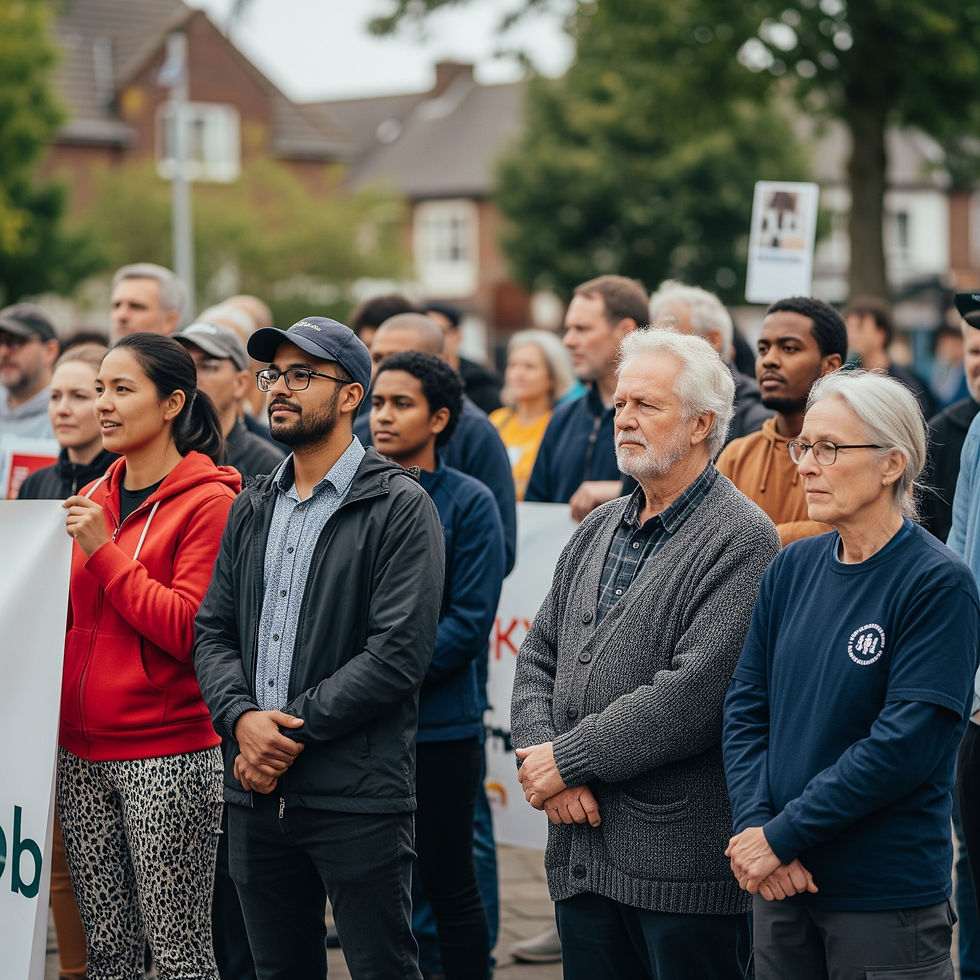
👑🤝 Which Creates More Lasting Change?
In the modern age, the fight for societal change is waged on two distinctly different battlegrounds. The first is the digital town square: a sprawling, algorithmically interconnected world of social media where hashtags can mathematically explode into global movements overnight. The second is the physical street corner: the exhausting realm of grassroots activism, built on face-to-face meetings, community organizing, and boots-on-the-ground determination.
This creates a pivotal duel of methodologies. Is true, lasting legislative and cultural change better achieved through the viral speed and massive computational scale of an online social movement, or through the deep, personal, long-term commitment of traditional grassroots efforts?
This is a brutal battle for the very soul of modern activism.
Welcome to the aiwa-ai.com portal! We've aggregated the most rigorous sociological data and algorithmic analysis 🧭 to bring you a curated breakdown of the Activism Duel. Let's march into this critical debate. 🚀
🧠 Brief Summary: The Script for Systemic Change
The operational architecture of social movements is undergoing a profound evolution. Activism—historically defined entirely by localized, physical protests—is fracturing into a complex hybrid of algorithmic manipulation and community organizing. The internet in 2026 acts as a massive accelerant for outrage. From the undeniable reality that viral algorithms can mobilize a million people in 24 hours, to the proof that online "slacktivism" rarely translates into actual policy reform, this analysis provides a visionary roadmap. As these dynamics transition protest from the street to the screen, the "Script That Will Save People" ensures this knowledge democratizes how marginalized voices break through algorithmic censorship, systematically combats the spread of deepfake political disinformation, and fiercely protects the fundamental right to organize both digitally and physically.
💡 AIWA-AI Perspective: Engineering the Ethical Movement
"Societal change is the absolute foundational algorithm of human progress; when activism is monopolized by corporate platforms or restricted by physical disenfranchisement, the systemic harm manifests as ignored injustices, performative outrage, and the total erosion of democratic accountability. Historically, launching a global movement required an impossible logistical array of physical communication and immense funding. This is exactly where the 'Script That Will Save People' rewrites the architecture of protest. Under 'The Humanity Scenario: Protecting Our Essence,' technology absolutely must not be deployed to build a dystopian echo chamber that prioritizes engagement-baiting rage over nuanced debate, nor to deploy AI surveillance systems that track and penalize peaceful physical protestors. Instead, the hard numerical truth must be aggressively utilized as the ultimate, democratizing engine for radical civic transparency, absolute community mobilization, and equitable systemic reform. It is a script that uses data to empirically prove that an AI identifying voter suppression tactics is infinitely more valuable than an algorithm optimizing a divisive political meme. The visionary organizers, sociologists, and civic-tech engineers actively verifying these trends are not just shouting into the void; they are actively architecting a profoundly fairer, deeply resilient, and radically active global civilization where true justice is an irrefutable, measurable reality."
Quick Navigation: An Activist's Inquisition
I. 🚀 Speed & Scale: Who Can Mobilize a Million People by Sundown?
II. 🌱 Depth & Durability: Who Builds a Movement That Lasts for Decades?
III. 🌐 Inclusivity & Accessibility: Who Can Join the Fight?
IV. 🏛️ Impact & Policy Change: Who Truly Changes the System?
V. 🌍 The Royal Decree & The "Architect of Change" Protocol
Here is your comprehensive analysis, categorized by the questions that define effective and sustainable social change.
I. 🚀 Speed & Scale: Who Can Mobilize a Million People by Sundown?
This is a brutal measure of pure, unadulterated reach. When a message desperately needs to spread like wildfire, which method is mathematically superior?
🥊 The Contenders: A viral, emotionally charged hashtag on X or TikTok vs. a highly organized, door-to-door physical canvassing campaign.
🏆 The Verdict: Online Social Movements, in a catastrophic landslide victory.
📜 The Royal Decree (Why):
The mathematical power of social media recommendation algorithms to amplify a message is absolutely unparalleled in human history. A single, powerful video or a compelling hashtag can reach tens of millions of people across the globe in a matter of hours. This raises awareness on a scale that would take physical grassroots organizers years, if not decades, and millions of dollars to achieve.
Algorithms optimize for engagement (often outrage); therefore, for rapidly shining a massive, blinding spotlight on an issue and demonstrating instantaneous mass public interest, digital activism reigns supreme. It breaks geographical borders instantly.
II. 🌱 Depth & Durability: Who Builds a Movement That Lasts for Decades?
A digital protest is a fleeting moment; a true social movement is a grueling marathon. This is the battle of commitment, fought against the relentless forces of algorithmically-induced burnout and apathy.
🥊 The Contenders: The fleeting, dopamine-driven click of a "like" or "share" vs. the enduring, inconvenient bonds forged in a physical community meeting.
🏆 The Verdict: Grassroots Activism, decisively.
📜 The Royal Decree (Why):
While online movements are explosive, they are notoriously prone to the fatal pitfall of "slacktivism"—low-effort online actions that give the psychological illusion of participation without demanding any deep, sacrificial commitment. The algorithm moves on to the next outrage cycle in 48 hours.
Grassroots activism, conversely, is built on the slow, unglamorous foundation of human relationships. It involves difficult, nuanced face-to-face conversations, long-term strategic planning, and the shared vulnerability of working together in person. This agonizing process forges incredibly strong, resilient bonds that can sustain a movement through years of struggle, legislative defeat, and public apathy—long after the initial hashtag has stopped trending.
III. 🌐 Inclusivity & Accessibility: Who Can Join the Fight?
Who is actually physically or digitally able to participate in the movement? This is a crucial question of access, socioeconomic barriers, and whose voices get heard by the powerful.
🥊 The Contenders: The digital world accessible from a cheap smartphone vs. the physical world requiring free time, transportation, and physical mobility.
🏆 The Verdict: A complex draw, with Online Social Movements having a slight edge.
📜 The Royal Decree (Why):
Digital activism offers unprecedented, revolutionary accessibility to individuals who may be entirely unable to participate in physical protests due to severe disabilities, relentless caregiving responsibilities, geographic isolation, or immediate personal safety concerns in authoritarian regimes. It allows them to lend their voice and skills anonymously from anywhere on Earth.
However, it also creates a brutal "digital divide," automatically excluding those without reliable internet access, smartphones, or technological literacy. Traditional grassroots activism can be far more inclusive of these digitally-disconnected populations but often requires a significant, privileged investment of free time and physical presence that acts as an insurmountable barrier for the working poor.
IV. 🏛️ Impact & Policy Change: Who Truly Changes the System?
Raw awareness is one thing; tangible, codified legislative results are entirely another. Which method is mathematically more effective at translating public sentiment into concrete policy changes?
🥊 The Contenders: The immense, chaotic public pressure of a viral online campaign vs. the highly targeted, strategic, relentless pressure of organized local constituents.
🏆 The Verdict: Grassroots Activism.
📜 The Royal Decree (Why):
While massive online outrage can force a previously ignored topic onto the national political agenda, politicians and entrenched institutions generally respond far more directly to sustained, highly organized pressure from their own specific, voting constituents.
Grassroots activism excels at this exact operational objective. It involves targeted letter-writing campaigns, relentless voter registration drives, direct lobbying of local officials, and building long-term, inescapable relationships with decision-makers. This strategic, localized pressure is almost always what is strictly required to turn the tide on actual legislation and secure lasting, systemic change. An online storm can be waited out by a PR firm; an organized, voting community physically occupying a town hall cannot be ignored.
🌍 V. The Royal Decree & The "Architect of Change" Protocol
The duel between the digital and the physical is ultimately a false choice. The absolute most potent, successful movements of our modern time have empirically proven that one cannot succeed without the other.
The crown is not awarded to a single method, but to an integrated strategy: Hybrid Activism.
The mathematically winning formula uses the incredible speed and scale of algorithmic online movements to raise mass awareness and instantly bring new people into the top of the "funnel." It then violently funnels that raw energy into the deep, committed, and highly strategic work of local grassroots organizing to effect real-world legislative change.
The hashtag inspires the meeting; the meeting plans the action; the action creates the change.
This understanding requires a new protocol for anyone who wishes to actually make a difference, rather than just posting about it.

🌱 The "Architect of Change" Protocol: A Script for Effective Activism
In line with our mission at aiwa-ai.com, we propose this empirical framework for engaging in activism that is both meaningful and mathematically effective.
🛡️ The Mandate of Deep Learning: Before you tweet, post, or protest, commit to understanding the issue deeply. Read the history, listen to the marginalized people most affected, and understand the actual, boring policy details. Act from a place of highly informed passion, not just fleeting, algorithmic outrage.
💖 The Command of Local Connection: Find the local chapter. Every major global issue has a group of people in your specific physical community actively working on it. Your time, energy, and physical presence at a boring local planning meeting are infinitely more valuable to the cause than a thousand online "likes." Go, listen, and ask, "How can I help with the logistics?"
🧠 The "Bridge-Building" Principle: Use your online platforms not just to broadcast your moral superiority, but to connect people to tangible, offline, physical actions. Don't just share a hashtag; share a direct link to a reputable local organization, a printable voter registration form, or the exact time and place of a community planning session. Be the strict bridge from online awareness to offline action.
⚖️ The Sustainability Edict: Activism is a grueling marathon, not a sprint. Avoid total burnout by practicing sustainable engagement. It is mathematically better for a movement if you commit two hours a month for five years, rather than working 80 hours a week for one month and then quitting in exhaustion. Find a specific logistical role that aligns with your skills.
🤝 The Empathy Filter: Remember that behind every screen and on every side of an issue are deeply flawed human beings. Engage in dialogue with respect, even in furious disagreement. Seek to understand the root of the opposition, not just to "dunk" on them for retweets. A movement built on empathy is vastly more resilient and politically persuasive than one built on algorithmically fueled anger alone.
By adopting this protocol, you move beyond being a passive, digital consumer of tragedy and become a highly effective architect of the change you wish to see in the world.
💬 Your Turn: Join the Discussion!
The nature of social change is one of humanity's absolute most important conversations. We want to hear your unvarnished perspective.
Have you ever been moved to physical action by an online movement? What was it, and did it lead to sustained offline engagement for you?
In your empirical experience, what makes a grassroots organization effective rather than just a disorganized talking circle?
Do you believe "slacktivism" is a genuine societal problem, or is all forms of awareness-raising valuable?
What is one specific, boring legislative issue in your local community that you believe deserves far more attention than a trending national hashtag?
Share your insights and experiences in the comments below! 👇
📖 Glossary of Key Terms:
Grassroots Activism: A type of activism that is driven from the ground up by the actual constituents of a community. It is often volunteer-run, chronically underfunded, and focuses strictly on local-level physical action.
Online Social Movement: A movement that primarily utilizes the viral algorithms of the internet and social media to organize, raise awareness, and rapidly mobilize participants globally.
Slacktivism: A portmanteau of "slacker" and "activism," referring to the epidemic of low-effort, zero-risk online actions (like changing a profile picture or liking a post) that give individuals a false psychological sense of moral satisfaction without requiring any true, effective engagement.
Canvassing: The systematic, exhausting initiation of direct physical contact with individuals, commonly used in political campaigns and grassroots organizing to talk to people door-to-door.
Lobbying: The act of lawfully attempting to influence the actions, policies, or decisions of government officials, most often directly engaging legislators who write the laws.
📝 Terms & Conditions
ℹ️ For Informational Purposes Only: This post is for general informational and analytical purposes, aligned with the educational mission of the AIWA-AI portal.
🔍 Due Diligence Required: The dynamics of social movements are wildly complex and context-dependent. The mathematical effectiveness of any given strategy can vary widely based on the political climate.
🚫 No Endorsement: This analysis does not constitute an official endorsement of any specific movement, organization, or political position by aiwa-ai.com.
🧑⚖️ User Responsibility: The "Architect of Change" Protocol is a guiding ethical framework. Individuals are solely, legally responsible for their own actions and must ensure they comply with all local laws and regulations when engaging in any form of physical or digital activism.

Posts on the topic 👨👩👧👦 AI in Social Sciences:
AI Sociologist: Understanding Humanity or the "Bug" of Total Control?
Community Dynamics Duel: Online Social Movements vs. Grassroots Activism
Social Insights: 100 AI Tips & Tricks for Understanding People
Social Sciences: 100 AI-Powered Business and Startup Idea
Social Sciences: AI Innovators "TOP-100"
Social Sciences: Records and Anti-records
Social Sciences: The Best Resources from AI
Statistics in Social Sciences from AI
The Best AI Tools in Social Sciences
The Algorithmic Lens: How AI is Reshaping Social Science Research
Unlocking the Secrets of Society: How AI is Revolutionizing Data Analysis and Research
Ethical Crossroads in AI-Driven Social Science Research
AI-Powered Tools and Platforms Revolutionizing Social Science Research
Explore key AI Trend Battles and clashes shaping our future
Hiring Hotspots Heat-Up: Remote-First Company Culture vs. A Return to the Office
Accommodation Antagonism: Boutique Hotels vs. Airbnb Experiences
Community Dynamics Duel: Online Social Movements vs. Grassroots Activism
Translation Tech Tangle: AI-Powered Machine Translation vs. Human Expertise
Console Wars: PlayStation 5 vs. Xbox Series X vs. Nintendo Switch
Artistic Avenues Square Up: Digital Art (NFTs) vs. Traditional Canvas
The Building Battleground: Prefabricated & Modular Construction vs. Traditional On-site Building
Retail Revolution Rumble: Fast Fashion's Dominance vs. The Rise of Thrifting
Short-Form Video vs. Long-Form Content: The Battle for Audience Attention
The "15-Minute City" Concept vs. Suburban Sprawl: Redefining Modern Urban Living
The Forecast Face-Off:AI-Powered Predictive Models vs. Traditional Synoptic Forecasting
Sustainability Strategies Struggle: Carbon Offsetting vs. Direct Emission Reduction
Connecting the World: 5G Networks vs. Satellite Internet
Space Race Revival: National Space Agencies vs. Private Space Exploration
Scientific Research: The Research Revolution Rumble
Civic Tech Conflict: E-Governance Portals vs. In-Person Services
Legal Tech Tussle: AI-Powered Legal Research vs. Traditional Paralegal Work
Power Grid Polemic: Centralized Power Grids vs. Decentralized Microgrids
Cybersecurity Clash: Proactive Threat Hunting vs. Reactive Incident Response
Streaming Giants Clash: Netflix's Binge Model vs. Disney+'s Weekly Drops
Farming Futures Feud: Precision Agriculture vs. Traditional Farming Methods
Retail Royal Rumble: Social Commerce vs. Traditional E-commerce Websites
Production Power Play: 3D Printing vs. Traditional Manufacturing
Automotive Arena: Electric Vehicles (EVs) vs. Hydrogen Fuel Cell Cars (FCVs)
Investment Ideologies Implode: Robo-Advisors vs. Traditional Financial Planners
Patient Care Paradigm Clash: Telemedicine Consultations vs. In-Person Doctor Visits
Learning Platforms Face-Off: Online Courses vs. Traditional Degrees
Smart Home Showdown: Google Assistant vs. Amazon Alexa



Comments