
Retail Revolution: 100 AI Tips & Tricks for E-commerce & Shopping
Updated: Sep 14

🔰🛍️ Transforming the Way We Buy and Sell with Intelligent Experiences
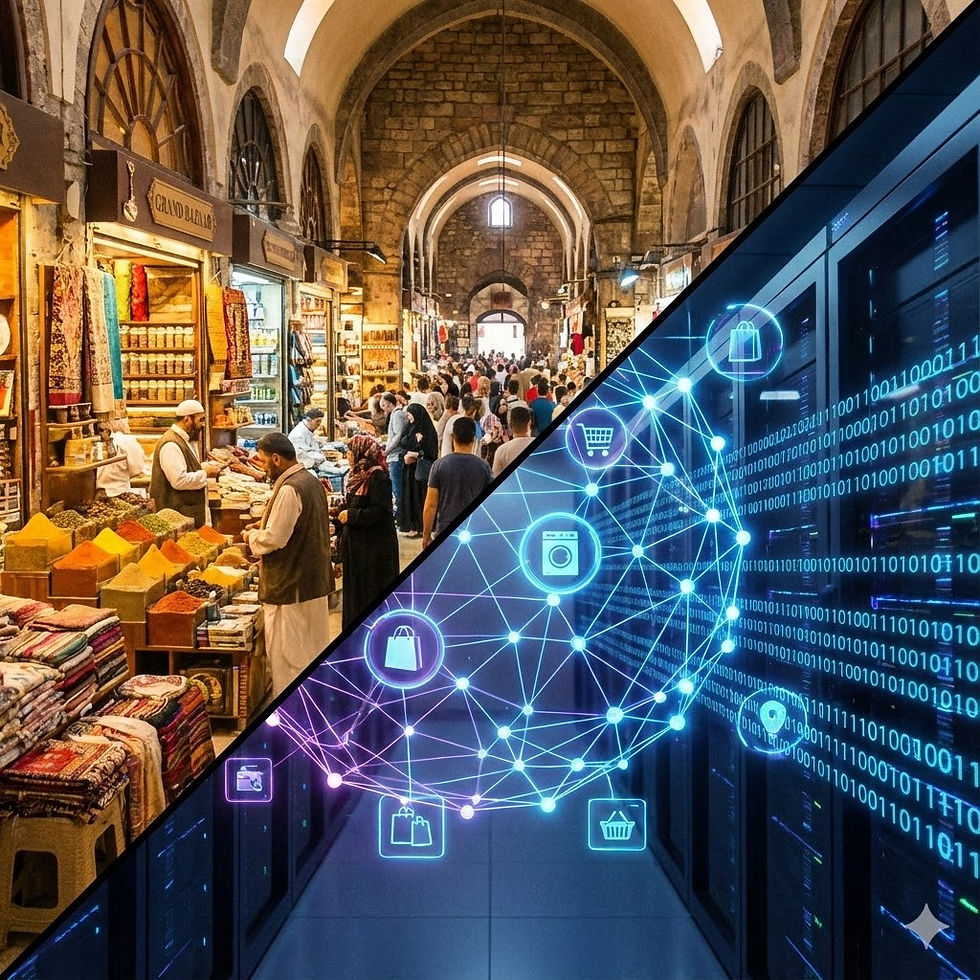
The world of retail is constantly evolving, from bustling brick-and-mortar stores to the vast digital marketplaces of e-commerce. Yet, whether online or offline, businesses face immense challenges: understanding ever-shifting consumer preferences, managing vast inventories, optimizing complex supply chains, personalizing the shopping journey, and predicting the next big trend. For shoppers, the sheer volume of choices, the search for the perfect item, and the desire for seamless experiences can be overwhelming. This is precisely where Artificial Intelligence offers a "Script That Will Save People" by revolutionizing how we discover, purchase, and interact with products, transforming both the art of selling and the joy of shopping.
AI in retail isn't just about showing you ads; it's about predicting what you'll want before you know it, personalizing your entire shopping journey, optimizing operations to deliver faster and cheaper, and ensuring every interaction is intelligent and frictionless. It's about empowering retailers with unprecedented market insights, helping consumers find exactly what they need with ease, and creating truly immersive and satisfying retail experiences.
This post is your comprehensive guide to exactly 100 AI-powered tips, tricks, and actionable recommendations designed to revolutionize your approach to retail and shopping, whether you're a business owner, a marketing professional, a supply chain manager, or simply a savvy consumer. Discover how AI can be your ultimate trend forecaster, personalized stylist, inventory manager, and a catalyst for a smarter, more rewarding retail experience.
🧠 Brief Summary: The Script for Frictionless Commerce
The trillion-dollar machinery of global retail is undergoing an absolute algorithmic metamorphosis. E-commerce and physical shopping—historically defined by agonizingly broad advertising, massive inventory waste, and generic customer experiences—are transitioning into a hyper-personalized, predictive science. Artificial Intelligence in 2026 acts as the ultimate digital merchant and supply chain architect. From generative AI that instantly creates a personalized 3D storefront for every unique customer, to predictive algorithms that mathematically guarantee a warehouse never runs out of stock of a trending item, these 100 advanced retail platforms provide a visionary roadmap. As these intelligent systems transition retail from a guessing game to an exact science, the "Script That Will Save People" ensures their deployment mathematically eliminates the ecological devastation of fast-fashion waste, radically protects consumer data privacy, and democratizes premium shopping experiences for all.
💡 AIWA-AI Perspective: Engineering the Perfect Market
"The exchange of goods and services is a foundational pillar of human society. Yet, modern retail is plagued by massive inefficiencies: customers drown in irrelevant choices, businesses hemorrhage capital on unsold inventory, and the environmental cost of reverse logistics (returns) is catastrophic. This is exactly where the 'Script That Will Save People' mathematically rewrites the architecture of global commerce. Under 'The Humanity Scenario: Protecting Our Essence,' Artificial Intelligence absolutely must not be deployed to build manipulative algorithms that exploit human psychology for endless consumption, or to surveil shoppers invasively. Instead, it must be aggressively utilized as the ultimate, democratizing engine for radical retail efficiency and sustainability. It is a script that uses AI computer vision to perfectly predict a customer's clothing size, slashing the carbon footprint of online returns by 80%. It is an algorithm that mathematically redirects unsold food inventory from supermarkets to local food banks before it spoils. The visionary retail technologists actively building the future of Commerce AI are not just trying to sell more products; they are actively, mathematically architecting a profoundly fairer, deeply responsive, and radically sustainable global marketplace."
Quick Navigation: Explore AI in Retail & E-commerce
I. 🛍️ Personalized Shopping Experience
II. 📈 Sales & Demand Forecasting
III. 🛒 E-commerce & Website Optimization
IV. 📦 Inventory & Supply Chain Management
V. 💬 Customer Service & Engagement
VI. 📢 Marketing & Advertising
VII. 📊 Market Research & Competitor Analysis
VIII. 🔒 Fraud Detection & Security
IX. ♻️ Sustainable Retail
X. ✨ Future of Retail & Innovation
🚀 The Ultimate List: 100 AI Tips & Tricks for Retail Revolution
I. 🛍️ Personalized Shopping Experience
Tip 1: Hyper-Personalized Discovery with Google Cloud Retail Search
❓ The Problem: Customers abandon e-commerce sites when standard search bars fail to understand nuanced, conversational queries (e.g., "warm jacket for a ski trip that looks good at dinner").
💡 The AI-Powered Solution: Deploy Google Cloud Retail Search, which uses Google's core search AI. It understands complex natural language, synonyms, and search intent. It mathematically reorders the search results specifically for the individual user based on their past click history.
🎯 How it Saves People: Eradicates search frustration, drastically boosts conversion rates, and ensures customers find exactly what they want in seconds.
Tip 2: AI Size & Fit Prediction via True Fit
❓ The Problem: Inaccurate sizing is the #1 reason for massive, costly online clothing returns, destroying retail profit margins and causing immense environmental damage from shipping.
💡 The AI-Powered Solution: Utilize AI tools like True Fit. A user inputs that they wear a "Medium in Nike." The AI mathematically cross-references manufacturing specs across thousands of brands and predicts: "You have a 95% probability of fitting perfectly into a size Large in this specific Zara jacket."
🎯 How it Saves People: Massively reduces online returns, increases purchasing confidence, and eliminates the environmental cost of reverse logistics.
Tip 3: Virtual Try-On (AR) with Snapchat/CameraKit
❓ The Problem: A major barrier to online sales for eyewear, makeup, and sneakers is the inability to see how the product looks on the actual customer.
💡 The AI-Powered Solution: Integrate AI-powered Augmented Reality (AR). Customers use their phone camera, and the AI mathematically maps their face or feet in 3D, overlaying a photorealistic rendering of the sunglasses or shoes directly onto their body in real-time.
🎯 How it Saves People: Bridges the gap between physical and digital retail, boosting buyer confidence and drastically reducing return rates.
Tip 4: Visual Search (Shop the Look). Use Google Lens integration to allow customers to upload a screenshot of an outfit from Instagram, letting the AI mathematically find visually identical items in your store's inventory.
Tip 5: In-Store Navigation. Use AI-powered store apps that guide a shopper's smartphone via Bluetooth beacons to the exact shelf location of the tomato sauce they put on their digital list.
Tip 6: Automated Outfit Generation. Use AI styling algorithms (like those used by Stitch Fix) to mathematically suggest a matching belt, shoes, and shirt the moment a customer adds a pair of pants to their cart.
Tip 7: Loyalty Program Personalization. Use AI to mathematically analyze a VIP customer's purchase history, automatically sending them a massive discount on their favorite brand of coffee right before they normally run out.
Tip 8: AI Personal Shopper. Deploy a conversational AI chatbot on your homepage that asks the user 3 simple questions and mathematically curates a custom boutique of 10 products just for them.
Tip 9: Dynamic Homepage. Use AI to completely alter the homepage layout; showing winter coats to a user logging in from Chicago, while simultaneously showing swimsuits to a user in Miami.
Tip 10: Gift Recommendation Engine. Ask an AI: "Suggest 5 gifts under $50 for a 30-year-old male who likes hiking and cooking," allowing the algorithm to mathematically curate the perfect present.
II. 📈 Sales & Demand Forecasting
Tip 11: Unprecedented Demand Forecasting with AWS Supply Chain
❓ The Problem: Inaccurate sales forecasts lead to massive overstocking (unsold inventory) or devastating stockouts (angry customers).
💡 The AI-Powered Solution: Employ enterprise AI platforms that ingest historical sales, global weather forecasts, and social media trending data. The AI mathematically predicts exactly how many umbrellas a specific store in Seattle will sell next Tuesday.
🎯 How it Saves People: Eliminates dead inventory, drastically reduces warehouse holding costs, and guarantees products are available when consumers demand them.
Tip 12: Dynamic Pricing Optimization via PricingHub
❓ The Problem: Manually updating prices across a catalog of 50,000 items to react to competitor sales or shifting demand is mathematically impossible for humans.
💡 The AI-Powered Solution: Utilize AI models that continuously scrape competitor websites and analyze real-time demand elasticity. The AI autonomously adjusts the price of an item up or down by a few cents to capture the absolute maximum profit margin every minute of the day.
🎯 How it Saves People: Maximizes retail revenue, ensures competitive positioning, and eliminates the guesswork of pricing strategy.
Tip 13: Predict Emerging Trends with Trendalytics
❓ The Problem: Identifying rapidly emerging product trends (like a sudden craze for "Y2K fashion") before competitors do is crucial, but manual research is too slow.
💡 The AI-Powered Solution: Employ AI platforms that use computer vision to analyze millions of daily social media images and runway photos. The AI mathematically identifies nascent product trends, predicting their longevity and peak demand window.
🎯 How it Saves People: Enables proactive product development and ensures retailers stock exactly what consumers will want next season, maximizing revenue.
Tip 14: Predict Customer Lifetime Value (CLTV). Use AI algorithms in your CRM to mathematically forecast the total revenue a business can expect from a specific customer, justifying higher acquisition costs for VIPs.
Tip 15: Markdown Optimization. Use AI to mathematically determine the exact date and the exact discount percentage required to clear out winter coats without sacrificing all profit margin.
Tip 16: Cross-Selling Analytics. Use AI to mathematically prove that customers who buy a specific brand of flashlight almost always buy a specific brand of batteries, automatically bundling them together.
Tip 17: Cart Abandonment Prediction. Use AI to identify the exact behavioral patterns (like hovering over the shipping cost) that indicate a user is about to abandon their cart, triggering an instant free-shipping pop-up.
Tip 18: Seasonality Forecasting. Use AI to mathematically analyze 10 years of sales data to predict the exact week "Back to School" shopping will peak this year.
Tip 19: New Product Success Prediction. Feed the specs of a new, unreleased product into an AI to mathematically forecast its first-quarter sales based on the historical performance of similar items.
Tip 20: Predictive Churn. Implement AI to identify customers exhibiting behavioral friction and automatically trigger a highly personalized retention discount before they switch to a competitor.
III. 🛒 E-commerce & Website Optimization
Tip 21: A/B Testing Automation with Dynamic Yield
❓ The Problem: Manually testing which website layout or button color drives more sales is agonizingly slow, and statistical significance is hard to verify.
💡 The AI-Powered Solution: Deploy AI platforms that automatically generate and test 50 different variations of a product page simultaneously. The AI autonomously detects the mathematical winner and routes 100% of traffic to the highest-converting page in real-time.
🎯 How it Saves People: Radically boosts conversion rates, optimizes the user experience constantly, and removes human bias from web design.
Tip 22: Generate Product Descriptions with Jasper
❓ The Problem: Writing unique, SEO-optimized, and persuasive product descriptions for 10,000 new inventory items is a massive creative bottleneck.
💡 The AI-Powered Solution: Feed your raw product specs (e.g., "red, cotton, v-neck") into an AI writing assistant. The AI instantly generates 10,000 unique, compelling, brand-aligned product descriptions that rank perfectly on Google.
🎯 How it Saves People: Accelerates time-to-market for new products, ensures consistent brand voice, and slashes copywriting costs.
Tip 23: UX Friction Identification via FullStory AI
❓ The Problem: Customers are dropping off your website, but Google Analytics doesn't tell you why they are leaving.
💡 The AI-Powered Solution: Use AI behavioral analytics platforms that monitor every single mouse click and scroll. The AI mathematically identifies "Rage Clicks" (when a user clicks a broken button 5 times in anger), instantly alerting the dev team to the exact UX friction point.
🎯 How it Saves People: Improves website usability, reduces user frustration, and rapidly fixes invisible technical errors costing the company money.
Tip 24: Automated SEO Tagging. Use AI computer vision to automatically scan your product photos and tag them with 50 specific SEO attributes (e.g., "A-line," "floral") to optimize site search without manual data entry.
Tip 25: Review Summarization. Use AI NLP tools to automatically extract and summarize the most common pros and cons from 5,000 customer reviews into a simple bulleted list at the top of the product page.
Tip 26: Automated Image Cropping. Use AI to automatically track the model's face and instantly crop 1,000 product photos perfectly for mobile, desktop, and tablet aspect ratios.
Tip 27: Server Load Prediction. Use AI to forecast web traffic for Black Friday, mathematically pre-provisioning the exact amount of cloud servers required so the website doesn't crash under the load.
Tip 28: ADA Compliance Auditing. Use AI to automatically scan your e-commerce site to ensure all images have alt-text and the color contrast mathematically complies with accessibility laws for visually impaired shoppers.
Tip 29: Automated Merchandising. Use AI to dynamically re-order the products on a category page; if a specific shirt starts selling rapidly, the AI mathematically moves it to the top row instantly.
Tip 30: Chatbot Concierge. Deploy an advanced LLM chatbot that acts as a virtual store clerk, guiding a confused user to the exact specific HDMI cable they need for their specific TV model.
IV. 📦 Inventory & Supply Chain Management
Tip 31: End-to-End Visibility with Project44
❓ The Problem: Retailers lose track of their inventory the moment it leaves the factory in China, making it impossible to predict when goods will actually hit store shelves.
💡 The AI-Powered Solution: Project44 uses AI to track millions of shipping containers globally. It aggregates data from ocean freighters, ports, and trucks, mathematically predicting the exact Estimated Time of Arrival (ETA) for a shipment of shoes to a warehouse in Ohio.
🎯 How it Saves People: Mitigates massive supply chain blind spots, ensures product availability, and allows retailers to confidently sell inventory that is still in transit.
Tip 32: Automated Warehouse Robotics via Amazon Robotics
❓ The Problem: Human workers walking 10 miles a day inside massive fulfillment centers to pick items is slow, physically grueling, and prone to error.
💡 The AI-Powered Solution: Implement AI-powered Kiva robots. The AI acts as the "brain" of the warehouse, mathematically orchestrating hundreds of robots to lift entire shelving units and bring them directly to the human picker, optimizing paths to prevent robot traffic jams.
🎯 How it Saves People: Dramatically increases warehouse efficiency, saves workers from severe physical strain, and enables 1-day shipping.
Tip 33: Last-Mile Delivery Optimization with Routific
❓ The Problem: The "last mile" (delivering the package from the local warehouse to the customer's door) is the most expensive and inefficient part of retail logistics.
💡 The AI-Powered Solution: Employ AI routing software. The AI analyzes 500 delivery addresses, real-time traffic, delivery time windows, and truck capacities to mathematically generate the absolute most efficient driving route for every single driver in seconds.
🎯 How it Saves People: Slashes fuel costs, massively reduces urban carbon emissions, and ensures customers get their packages on time.
Tip 34: Supplier Risk Assessment. Use AI to monitor global news to mathematically predict if a sudden geopolitical event or hurricane will sever your supply of raw cotton from India.
Tip 35: Multi-Echelon Inventory Optimization. Use AI to mathematically balance inventory across your entire network, automatically shifting winter coats from a warm store in Texas to a freezing store in Minnesota.
Tip 36: Automated Purchase Orders. Use AI procurement tools to automatically generate and send purchase orders to suppliers the exact mathematical millisecond warehouse stock drops below safety levels.
Tip 37: Returns Logistics (Reverse Logistics). Use AI to mathematically calculate the most profitable path for a returned item: restock it, route it to a discount outlet, or liquidate it.
Tip 38: Packaging Optimization. Use AI generative design to mathematically create custom shipping boxes for fragile items that use 30% less cardboard while maintaining structural integrity.
Tip 39: Cross-Docking Efficiency. Use AI to synchronize inbound and outbound trucks at a distribution center, allowing pallets of goods to be transferred directly between trucks without ever touching the warehouse floor.
Tip 40: Drone Delivery Management. Use AI traffic controllers to mathematically manage the airspace and battery life of a fleet of autonomous delivery drones for suburban fulfillment.
V. 💬 Customer Service & Engagement
Tip 41: Autonomous Resolution via Google Cloud Contact Center AI (CCAI)
❓ The Problem: Customers waiting on hold for 45 minutes to process a simple return destroys brand loyalty permanently.
💡 The AI-Powered Solution: Deploy Google CCAI. Virtual agents understand natural human frustration and accents. They instantly process returns, track lost packages, and seamlessly route emotionally elevated customers to a human agent, providing the agent with a real-time transcript.
🎯 How it Saves People: Eradicates hold times, provides 24/7 instant support, and drastically reduces burnout for human call-center operators.
Tip 42: Agent Assist Technology with Zendesk AI
❓ The Problem: Human customer service agents spend 80% of a phone call frantically searching massive corporate databases for the right policy answer.
💡 The AI-Powered Solution: While the human agent is speaking to the customer, the AI "listens" to the call. The AI instantly, mathematically retrieves the exact return policy or troubleshooting guide and displays it on the agent's screen in real-time.
🎯 How it Saves People: Radically empowers human workers, reduces call handle times, and ensures the customer receives the absolute correct mathematical answer instantly.
Tip 43: Sentiment-Driven Routing
❓ The Problem: Treating a furious customer threatening a lawsuit the exact same way as a confused customer asking for a password reset is a disastrous service strategy.
💡 The AI-Powered Solution: Utilize AI NLP to instantly analyze the text of an incoming email or chat. The AI mathematically scores the sentiment as "Highly Angry" and autonomously bypasses the standard queue, routing the ticket directly to a specialized, senior retention executive.
🎯 How it Saves People: De-escalates PR disasters, saves high-value customer relationships, and applies human empathy exactly where it is needed most.
Tip 44: Automated Translation. Use AI to allow English-speaking support reps to chat seamlessly in real-time with global e-commerce customers typing in Japanese or Spanish.
Tip 45: Proactive Outreach. Use AI to mathematically detect if a customer's package is going to be delayed by a snowstorm, autonomously emailing them an apology and a discount code before they even notice the delay.
Tip 46: Voice Analytics for Quality Assurance. Use AI to mathematically analyze millions of hours of call-center audio to identify which empathetic phrases result in the highest customer satisfaction scores.
Tip 47: Omnichannel Journey Mapping. Use AI to link a customer's Twitter complaint directly to their ongoing email support ticket, giving the agent absolute context.
Tip 48: Predict Churn. Implement AI to identify customers exhibiting behavioral friction (like opening the cancellation page) and automatically trigger a personalized retention discount.
Tip 49: Automated FAQ Updating. Use AI to mathematically identify when 500 people suddenly ask the chatbot the exact same new question, automatically prompting the web team to update the public FAQ page.
Tip 50: Post-Purchase Personalization. Use AI to automatically email a customer a personalized, AI-generated video tutorial on how to assemble the specific piece of furniture they just bought.
VI. 📢 Marketing & Advertising
Tip 51: Autonomous Ad Optimization with Google Ads (Performance Max)
❓ The Problem: Manually testing thousands of ad creative variations and manually adjusting bids across Google, YouTube, and Maps is mathematically impossible for a human.
💡 The AI-Powered Solution: PMax completely removes human targeting. A marketer provides a budget and raw assets (videos, text). Google’s massive AI autonomously mixes the assets, mathematically finding the most profitable users and executing billions of real-time micro-bids to maximize Return on Ad Spend (ROAS).
🎯 How it Saves People: Improves absolute ad performance, eliminates manual A/B testing drudgery, and ensures optimal marketing budget delivery.
Tip 52: Predictive Lookalike Audiences via Meta Ads Manager
❓ The Problem: Finding new customers who behave exactly like your current best customers is difficult using broad demographic targeting.
💡 The AI-Powered Solution: Feed your "High Lifetime Value" customer list into Meta's algorithm. The AI mathematically analyzes thousands of hidden data points to generate a "Lookalike Audience" of millions of new users who share the exact same psychological and purchasing behaviors as your VIPs.
🎯 How it Saves People: Increases ad relevance, reduces wasted ad spend, and effortlessly scales customer acquisition.
Tip 53: Hyper-Personalized Email Campaigns with Klaviyo
❓ The Problem: Generic email blasts lead to low open rates and high unsubscribes because they don't resonate with individual subscriber needs.
💡 The AI-Powered Solution: Utilize AI platforms like Klaviyo that analyze a subscriber's purchase history and browsing behavior. The AI dynamically populates the email with specific product recommendations mathematically tailored to that exact user's tastes.
🎯 How it Saves People: Increases email click-through rates, boosts conversions, and makes marketing feel like a personalized service rather than spam.
Tip 54: Subject Line Optimization. Employ AI tools like Phrasee that mathematically generate hundreds of subject line variations and predict the open rates based on historical linguistic data.
Tip 55: Send Time Optimization (STO). Utilize AI algorithms to analyze individual subscriber habits. The AI autonomously holds an email and sends it to a specific user at the exact minute they mathematically check their phone.
Tip 56: Influencer Matchmaking. Use AI platforms like CreatorIQ to mathematically analyze an influencer's audience demographics to ensure it overlaps perfectly with your brand's target demographic, identifying fake "bot" followers.
Tip 57: Visual Trend Identification. Use Dash Hudson's "Vision AI" to mathematically analyze your brand's photos before you post them, predicting exactly how much engagement an image will get on Instagram.
Tip 58: Generate AI Avatars. Use platforms like HeyGen to create photorealistic, fully rigged 3D digital avatars to model digital clothing 24/7 for social media campaigns.
Tip 59: Dynamic Promotional Pricing. Use AI algorithms to adjust e-commerce discount codes in real-time based on a specific user's probability of abandoning their cart.
Tip 60: Campaign Performance Forecasting. Use AI models to analyze historical data to mathematically predict the ROI of a new Black Friday campaign before you spend a single dollar launching it.
VII. 📊 Market Research & Competitor Analysis
Tip 61: Analyze Competitor Pricing with DataWeave
❓ The Problem: Tracking the daily price changes of a competitor's 100,000-item catalog manually is impossible, leading to uncompetitive pricing.
💡 The AI-Powered Solution: DataWeave uses AI web scrapers to continuously monitor competitor websites globally. It mathematically maps their exact pricing strategy, stock levels, and promotional discounts in real-time, feeding this data into your pricing engine.
🎯 How it Saves People: Provides a massive competitive advantage, ensuring you are never undersold on key items or overpricing your inventory.
Tip 62: Uncover Consumer Sentiment via Brandwatch
❓ The Problem: A brand launches a new sneaker, but they don't know if the public actually likes it until sales data returns months later.
💡 The AI-Powered Solution: Brandwatch AI ingests millions of social media posts, Reddit threads, and YouTube comments globally. It mathematically scores the public sentiment surrounding the sneaker launch, explicitly highlighting the most common complaints (e.g., "The toe box is too narrow").
🎯 How it Saves People: Replaces slow, expensive focus groups with instant, mathematically verifiable global market feedback.
Tip 63: Identify White-Space Opportunities
❓ The Problem: Launching a product into an already saturated market guarantees failure. Retailers need to find unmet consumer needs.
💡 The AI-Powered Solution: Use AI NLP to analyze millions of Amazon product reviews across a specific category. The AI mathematically identifies a recurring complaint across all competitor products (e.g., "Every blender on the market is too loud"), signaling a massive "white-space" opportunity to develop a silent blender.
🎯 How it Saves People: Radically de-risks R&D investments by proving mathematical market demand before a product is even designed.
Tip 64: Predict Regional Sales. Use AI to mathematically forecast that a specific style of winter boot will sell exponentially better in Denver than in New York based on micro-cultural search trends.
Tip 65: Track Emerging Niches. Use Exploding Topics AI to identify rapidly growing consumer trends (like "Mushroom Coffee") months before they hit mainstream search volume.
Tip 66: Benchmark Product Performance. Use AI to automatically compare the star-rating and review velocity of your flagship product directly against your top 3 competitors in a daily dashboard.
Tip 67: Store Location Optimization. Use Placer.ai to use aggregated mobile location data to mathematically prove exactly which street corner has the highest concentration of your target demographic walking past it daily.
Tip 68: Analyze Competitor Ad Spend. Use Semrush AI to mathematically estimate the exact ad budget of rival retailers and see exactly which keywords they are bidding on to steal their traffic.
Tip 69: Predict Seasonal Shopping Behavior. Use AI to mathematically analyze 10 years of sales data to predict the exact week "Back to School" shopping will peak this year.
Tip 70: Analyze Global Socio-Cultural Shifts. Use AI to analyze macroeconomic indicators and art movements to predict how global events (like an economic recession) will shift fashion towards "quiet luxury."
VIII. 🔒 Fraud Detection & Security
Tip 71: Stop Transaction Fraud with Signifyd
❓ The Problem: E-commerce retailers lose billions to stolen credit cards and organized "friendly fraud" (customers claiming they never received the item), destroying profit margins.
💡 The AI-Powered Solution: Signifyd uses massive machine learning networks that analyze thousands of data points during checkout (IP address, typing speed, shipping address history). The AI mathematically determines if a transaction is fraudulent in milliseconds, either approving or declining the charge autonomously.
🎯 How it Saves People: Eradicates catastrophic financial losses for retailers, protects innocent consumers from identity theft, and eliminates false declines that anger legitimate buyers.
Tip 72: Prevent Account Takeovers (ATO) via BioCatch
❓ The Problem: Hackers buy stolen passwords on the Dark Web and log into a user's retail account, stealing their saved credit cards and loyalty points.
💡 The AI-Powered Solution: BioCatch uses AI Behavioral Biometrics. The AI mathematically learns exactly how a specific customer types, holds their phone, and moves their mouse. If a hacker logs in using the correct password but types differently, the AI instantly locks the account.
🎯 How it Saves People: Provides un-hackable, invisible security that protects consumer data and retailer reputation without requiring annoying captchas.
Tip 73: Automated Bot Mitigation with Cloudflare Bot Management
❓ The Problem: Malicious bots scrape pricing data, launch DDoS attacks, or buy up all the inventory of limited-edition sneaker drops in seconds, ruining the site for real humans.
💡 The AI-Powered Solution: Cloudflare’s AI continuously analyzes global web traffic. It mathematically identifies the non-human behavioral signatures of malicious bots, autonomously blocking them at the network edge before they ever reach the retailer's website.
🎯 How it Saves People: Keeps e-commerce websites online during massive traffic spikes and ensures real humans can actually buy highly anticipated products.
Tip 74: Inventory Shrinkage Analysis. Use AI computer vision in retail store stockrooms to mathematically track every item, identifying organized employee theft rings instantly.
Tip 75: Physical Store Surveillance. Use AI security cameras to mathematically identify the specific behavioral patterns of shoplifting (like hovering near high-value electronics) and alert loss-prevention staff.
Tip 76: Vendor Fraud Detection. Use AI to analyze supply chain billing patterns to mathematically flag anomalies, like a vendor suddenly charging 20% more for shipping without justification.
Tip 77: Automated Compliance Checks. Use AI to automatically scan your e-commerce checkout flow to ensure absolute, mathematical compliance with PCI DSS (credit card) and GDPR (privacy) security regulations.
Tip 78: Predict Product Counterfeiting. Use AI to monitor Dark Web forums and global shipping manifests to mathematically predict when a massive shipment of counterfeit luxury handbags is about to hit the market.
Tip 79: Phishing Defense for Employees. Utilize AI email security to mathematically identify and quarantine highly sophisticated spear-phishing attacks targeting the retail company's executive team.
Tip 80: Incident Response Automation. Use AI to help orchestrate an automated, split-second response to isolate a compromised e-commerce database during an active cyberattack.
IX. ♻️ Sustainable Retail
Tip 81: Track Product Environmental Footprints with HowGood
❓ The Problem: Consumers want to buy sustainable products, but retailers have no idea what the actual carbon or water footprint is for the 50,000 items on their shelves.
💡 The AI-Powered Solution: HowGood is a massive AI database that mathematically scores the environmental and social impact of over 2 million food and retail products. It analyzes complex global supply chains to output a unified, mathematical "Sustainability Score."
🎯 How it Saves People: Eradicates corporate greenwashing, allows retailers to easily source genuinely sustainable products, and empowers consumers to vote with their wallets.
Tip 82: Supply Chain Circularity via EON (CircularID™)
❓ The Problem: Reselling or recycling retail goods (like clothing or electronics) is difficult because the material composition tags are often removed or unreadable.
💡 The AI-Powered Solution: Brands use EON to create a digital twin/ID (QR code or NFC) for every product. When a consumer wants to resell it 5 years later, the AI instantly provides the exact material composition, authenticating it for the resale market or industrial recyclers.
🎯 How it Saves People: Solves the authentication bottleneck in the resale market, keeping millions of products out of toxic landfills and fueling the circular economy.
Tip 83: Reverse Logistics Optimization via Optoro
❓ The Problem: E-commerce returns are an ecological nightmare, often ending up in landfills because processing them is more expensive than the item itself.
💡 The AI-Powered Solution: Optoro's AI mathematically calculates the absolute most profitable and sustainable path for a returned blender: restock it, route it to a discount outlet, sell it for parts, or recycle it, minimizing massive financial loss and landfill waste.
🎯 How it Saves People: Drastically reduces the environmental devastation caused by the retail industry's massive, unsustainable return rates.
Tip 84: Sustainable Material Sourcing. Retail designers use AI databases to instantly find sustainable, low-carbon bio-fabric alternatives that mimic the properties of traditional leather or plastic.
Tip 85: Predict Textile Waste. Use AI to mathematically identify the exact factories in a supply chain where the most fabric off-cut waste is occurring for targeted intervention.
Tip 86: Second-Hand Recommendations. Use AI-driven search on platforms like ThredUp to perfectly match your size and style to millions of second-hand garments, avoiding the creation of new textiles.
Tip 87: Product Lifespan Prediction. Brands use AI to analyze material stress tests to predict the exact physical longevity of a garment, designing it to last 10 years instead of 10 months.
Tip 88: Water Usage Analysis. Use AI to analyze manufacturing data to highlight highly water-intensive dyeing processes in the supply chain and suggest mathematical alternatives to save millions of gallons of fresh water.
Tip 89: Eco-Friendly Packaging. Use AI generative design to mathematically create custom shipping boxes for fragile items that use 30% less cardboard while maintaining structural integrity.
Tip 90: Automated Sorting Facilities. Support municipal waste centers that deploy AMP Robotics; robotic AI arms that identify and pick recyclable plastics out of retail trash streams at superhuman speeds.
X. ✨ Future of Retail & Innovation
Tip 91: Frictionless Physical Checkout via Amazon Just Walk Out
❓ The Problem: Waiting in a 20-minute line to buy groceries is the worst part of physical retail, wasting millions of hours of human time globally.
💡 The AI-Powered Solution: Deploy ceiling-mounted computer vision AI and shelf weight sensors. The AI mathematically tracks exactly what a shopper picks up. The shopper simply walks out the door, and the AI automatically charges their digital wallet.
🎯 How it Saves People: Completely eradicates checkout lines, revolutionizing the convenience of physical shopping and allowing retail staff to focus on customer service rather than scanning barcodes.
Tip 92: Predictive Replenishment via Smart Homes
❓ The Problem: Consumers waste time repeatedly driving to the store or manually ordering basic staples like laundry detergent or dog food.
💡 The AI-Powered Solution: Integrate retail AI directly with Smart Home appliances. A smart washing machine uses AI to mathematically track detergent usage. When it calculates there are only 3 loads left, it autonomously reorders the exact brand from Amazon to arrive the next day.
🎯 How it Saves People: Eliminates the cognitive load of household inventory management, ensuring families never run out of critical essentials.
Tip 93: Hyper-Personalized Manufacturing (Mass Customization)
❓ The Problem: Mass production forces consumers into generic sizes and styles, leading to poor fits and massive inventory waste for niche preferences.
💡 The AI-Powered Solution: Use AI to power "Mass Customization." A consumer uses their phone to 3D-scan their foot. The AI sends the exact mathematical dimensions to a robotic knitting machine, which manufactures a 1-of-1, perfectly fitted pair of sneakers on-demand.
🎯 How it Saves People: Ends the era of "Standard Sizing," providing flawless comfort for consumers while allowing retailers to hold zero physical inventory.
Tip 94: Metaverse Retail. Create virtual 3D stores using platforms like Spatial.io where global customers can shop for physical goods using their digital avatars in a highly immersive, branded environment.
Tip 95: Robotic Customer Service. Deploy highly advanced, multilingual AI humanoid robots in massive hardware stores to physically guide confused customers to the exact aisle they need.
Tip 96: Smart Shelves. Use AI-integrated weight sensors on physical store shelves to mathematically track inventory in real-time, instantly alerting staff when a product is running low to prevent empty displays.
Tip 97: Neuromarketing Analytics. Use advanced (opt-in) AI biometric tracking in physical stores to analyze subtle physiological customer reactions to optimize lighting, music, and store layout for maximum comfort.
Tip 98: Dynamic Physical Pricing. Use Electronic Shelf Labels (ESLs) connected to a centralized AI pricing engine to autonomously adjust the physical price of an item in a store based on real-time internet demand.
Tip 99: Decentralized Marketplaces. Explore Web3 and blockchain platforms that use AI to mathematically ensure fairer compensation and transparent sales for independent creators selling digital and physical goods.
Tip 100: Stay Ahead of the Curve. Continuously use AI directories (like AIWA-AI) and tech news to stay updated on the absolute newest, most disruptive generative commerce tools launching weekly.

✨ The Script That Will Save Humanity
The "Script That Will Save People" in the realm of retail and commerce is a profound narrative of ultimate convenience, radical efficiency, and absolute ecological responsibility. It is not about turning shopping into a sterile, automated nightmare or manipulating consumers into debt; it is about infusing the global supply chain with a level of computational intelligence that eradicates devastating material waste, mathematically guarantees hyper-personalized relevance, and brutally champions sustainable manufacturing. It is the AI that perfectly predicts a customer's shoe size to end the carbon-heavy nightmare of returns, the algorithm that autonomously reroutes a cargo ship around a hurricane to save the crew, the math that instantly identifies a counterfeit medicine on an e-commerce site, and the platform that empowers independent artisans to bypass massive corporate monopolies.
These 100 AI-powered tips and tricks are architecting a retail landscape that is fiercely efficient, profoundly accessible, and undeniably responsible. They empower businesses to abandon guesswork and focus entirely on building brilliant, necessary products, while simultaneously giving consumers their time back. By aggressively, ethically embracing AI, we are not just selling goods faster; we are actively, mathematically co-creating a future where global commerce is radically sustainable, deeply equitable, and perfectly aligned with the true needs of humanity.
💬 Your Turn: How Will AI Revolutionize Your Shopping?
Which of these 100 AI tips and tricks do you believe holds the absolute most mathematical promise for ending the environmental devastation of fast-fashion and e-commerce returns?
What is a major, agonizing bottleneck in your daily shopping experience (like checkout lines or confusing websites) that you believe AI is uniquely positioned to solve tomorrow?
For retailers, marketers, and avid shoppers: What is the most terrifying or inspiring application of AI you foresee in the world of global commerce over the next decade?
We aggressively invite you to share your vital insights and visionary experiences in the comments below! 👇
📖 Glossary of Terms
AI (Artificial Intelligence): The advanced theory and development of computer systems mathematically engineered to perform complex cognitive tasks—like instantly analyzing a million customer reviews to find the exact flaw in a new product.
Machine Learning (ML): A subset of AI allowing systems to learn from massive datasets, identifying hidden patterns like predicting exactly how many winter coats a retailer needs to manufacture to prevent massive unsold waste.
AR (Augmented Reality): An interactive experience where AI overlays digital information (like a photorealistic 3D rendering of a new couch) directly into the physical real world through your phone's camera.
Computer Vision: A field of AI that enables computers to "see." Used in physical retail to power checkout-free stores, where the AI mathematically tracks exactly what you put in your bag.
NLP (Natural Language Processing): AI's miraculous ability to read and understand human text. Used by e-commerce search engines to understand complex, conversational queries rather than just exact keyword matches.
Supply Chain: The massive, fragile network of ships, trucks, and factories involved in creating a product. AI is now the only mathematical way to predict and prevent catastrophic global bottlenecks.
Reverse Logistics (Returns): The incredibly wasteful, carbon-heavy process of handling returned clothing and electronics. AI mathematically calculates the absolute most profitable and ecologically sound path for a returned item.
📝 Terms & Conditions
ℹ️ Information Only: The information provided in this blog post, including the list of 100 AI tips and tricks, is for general informational and educational purposes only. It does not constitute professional business, financial, marketing, or legal advice.
🔍 No Warranties: While AIWA-AI strives to provide insightful and well-researched ideas, we make no representations or warranties of any kind, express or implied, about the completeness, viability, or accuracy of these tools. Any reliance you place on this information is therefore strictly at your own risk.
🚫 Not a Solicitation: The presentation of these tips is not an offer or solicitation. Implementing AI solutions in retail involves complex technical challenges, significant capital investment, and profound ethical considerations regarding consumer data privacy.
🧑⚖️ Exercise Caution: We strongly encourage you to conduct your own thorough research and exercise extreme ethical caution when dealing with sensitive consumer data (PII), automated pricing algorithms, and biometric tracking. Please consult with qualified legal professionals, data privacy officers, and cybersecurity experts for specific technical, legal, or regulatory advice regarding AI deployment in retail and e-commerce.

Posts on the topic 🛍️ AI in Retail and E-commerce:
AI Salesperson: The Ideal Servant or the "Bug" Hacker of Your Wallet?
Retail Royal Rumble: Social Commerce vs. Traditional E-commerce Websites
Retail Revolution: 100 AI Tips & Tricks for E-commerce & Shopping
Retail & E-commerce: 100 AI-Powered Business and Startup Ideas
Retail & E-Commerce: AI Innovators "TOP-100"
Retail and E-commerce: Records and Anti-records
Retail & E-Commerce: The Best Resources from AI
Statistics in Retail and E-commerce from AI
The Best AI Tools for Retail & E-commerce
AI's Unbreachable Shield Against Retail Fraud and Cyber Threats
AI Revolution in Hyper-Visual, Sensory, and Cognitive Retail Discovery
AI Unveiling Hyper-Dimensional Retail Insights
Beyond the Algorithm: AI's Sympathetic Intelligence in Retail Customer Service and Support
The Quantum Algorithmic Ad Agency: AI Orchestrating Hyper-Personalized Retail Marketing
AI Orchestrating Hyper-Efficiency in Retail's Operational Core
The Algorithmic Curator: AI's Hyper-Personalization of Your Retail Experience
Explore our Top-rated AI tips and quick tricks in other sectors
HR Reimagined: 100 AI Tips & Tricks for Human Resources
Travel Smarter: 100 AI Tips & Tricks for Tourism & Hospitality
Social Insights: 100 AI Tips & Tricks for Understanding People
Language Unlocked: 100 AI Tips & Tricks for Linguistics & Translation
Gaming Smarter: 100 AI Tips & Tricks for Entertainment & Play
Creative AI: 100 Tips & Tricks for Arts & Innovation
Build Smarter: 100 AI Tips & Tricks for the Construction Industry
Style & Tech: 100 AI Tips & Tricks for the Fashion Industry
Marketing Magic: 100 AI Tips & Tricks for Advertising & Campaigns
Urban Living: 100 AI Tips & Tricks for Smart Cities & Development
Weather Wisdom: 100 AI Tips & Tricks for Meteorology & Forecasting
Green Living: 100 AI Tips & Tricks for Ecology & Sustainability
Connect Smarter: 100 AI Tips & Tricks for Telecommunications
Cosmic Insights: 100 AI Tips & Tricks for the Space Industry
Research Breakthroughs: 100 AI Tips & Tricks for Scientific Discovery
Civic Hacks: 100 AI Tips & Tricks for Public Administration
Legal Edge: 100 AI Tips & Tricks for Jurisprudence
Powering Up: 100 AI Tips & Tricks for the Energy Sector
Digital Guardians: 100 AI Tips & Tricks for Security & Defense
Media Mastery: 100 AI Tips & Tricks for Entertainment & Content Creation
Smart Farming: 100 AI Tips & Tricks for Agriculture
Retail Revolution: 100 AI Tips & Tricks for E-commerce & Shopping
Industrial Intelligence: 100 AI Tips & Tricks for Manufacturing & Industry
Route Optimization: 100 AI Tips & Tricks for Transportation & Logistics
Finance Fortunes: 100 AI Tips & Tricks for Business & Finance
Health & Wellness: 100 AI Tips & Tricks from AI for Medicine & Healthcare
Learn with AI: 100 Tips & Tricks for Enhanced Education
Everyday AI: 100 Tips & Tricks for Smarter Living
🎁 This Is a Gift For You: Why? Just Like That!
🛡️A Safe Harbor in the Digital Sea: A Loving Guide to Protecting Your Child's Heart Online
🧭 Navigating the Digital Fog: A Guide to Reclaiming Your Mental Sovereignty


Comments