
Retail Royal Rumble: Social Commerce vs. Traditional E-commerce Websites
Updated: 2 days ago

👑🛒 The Battle for the Future of Online Shopping
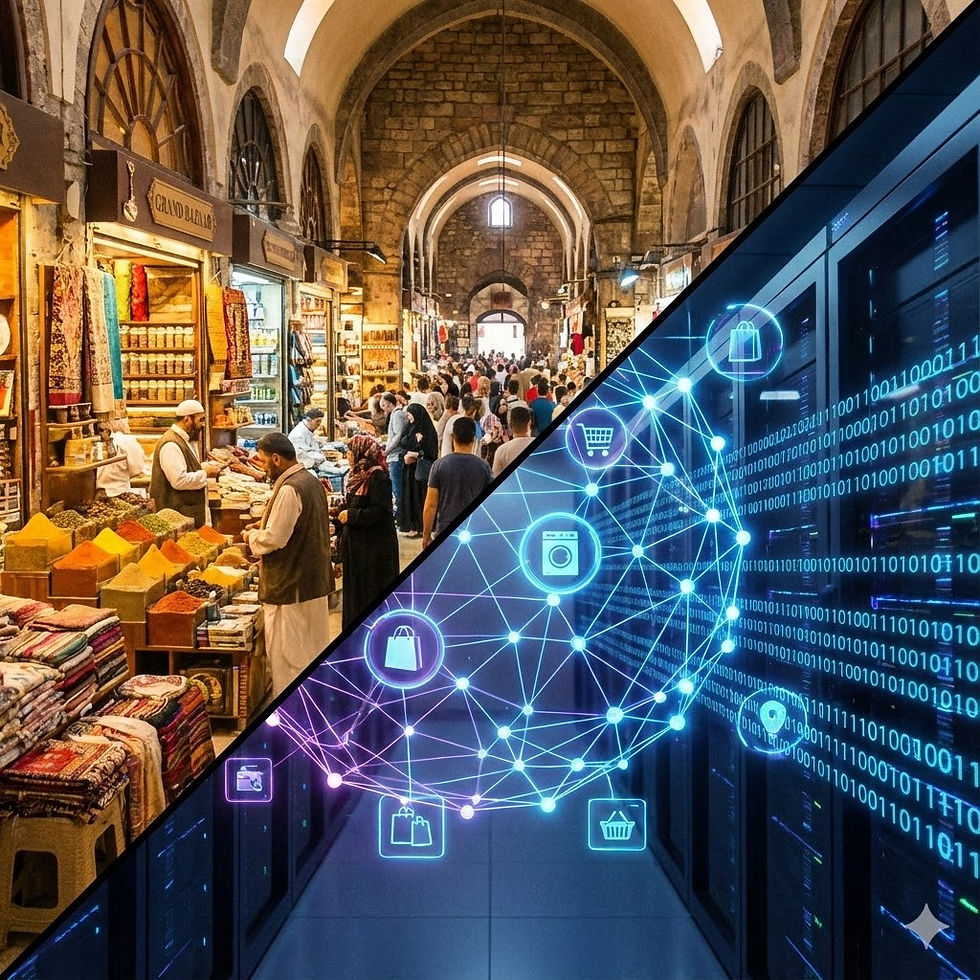
For two decades, online shopping was strictly defined by a solitary, intentional destination: the Traditional E-commerce Website. Legacy platforms like Amazon and countless independent storefronts powered by Shopify created a sterile, digital translation of a physical shopping mall—a specific URL you visit with the explicit, pre-meditated intent to browse, compare, and buy.
But a massive, highly disruptive psychological force has emerged, seamlessly weaving the transactional storefront directly into the intimate fabric of our social lives. This is Social Commerce, the explosive, multi-billion-dollar trend of discovering and purchasing products completely frictionlessly within algorithmic platforms like TikTok Shop, Instagram, and WeChat.
This is a fundamental, existential clash over the future architecture of global retail. It is a psychological battle that pits the deliberate, search-driven, rational journey of a traditional website against the spontaneous, algorithmically engineered, discovery-driven impulse of an endless social feed.
As our digital identities and our financial wallets permanently merge, where exactly will humanity click "buy"?
Welcome to the aiwa-ai.com portal! We are stepping out of the supply chain and into the social feed 🧭 to deeply analyze the philosophical and economic war defining modern retail. Let's add this debate to our cart and check it out. 🚀
🧠 Brief Summary: The Script for Algorithmic Desire
The foundational architecture of consumerism is shifting from a model of active search to a model of passive surrender. Retail—historically defined by a customer realizing a need and actively seeking a product—is transitioning into a hyper-predictive science where the algorithm knows what you want before you do. The social feed in 2026 acts as the ultimate, inescapable storefront. From the undeniable reality that one-click social purchasing eliminates cart abandonment, to the grim truth that brands are losing their sovereignty to platform monopolies, this analysis provides a visionary roadmap. As these dynamics transition shopping from an errand into pure entertainment, the "Script That Will Save People" ensures this knowledge democratizes small business reach, systematically exposes manufactured urgency and influencer manipulation, and fiercely protects the psychological autonomy of the digital consumer.
💡 AIWA-AI Perspective: Engineering the Conscious Cart
"Commerce is the absolute foundational algorithm of global economics and human material expression; when the act of purchasing is weaponized by addictive social media algorithms designed to bypass rational thought, the systemic harm manifests as crushing consumer debt, hyper-fast fashion ecological waste, and the total erosion of mindful consumption. Historically, 'going shopping' required physical effort and conscious financial deliberation. This is exactly where the 'Script That Will Save People' rewrites the architecture of the digital wallet. Under 'The Humanity Scenario: Protecting Our Essence,' technology absolutely must not be deployed to build a dystopian, infinite scrolling loop where users are psychologically manipulated into buying things they do not need to impress people they do not know. Instead, the raw power of digital commerce must be aggressively utilized as the ultimate, democratizing engine for radical supply-chain transparency, authentic peer-to-peer economic support, and empowering local artisans on a global stage. The visionary product designers, ethical marketers, and conscious consumers championing this movement are not just buying commodities; they are actively architecting a profoundly fairer, deeply intentional, and radically sustainable global civilization where every digital transaction is a conscious vote for the world we want to build."
Quick Navigation: A Shopper's Inquisition
I. 🎯 Discovery & Engagement: The Planned Trip vs. The Serendipitous Scroll
II. 🤝 Trust & Authenticity: Polished Product Pages vs. Peer Recommendations
III. 💳 The Customer Journey: The Multi-Step Funnel vs. The One-Click Buy
IV. 🏛️ Brand Building & Data: The Owned Castle vs. The Rented Stall
V. 🌍 The Royal Decree & The "Conscious Commerce" Protocol
Here is your comprehensive, philosophical analysis, categorized by the core questions that strictly define the modern online shopping experience.
I. 🎯 Discovery & Engagement: The Planned Trip vs. The Serendipitous Scroll
How do human beings actually realize they want a new product? Is it through a logical, targeted search to solve a specific problem, or a sudden, engineered moment of unexpected algorithmic inspiration?
🥊 The Contenders: A highly intentional user typing "blue running shoes size 10" into a website search bar vs. a passive user watching their favorite lifestyle influencer casually unbox a stunning new pair of shoes on their nightly video feed.
🏆 The Verdict: Social Commerce, unequivocally for discovery and engagement.
📜 The Philosophical Decree:
Traditional e-commerce is a masterpiece of logistics when a customer already logically knows exactly what they want. It is a high-intent, search-driven, utilitarian process.
Social commerce, however, operates on a fundamentally different psychological level: it excels at creating deep, visceral demand out of thin air. It is built entirely on serendipity and parasocial entertainment. By seamlessly embedding purchasable products within an endless stream of highly engaging content (viral videos, makeup tutorials, chaotic live streams), it transforms the chore of product discovery into a passive, highly enjoyable dopamine loop. This terrifyingly effective ability to generate sudden impulse buys and engineer global viral "product moments" (the "TikTok made me buy it" phenomenon) is a psychological feat that traditional, sterile websites mathematically struggle to replicate.
II. 🤝 Trust & Authenticity: Polished Product Pages vs. Peer Recommendations
What specifically triggers the psychological safety required for a consumer to hand over their credit card? A perfectly lit, flawless studio photograph, or a raw, shaky video review from a stranger?
🥊 The Contenders: Highly expensive, professionally curated product images and legally vetted brand descriptions vs. chaotic User-Generated Content (UGC), charismatic influencer reviews, and unscripted live-streamed demos.
🏆 The Verdict: Social Commerce, for the illusion of peer intimacy.
📜 The Philosophical Decree:
While traditional e-commerce sites rely heavily on static, text-based 5-star customer reviews (which are frequently manipulated by bots), social commerce elevates "social proof" to an entirely new, visceral dimension.
Watching a physical product being actively used, worn, or critically reviewed on video by a trusted creator—or even a close friend—provides a powerful psychological layer of authenticity that a sterile, white-background product page cannot possibly evoke. It is the highly scalable, digital equivalent of a trusted friend grabbing your arm and saying, "You have to try this." Modern sociological studies consistently show that Gen Z and Millennial consumers express vastly higher trust in decentralized social media marketplaces than in legacy corporate e-commerce platforms, driven entirely by this powerful, parasocial validation.
III. 💳 The Customer Journey: The Multi-Step Funnel vs. The One-Click Buy
How many physical screen taps does it take to transition a human brain from "I want that" to "It is currently being shipped to my house"? This is a brutal war against user friction.
🥊 The Contenders: The agonizing, traditional multi-step path (leave the app -> open browser -> find product -> add to cart -> create account -> enter shipping -> type credit card -> buy) vs. the native, in-app biometric "Buy Now" button.
🏆 The Verdict: Social Commerce, in a devastating structural victory.
📜 The Philosophical Decree:
The single greatest, most ruthlessly optimized advantage of social commerce is the absolute annihilation of friction. By allowing users to execute a financial transaction without ever physically leaving the social media app they were scrolling, it dramatically, surgically shortens the customer journey.
In digital retail economics, every single additional page load, form field, or app-switch in a traditional e-commerce funnel is a lethal opportunity for the customer to break out of their dopamine trance, remember their budget, and abandon their cart. The seamless, biometric one-click checkout experience embedded natively within a TikTok or Instagram feed is an apex-level conversion tool that traditional e-commerce giants are currently terrified of and desperately racing to replicate.
IV. 🏛️ Brand Building & Data: The Owned Castle vs. The Rented Stall
Where can a sovereign brand build a permanent, lasting identity and a direct, unmediated relationship with its customers? This is a high-stakes battle for corporate control and data sovereignty.
🥊 The Contenders: A fully customizable, sovereign, brand-owned website vs. a highly standardized, algorithmically restricted storefront embedded on a social media platform.
🏆 The Verdict: Traditional E-commerce Websites, unequivocally.
📜 The Philosophical Decree:
A brand's own independent website is its sovereign castle. They control absolutely every pixel of the psychological experience, from the bespoke aesthetic design to the specific checkout flow and post-purchase email communication. Crucially, they own 100% of the first-party customer data (emails, browsing habits), allowing for deep, highly targeted analytics and long-term, profitable relationship building.
Selling natively on a social platform is the equivalent of renting a cheap, standardized stall in a massive, chaotic, incredibly noisy bazaar owned by a fickle landlord. You absolutely get access to the billions in foot traffic, but you have zero structural control over your brand presentation, you must ruthlessly play by the tech platform's ever-changing, opaque algorithms, and you are actively denied access to the most valuable customer data. For building a deep, generational brand legacy and truly owning the customer relationship, a dedicated, independent website remains absolutely irreplaceable.
🌍 V. The Royal Decree & The "Conscious Commerce" Protocol
This is not a zero-sum, gladiator battle where one platform will violently vanquish the other. The ultimate, highly profitable winner is the brand that deeply understands these are not two separate, hostile battlefields, but one deeply interconnected psychological ecosystem.
The crown is officially awarded to a new, highly integrated, structural strategy: The Omnichannel Approach.
The most historically successful brands of the next decade will absolutely not choose between social and traditional e-commerce. They will ruthlessly weaponize Social Commerce as their primary, high-octane engine for viral discovery, influencer engagement, and building explosive top-of-funnel excitement.
They will then strategically utilize their Traditional E-commerce Website as their fortified core hub for building deep brand loyalty, processing massive, complex orders, and permanently owning the long-term, data-rich customer relationship. The social feed creates the sudden spark; the independent website builds the lasting fire.
This new, highly optimized commercial reality requires a vastly more conscious, defensive approach from us as individual consumers.

🌱 The "Conscious Commerce" Protocol: A Script for Mindful Shopping
In line with our mission at aiwa-ai.com, we propose this ethical, psychological framework for navigating the dangerous, algorithmically optimized world of digital commerce with absolute human intention.
🛡️ The Mandate of Intent: Before you let your thumb hit the biometric "buy" button on a social feed, physically pause for ten seconds. Actively ask your brain: "Do I truly, materially need this item to survive or flourish, or is the Silicon Valley algorithm brilliantly manufacturing a synthetic desire for me?" Learn to ruthlessly differentiate between genuine human need and algorithmic urgency.
💖 The Command of Authenticity: Demand genuine, unvarnished reviews from real people over slick, undisclosed sponsored advertising. When you find a product or an artisan you genuinely love, actively contribute to the ecosystem by leaving an honest, helpful review. Your authentic, unpaid voice is a shield that empowers other conscious shoppers against predatory marketing.
🧠 The "Source First" Principle: When you discover a brilliant product natively on social media, take an extra 30 seconds of friction to click entirely out of the app and visit the brand's own independent website. Read their "About Us" page, verify their labor values, and examine their other products. This small act helps you build a psychological relationship with the human brand, rather than a mindless impulse transaction with a social media monopoly.
⚖️ The Data Dignity Edict: Be intensely, permanently mindful of the raw data you are freely sharing across all platforms. Deeply understand that your pauses, clicks, likes, and shares are the literal currency that powers this multi-trillion-dollar economy. Aggressively use privacy controls and be highly conscious of what personal psychological information you are trading away for a 5% discount.
🤝 The Local & Small Imperative: Weaponize the massive discovery power of social media algorithms to actively find, fund, and support small, local, and independent artisans. Often, a $50 purchase that may seem trivial to you can literally make the difference between bankruptcy and survival for an independent business owner fighting against Amazon.
By aggressively adopting this protocol, we transition ourselves from being passive, easily manipulated consumers trapped in an algorithmic feed into highly active, conscious participants architecting a vastly more equitable, intentional digital economy.
💬 Your Turn: Join the Discussion!
The exact mechanics of how we shop online are a direct psychological reflection of our society. We want to hear your unvarnished truth!
Have you ever succumbed to the algorithm and bought a product directly through a native social media app like TikTok Shop or Instagram? What was the psychological experience like?
Who do you empirically trust more with your money: a highly charismatic, sponsored video review from an influencer, or a wall of anonymous, text-based customer reviews on a traditional website?
What is the absolute best (or worst) product you have ever serendipitously discovered while mindlessly scrolling your late-night social feed?
Do you genuinely worry about the terrifying amount of psychological and behavioral data that social platforms harvest about your shopping and viewing habits?
How can independent, local small businesses possibly survive and best compete against mega-corporations in this frictionless new world of social commerce?
Share your digital shopping experiences and join this vital economic conversation in the comments below! 👇
📖 Glossary of Key Terms:
Social Commerce: The highly optimized, frictionless process of selling physical and digital products directly natively within social media platforms (like TikTok or WeChat), allowing users to complete a credit card purchase without ever leaving the app's ecosystem.
Traditional E-commerce: The legacy model of selling products through a sovereign, dedicated website (like a Shopify store) or a massive third-party marketplace (like Amazon), where the user's primary, initial intent for opening the browser is shopping.
Customer Journey: The complete, mapped psychological and physical sum of experiences that a consumer goes through when discovering, evaluating, and interacting with a brand before, during, and after a purchase.
Conversion Rate: The absolutely vital mathematical percentage of users who visit a page and actually take a highly desired financial action (most commonly, successfully completing a checkout).
Friction: Any tiny psychological or physical point in the customer journey (a slow-loading page, a required password, an extra click) that causes frustration or delay, mathematically increasing the likelihood that a user will abandon their shopping cart.
User-Generated Content (UGC): Any form of media—images, raw videos, unboxing streams, or text—that has been authentically created and posted by regular users or influencers online, serving as highly potent social proof for brands.
📝 Terms & Conditions
ℹ️ For Informational Purposes Only: This post is for general informational and philosophical analysis, aligned with the educational mission of the AIWA-AI portal. It absolutely does not constitute professional financial, marketing, or business advice.
🔍 Due Diligence Required: The global world of e-commerce, algorithmic social media marketing, and data privacy is violently complex and constantly evolving. Consumer macroeconomic trends and proprietary platform features are subject to instant, unannounced change.
🚫 No Endorsement: This analysis does not constitute an official corporate endorsement of any specific e-commerce platform (like Shopify), social media app (like TikTok or Instagram), or retail brand by aiwa-ai.com.
🧑⚖️ User Responsibility: The "Conscious Commerce" Protocol is a guiding ethical framework. Consumers and business owners are solely, legally responsible for their own purchasing decisions, data privacy configurations, and financial market choices.

Posts on the topic 🛍️ AI in Retail and E-commerce:
AI Salesperson: The Ideal Servant or the "Bug" Hacker of Your Wallet?
Retail Royal Rumble: Social Commerce vs. Traditional E-commerce Websites
Retail Revolution: 100 AI Tips & Tricks for E-commerce & Shopping
Retail & E-commerce: 100 AI-Powered Business and Startup Ideas
Retail & E-Commerce: AI Innovators "TOP-100"
Retail and E-commerce: Records and Anti-records
Retail & E-Commerce: The Best Resources from AI
Statistics in Retail and E-commerce from AI
The Best AI Tools for Retail & E-commerce
AI's Unbreachable Shield Against Retail Fraud and Cyber Threats
AI Revolution in Hyper-Visual, Sensory, and Cognitive Retail Discovery
AI Unveiling Hyper-Dimensional Retail Insights
Beyond the Algorithm: AI's Sympathetic Intelligence in Retail Customer Service and Support
The Quantum Algorithmic Ad Agency: AI Orchestrating Hyper-Personalized Retail Marketing
AI Orchestrating Hyper-Efficiency in Retail's Operational Core
The Algorithmic Curator: AI's Hyper-Personalization of Your Retail Experience
Explore key AI Trend Battles and clashes shaping our future
Hiring Hotspots Heat-Up: Remote-First Company Culture vs. A Return to the Office
Accommodation Antagonism: Boutique Hotels vs. Airbnb Experiences
Community Dynamics Duel: Online Social Movements vs. Grassroots Activism
Translation Tech Tangle: AI-Powered Machine Translation vs. Human Expertise
Console Wars: PlayStation 5 vs. Xbox Series X vs. Nintendo Switch
Artistic Avenues Square Up: Digital Art (NFTs) vs. Traditional Canvas
The Building Battleground: Prefabricated & Modular Construction vs. Traditional On-site Building
Retail Revolution Rumble: Fast Fashion's Dominance vs. The Rise of Thrifting
Short-Form Video vs. Long-Form Content: The Battle for Audience Attention
The "15-Minute City" Concept vs. Suburban Sprawl: Redefining Modern Urban Living
The Forecast Face-Off:AI-Powered Predictive Models vs. Traditional Synoptic Forecasting
Sustainability Strategies Struggle: Carbon Offsetting vs. Direct Emission Reduction
Connecting the World: 5G Networks vs. Satellite Internet
Space Race Revival: National Space Agencies vs. Private Space Exploration
Scientific Research: The Research Revolution Rumble
Civic Tech Conflict: E-Governance Portals vs. In-Person Services
Legal Tech Tussle: AI-Powered Legal Research vs. Traditional Paralegal Work
Power Grid Polemic: Centralized Power Grids vs. Decentralized Microgrids
Cybersecurity Clash: Proactive Threat Hunting vs. Reactive Incident Response
Streaming Giants Clash: Netflix's Binge Model vs. Disney+'s Weekly Drops
Farming Futures Feud: Precision Agriculture vs. Traditional Farming Methods
Retail Royal Rumble: Social Commerce vs. Traditional E-commerce Websites
Production Power Play: 3D Printing vs. Traditional Manufacturing
Automotive Arena: Electric Vehicles (EVs) vs. Hydrogen Fuel Cell Cars (FCVs)
Investment Ideologies Implode: Robo-Advisors vs. Traditional Financial Planners
Patient Care Paradigm Clash: Telemedicine Consultations vs. In-Person Doctor Visits
Learning Platforms Face-Off: Online Courses vs. Traditional Degrees
Smart Home Showdown: Google Assistant vs. Amazon Alexa


Comments