
From the Grand Bazaar to Predicting Desires: The Evolution of Trade
Updated: 5 days ago

💡 Aiwa-AI Perspective: From Search to Discovery
Trade is the oldest biological social network. From the treacherous Silk Road to the fluorescent shopping mall, the physical act of exchange was exactly how humanity met, ruthlessly negotiated, and slowly built civic trust.
At Aiwa-AI, we believe that Artificial Intelligence is actively, permanently transforming commerce from a frustrating "Search" into an invisible, predictive "Discovery." We are moving from a physical world where you have to desperately search for the product, to a digital world where the product flawlessly finds you.
The ultimate corporate goal is to completely eliminate the physical friction of logistics so that consumer trade becomes exactly as fluid as biological thought. However, under "The Humanity Script," we must furiously ensure we are absolutely not just mathematically optimizing for mindless consumption, but for genuine human satisfaction.
In this post, we explore:
1. 📜 The Grand Timeline: From the Souk to the Server.
2. 🕵️ The Death of the Salesman: The Algorithm as Shopkeeper.
3. 🏷️ The Return of the Bazaar: The End of Fixed Pricing.
4. 🔮 Anticipatory Shipping: Sending the Package Before You Click.
5. 🛡️ The Humanity Script: Fighting the Hedonic Treadmill.
6. ✨ The Humanity-Saving Scenario: The Algorithmic Consumer Act.
📜 1. The Grand Timeline: The Velocity of Exchange
The entire history of human retail is the relentless engineering history of mathematically removing biological friction.
🏛 Era I: The Age of Negotiation (The Bazaar - Pre-1850s)
The Paradigm: Prices are entirely fluid. Trade is intensely, biologically social.
1455 — The Grand Bazaar (Istanbul): The world's first massive shopping mall. 61 physical streets, 4,000 dense shops. The absolute, beating center of global trade.
Pre-1850s — The Haggling System: Absolutely nothing on Earth has a fixed price tag. Every single transaction is a brutal biological negotiation based entirely on who you are and what you look like.
⚙️ Era II: The Age of Standardization (The Department Store - 1850s-1990s)
The Paradigm: Prices become rigidly fixed. Consumption miraculously becomes a mass phenomenon.
1852 — Le Bon Marché (Paris): Aristide Boucicaut brilliantly invents the Department Store. He introduces The Price Tag. Absolutely no more haggling. Every human pays the exact same mathematical price. The biological shopping experience becomes democratic and entirely passive.
1916 — Piggly Wiggly (Memphis): Clarence Saunders invents Self-Service. Before this exact moment, a biological clerk physically fetched your goods. Now, you physically walk the aisles. The psychological concept of "Impulse Buying" is officially born.
💻 Era III: The Age of the Infinite Shelf (E-commerce - 1990s-2010s)
The Paradigm: The physical store entirely loses its walls.
1994 — The First Secure Online Transaction: A digital CD of Sting is successfully sold on NetMarket. Global E-commerce officially begins.
1995 — Amazon.com: Jeff Bezos aggressively opens the "Everything Store." He brilliantly uses the Long Tail theory: physical stores can mathematically only stock popular items; the internet can physically stock absolutely everything.
1999 — User Reviews: Cultural trust shifts completely from the local merchant to the anonymous global crowd. We blindly buy what digital strangers statistically recommend.

🤖 Era IV: The Age of Prediction (AI Commerce - 2020s-2030s)
The Paradigm: The store knows your biological needs better than you do.
2003 — "Item-to-Item" Filtering: Amazon perfectly patents the algorithm: "People who bought this also bought..." Today, exactly 35% of all Amazon sales come exclusively from AI recommendations.
2011 — Stitch Fix: The physical store permanently disappears. An AI algorithm stylist mathematically selects clothes for you and physically sends a box. You simply keep what you biologically like. The physical "Search Bar" is completely removed.
2014 — Anticipatory Shipping Patent: Amazon legally patents a predictive system to physically ship goods to a local municipal hub before the biological customer even orders them, based entirely on algorithmic probability.
2030 (Prediction) — The Virtual Fitting Room: Generative AI perfectly creates a 4K photorealistic video of your specific biological body wearing the digital clothes in different dynamic environments, permanently ending the wasteful era of physical returns.
🔑 Key Takeaways:
Retail evolved from fluid haggling to standardized price tags, then to infinite digital shelves.
The invention of "Self-Service" (Piggly Wiggly) created the psychology of impulse buying.
E-commerce removed physical walls; AI commerce removes the need to search entirely.
🕵️ 2. The Death of the Salesman (Personalization)
In 1900, an exceptional local shopkeeper biologically knew your name, your physical size, and your exact family taste. In 1990, the massive Walmart supermarket knew absolutely nothing. You were a biological ghost.
The Shift: AI aggressively brings back the "Village Shopkeeper," but at a terrifying mathematical scale of billions.
The Digital Footprint: AI neural networks ruthlessly analyze your mouse clicks, your micro-hover time, your exact GPS location, and your historical returns. It flawlessly builds an invisible "Taste Graph" of your soul.
Hyper-Personalization: Two biological humans looking at the exact same Netflix homepage will see completely different visual covers for the exact same movie. Two biological humans looking at a fashion site will see completely different digital models wearing the clothes. The entire digital world flawlessly, mathematically re-arranges itself to psychologically seduce you specifically.
🔑 Key Takeaways:
AI algorithms serve as infinitely scalable, hyper-observant digital shopkeepers.
Recommendation engines mathematically construct a "Taste Graph" of your specific psychological desires.
Hyper-personalization means that no two humans experience the exact same digital store.

🏷️ 3. The Return of the Bazaar (Dynamic Pricing)
For exactly 150 years, the physical price tag was considered sacred. $5 was absolutely $5 for everyone on Earth.
The Shift: Algorithmic Pricing.
Fluidity: Airlines and Uber aggressively started it. Now, global retail seamlessly follows. AI mathematically analyzes global demand, physical inventory, and competitor pricing in milliseconds. The actual price of a digital toaster might algorithmically change 10 times a day.
Personalized Pricing (Controversial): Advanced AI might mathematically offer you a 10% discount because it statistically knows your behavior is hesitant, but charge your biological neighbor exactly 20% more for the exact same item because it mathematically knows they are desperate and less price-sensitive. We are terrifyingly returning to the Bazaar—the price depends entirely on exactly who the algorithm thinks you are.
🔑 Key Takeaways:
The era of the "fixed price tag" is dead, replaced by algorithmic, real-time pricing.
AI adjusts prices based on supply, demand, and competitor data in milliseconds.
"Personalized pricing" charges different people different amounts based on their predicted desperation.
🔮 4. Anticipatory Shipping
The absolute ultimate physical friction in commerce is the biological time between "I want it" and "I have it."
The Shift: Predictive Logistics.
The Concept: The Amazon AI mathematically knows you buy specific laundry detergent exactly every 4 weeks. It statistically knows you consistently buy a new thriller novel every single November.
The Action: The AI physically moves these physical items to an autonomous delivery truck parked in your exact municipal neighborhood before you even open the app. When you biologically click buy, it physically arrives via drone in exactly 15 minutes.
The Future: "Zero-Click Ordering." The mathematical system just autonomously sends you what you biologically need. You exclusively interact with the store only to physically return items you absolutely didn't want. Shopping entirely becomes a silent, invisible utility, exactly like running water.
🔑 Key Takeaways:
The ultimate goal of AI commerce is reducing shipping latency to near zero.
Predictive logistics moves physical inventory to local hubs before an order is even placed.
"Zero-Click Ordering" transforms shopping from an active task into a passive, automated utility.
🛡️ 5. The Humanity Script: The Hedonic Treadmill
We are successfully, mathematically building an infinite machine optimized perfectly to trigger biological dopamine.
The Risk: Consumerism on Autopilot.
Impulse Control: If the corporate AI mathematically knows exactly when your biological willpower is lowest (e.g., late at night after a stressful workday) and algorithmically knows exactly what specific image triggers your psychological desire, do you legally, biologically have free will?
Serendipity: Recommendation algorithms aggressively reinforce only what you already statistically like. You mathematically never find the strange, the challenging, or the new. You are permanently trapped in a hyper-optimized "Mirror World" of your own past choices.
The Humanity Script:
Conscious Consumption: We desperately need ethical AI tools that actively help us buy less, but vastly better quality, not just more, vastly faster. (e.g., an AI that warns: "You already own 4 blue shirts; do you biologically really need this specific one?")
Privacy of Desire: We must legally, violently limit exactly how much raw emotional data advertisers can harvest. Using an algorithm to mathematically detect your clinical sadness to aggressively sell you chocolate is predatory and unethical.
The Joy of the Hunt: Sometimes, biological humans desperately want to physically wander a bookstore aimlessly. Absolute mathematical efficiency is absolutely not the only goal of a biological life.
🔑 Key Takeaways:
Infinite, frictionless shopping traps humans on a "Hedonic Treadmill" of endless dopamine hits.
Perfect recommendation algorithms eliminate the biological joy of serendipity and discovery.
We must establish ethical limits on how AI uses our emotional and biometric data to trigger sales.
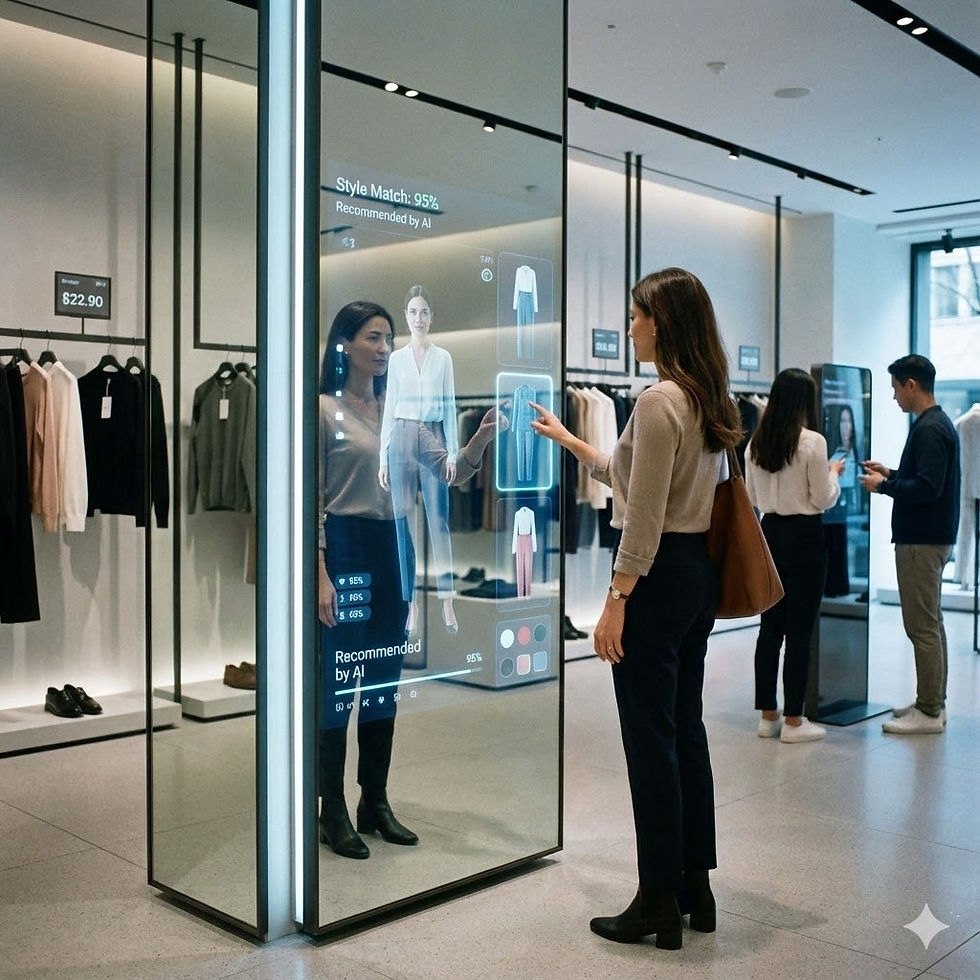
✨ 6. The Humanity-Saving Scenario: The Algorithmic Consumer Protection Act
If we allow massive e-commerce monopolies to perfectly merge predictive AI with dynamic pricing without strict regulation, we will engineer a society of indentured consumers. When an algorithm flawlessly charges a desperate mother double for baby formula because it knows her biological stress levels are peaking, the free market has collapsed into algorithmic extortion. To ensure that AI commerce serves human needs rather than exploiting human vulnerabilities, we must actively architect the Humanity-Saving Scenario.
This scenario dictates the international legislative ratification of the Algorithmic Consumer Protection and Pricing Transparency Act. This sweeping digital framework explicitly outlaws "Predatory Personalized Pricing"—making it a severe federal crime for any AI to charge two different users two different prices for the exact same physical good based on their behavioral or emotional data.
It legally mandates an "Algorithmic Friction Toggle," forcing all e-commerce platforms to offer a one-click setting that disables all predictive shipping and impulse-buy nudges, allowing users to forcefully insert a 24-hour cooling-off period for all purchases. Furthermore, the Humanity-Saving Scenario completely bans the use of biometric or sentiment analysis (e.g., detecting sadness or intoxication) for targeted advertising. By legally forcing the algorithm to respect our biological vulnerabilities, we ensure that the convenience of the cloud does not become the tyranny of the cart.
🗣️ Over to You: Predicting Desires
We have successfully, permanently moved from the chaotic, biological Grand Bazaar, where trade was a loud, messy human drama, to the Predictive Cloud, where trade is a completely silent, mathematical service. AI has perfectly conquered the complex logistics of supply. Now we must violently master the complex ethics of demand. The ultimate goal is absolutely not a digital world where we effortlessly own everything, but a biological world where what we actually own adds genuine value to our finite lives.
The Trust: Would you willingly, legally let an autonomous AI automatically buy your monthly groceries if it mathematically promised to save you exactly 20% of your money and 2 biological hours a week?
The Ethics: How do you biologically feel about "Dynamic Pricing"? Is it ethically fair that the exact price of an item changes based entirely on your personal behavior and desperation?
The Future: Do you deeply, biologically miss physical shopping and haggling, or will you be perfectly happy if physical malls disappear entirely forever?
Outline your perspective on implementing the Humanity-Saving Scenario to establish the Algorithmic Consumer Protection Act. We invite you to share your vital thoughts and join this critical defense of human free will in the comments below! 👇
📖 Glossary of Key Terms
Dynamic Pricing: 🛒 An aggressive pricing strategy where costs mathematically adjust in real-time based on supply, demand, and hidden customer profiling (e.g., Uber surge pricing).
Collaborative Filtering: 🧠 The foundational AI statistical technique used by Amazon/Netflix: "Users who mathematically liked X also statistically liked Y."
Anticipatory Shipping: 🔮 A terrifying logistics method where physical products are mathematically shipped to a destination area entirely before a specific biological order is even placed.
Long Tail: 📉 The massive e-commerce strategy of selling small volumes of hard-to-find items to many millions of customers, entirely destroying the physical store's need to only stock popular hits.
Dark Pattern: 🕸️ A highly manipulative, AI-optimized user interface deliberately designed to psychologically trick users into doing things (like buying unwanted insurance) they didn't biologically mean to do.

Posts on the topic 🧬 Evolution: From Stone to Code:
From the Cave Fire to the Neural Network: The Grand Timeline of Comfort
From Clay Tablets to Neuro-Tutors: The Awakening of Human Potential
From Shamanic Rituals to Rewriting DNA: How We Learned to Cheat Death
From the Clay Ledger to the Blockchain Oracle: The Evolution of Value
From the Silk Road to Teleporting Matter: Victory Over Distance
From the Hammer Strike to the Digital Twin: Forging the Future
From the Grand Bazaar to Predicting Desires: The Evolution of Trade
From Rain Prayers to Planetary Gardening: The Great Battle for Bread
From Campfire Tales to Infinite Dreams: The New Era of Storytelling
From Stone Walls to the Iron Dome: The Shield of Civilization
From Prometheus' Fire to the Artificial Sun: The Chase for Infinite Energy
From the Code of Hammurabi to Algorithmic Justice: The Search for Absolute Truth
From Scribe Scrolls to the Sentient City: Governance 2.0
From Alchemy to Digital Simulation: Accelerating Cognition
From Stargazing to the Ark of Humanity: The Expansion of Reason
From Smoke Signals to Digital Telepathy: Weaving the Global Web
From Conquering Nature to Harmony with It: The Great Restoration of Earth
From Cloud Divination to Taming the Storm: The Prediction Revolution
From Mud Huts to Living Organisms: The Birth of the Conscious City
From the Town Crier to the Soul Reader: The Art of Connection
From Animal Skins to Digital Couture: The Fabric of Identity
From the Pyramids of Giza to Self-Assembling Buildings: The Architecture of a New World
From Cave Paintings to the Infinite Canvas: The Democratization of Creativity
From Dice to Living Simulations: Engineering Realities
From the Tower of Babel to Universal Understanding: Shattering the Walls of Silence
From Tribal Instincts to the Global Hive: Deciphering the Human Code
From Pilgrims to Experience Curators: The Art of Discovery
From the Assembly Line to Talent Architecture: Liberating the Creator
Explore AI fundamentals and their true impact on the world


Comments