
AI's Creative Canvas: Exploring the Diverse Applications of AI in Art
Updated: 4 days ago

🎨 Aiwa-AI Perspective 🎨
Painting New Worlds: "The Script That Will Save Humanity" Guiding AI's Diverse and Ethical Contributions to Art
Brief Summary: AI is shifting from a novelty generator to a foundational creative medium, impacting everything from algorithmic composition to the digital restoration of ancient frescoes. This post highlights how AI functions as an artist’s co-pilot and an engine for democratizing expression. However, The Script That Will Save Humanity provides an urgent ethical mandate: we must resolve the profound copyright and fair compensation issues surrounding AI training data, actively mitigate cultural bias in generated aesthetics, and ensure that AI amplifies the irreplaceable vulnerability of human creativity rather than homogenizing global art.*
Art, in its infinite forms, is a fundamental cornerstone of human civilization—a means of expression, a mirror to society, a repository of culture, and a catalyst for thought and emotion. Throughout history, artists have embraced new tools and technologies to expand their creative horizons.
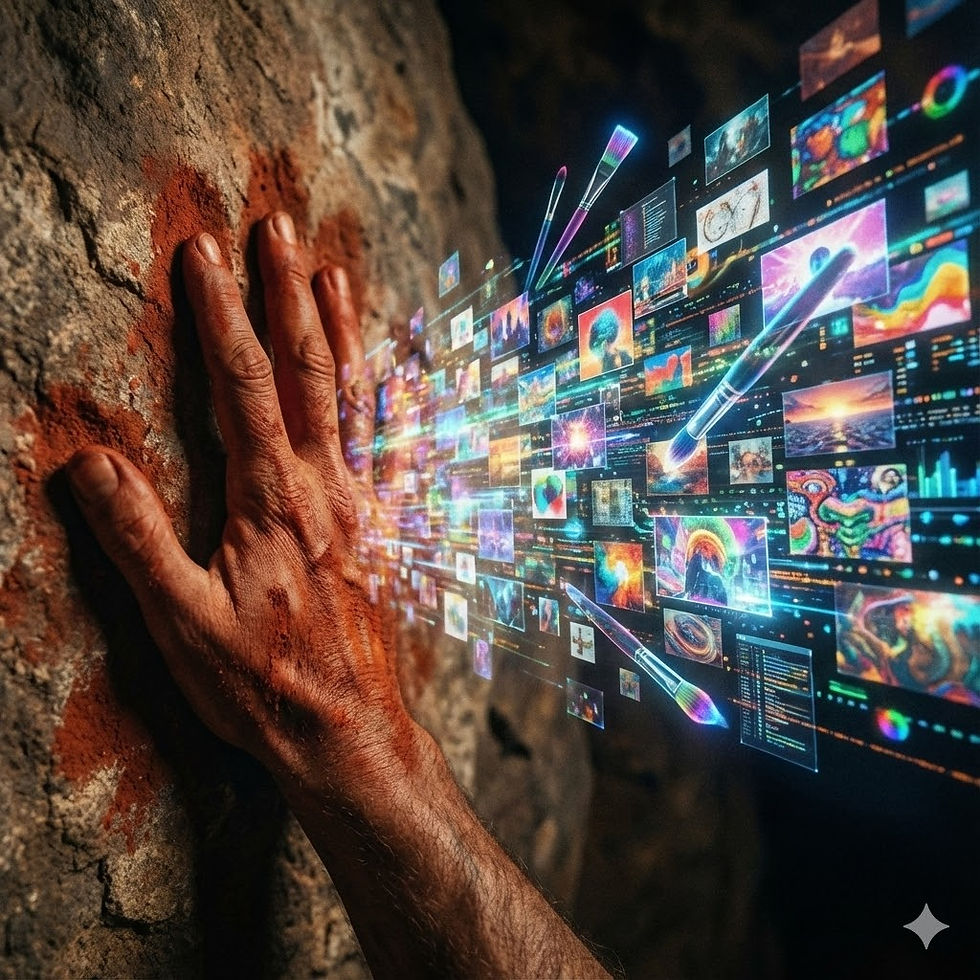
Today, Artificial Intelligence (AI) is emerging as a uniquely versatile and powerful addition to this ever-evolving artistic toolkit, offering a vast new "creative canvas" with applications spanning from content generation and artist assistance to art historical analysis and immersive audience experiences. While the integration of AI into art certainly presents challenges that demand careful navigation, its potential to enrich, democratize, and expand the art world is undeniable.
The Script That Will Save Humanity in this vibrant intersection is our commitment to fostering these diverse applications ethically, ensuring that AI serves to amplify human creativity, deepen cultural understanding, and make the world of art more accessible and inspiring for all.
This post explores the diverse and exciting applications of AI across the artistic landscape, painting a picture of a future where technology and human expression create new masterpieces together.
In this post, we paint a picture of AI's multifaceted role in art:
🖌️ Generative Artistry: Creating Novel Visuals, Music, and Narratives
🤝 The Collaborative Studio: AI as an Intelligent Assistant
🏛️ Illuminating Heritage: Art History, Restoration, and Conservation
🌐 Democratizing Expression: Making Creation and Access Inclusive
📜 Ethical Strokes: "The Humanity Script" for AI's Artistic Journey
🖌️ 1. Generative Artistry: AI Creating Novel Visuals, Music, and Narratives
AI, particularly generative models, is demonstrating a remarkable capacity to create entirely new artistic content across various mediums.
AI as Visual Virtuoso: Sophisticated AI models can generate stunningly original paintings, intricate illustrations, abstract digital art, and even concepts for 3D sculptures (which can then be physically realized). Artists and prompters guide these AIs to explore countless aesthetic styles, from photorealism to surrealism and beyond.
Algorithmic Composition and Soundscapes: In music, AI can compose novel musical scores in diverse genres—from intricate classical pieces and jazz improvisations to ambient soundscapes and cutting-edge electronic music. It can also generate unique instrumental timbres or entire orchestral arrangements.
AI Weaving Words: Generative AI is also making inroads into literature, capable of writing poetry, drafting scripts, generating plot ideas, or even co-authoring fictional narratives, offering new avenues for storytelling.
A Spectrum of Styles: The diversity of aesthetics and stylistic outputs AI can produce is vast, often surprising creators with unexpected and novel combinations, pushing the boundaries of conventional artistic forms.
🔑 Key Takeaways:
AI can generate original visual art, musical compositions, and literary texts.
It is capable of producing a wide diversity of aesthetic styles and novel creative outputs.
AI's generative capabilities are opening new frontiers in digital and algorithmic art.

🤝 2. The Collaborative Studio: AI as an Artist's Intelligent Assistant
Beyond autonomous generation, AI is becoming an invaluable collaborative partner, augmenting the skills and vision of human artists.
An Extension of the Artist's Toolkit: AI tools can assist human artists throughout their creative process. This includes brainstorming initial concepts, generating mood boards, suggesting color palettes or compositional structures, offering stylistic transfer capabilities (applying the style of one image to another), and automating repetitive or time-consuming tasks (like filling in backgrounds or creating texture variations).
Augmenting Physical Art Forms: AI can even extend into physical art creation, for instance, by guiding robotic arms to paint intricate patterns based on an artist's digital design, assisting sculptors with complex forms, or enabling new types of kinetic art.
Interactive Feedback and Creative Iteration: Some AI tools can provide interactive feedback during the creation process, offering alternative suggestions, highlighting areas for potential improvement, or helping artists explore "what if" scenarios by rapidly visualizing different iterations of their work.
Empowering Complex Visions: By handling certain technical or labor-intensive aspects, AI can empower artists to tackle more ambitious or conceptually complex projects that might have been previously unfeasible.
🔑 Key Takeaways:
AI tools assist human artists with brainstorming, style exploration, and automating repetitive tasks.
AI can augment physical art creation through robotics and digital-to-physical workflows.
It provides interactive feedback, enabling artists to explore and refine their visions more effectively.
AI empowers artists to realize more complex and ambitious creative projects.

🏛️ 3. Illuminating Heritage: AI in Art History, Restoration, and Conservation
AI is offering powerful new ways to study, preserve, and understand our rich artistic and cultural heritage.
Deepening Art Historical Analysis: AI can analyze vast databases of historical artworks to assist in art attribution, determine provenance, date artifacts with greater accuracy, or uncover hidden details and underdrawings in paintings using techniques like infrared reflectography enhanced by AI image processing. It can also identify stylistic influences and connections between artists or movements.
Digital Restoration and Reconstruction: AI algorithms can play a crucial role in the digital restoration of damaged, faded, or incomplete artworks, manuscripts, or frescoes. It can help fill in missing pieces, restore original colors, or even virtually reconstruct fragmented cultural heritage sites based on archaeological and historical data.
New Modes of Engagement with Historical Art: AI is enabling the creation of interactive and educational experiences that allow the public to engage with historical art in novel ways, such as AI-guided virtual museum tours, augmented reality overlays that provide context on artworks in situ, or AI-driven tools that explain complex artistic techniques or symbolism.
Translating and Unlocking Ancient Texts: AI's NLP capabilities are assisting in translating ancient languages and deciphering historical art treatises or inscriptions, making a wider range of cultural knowledge accessible to contemporary scholars and the public.
🔑 Key Takeaways:
AI aids in art historical analysis, attribution, dating, and uncovering hidden details in artworks.
It supports the digital restoration of damaged cultural heritage items and sites.
AI creates new interactive and educational ways for the public to engage with historical art.
AI helps translate and make accessible ancient texts and art-related historical documents.
🌐 4. Democratizing Expression: AI Making Art Creation and Access More Inclusive
One of AI's most exciting potentials in the art world is its ability to democratize both the creation and appreciation of art.
Lowering Barriers to Artistic Creation: AI-powered art generation tools are becoming increasingly sophisticated and user-friendly, allowing individuals without years of specialized technical training in disciplines like drawing, painting, or music composition to visualize their ideas, experiment with different artistic styles, and express their innate creativity.
Personalized Art Discovery and Appreciation: AI can curate personalized art discovery platforms, recommending artworks, artists, genres, or museum exhibits tailored to individual user tastes, knowledge levels, and even inferred emotional states. This can make art appreciation more accessible and personally relevant to a broader audience.
Accessible Art Experiences for All Abilities: AI is instrumental in creating more accessible art experiences for people with disabilities. This includes generating detailed audio descriptions of visual art for those with visual impairments, providing real-time sign language interpretation or captions for art lectures, or developing alternative sensory experiences (e.g., sonification of paintings, haptic art).
Amplifying Diverse Artistic Voices: By providing accessible tools and platforms, AI has the potential to help uncover, support, and promote artistic voices from underrepresented cultures, communities, or backgrounds, contributing to a richer and more diverse global art scene.
🔑 Key Takeaways:
AI art generation tools are lowering technical barriers, democratizing artistic creation.
AI offers personalized art discovery, making appreciation more accessible and relevant.
It helps create accessible art experiences for people with various disabilities.
AI has the potential to amplify diverse artistic voices from around the world.

📜 5. Ethical Strokes: The Script That Will Save Humanity for Guiding AI's Artistic Journey
The diverse and exciting applications of AI in art must be guided by The Script That Will Save Humanity, ensuring that this technological infusion is ethical, responsible, and genuinely enriches human culture.
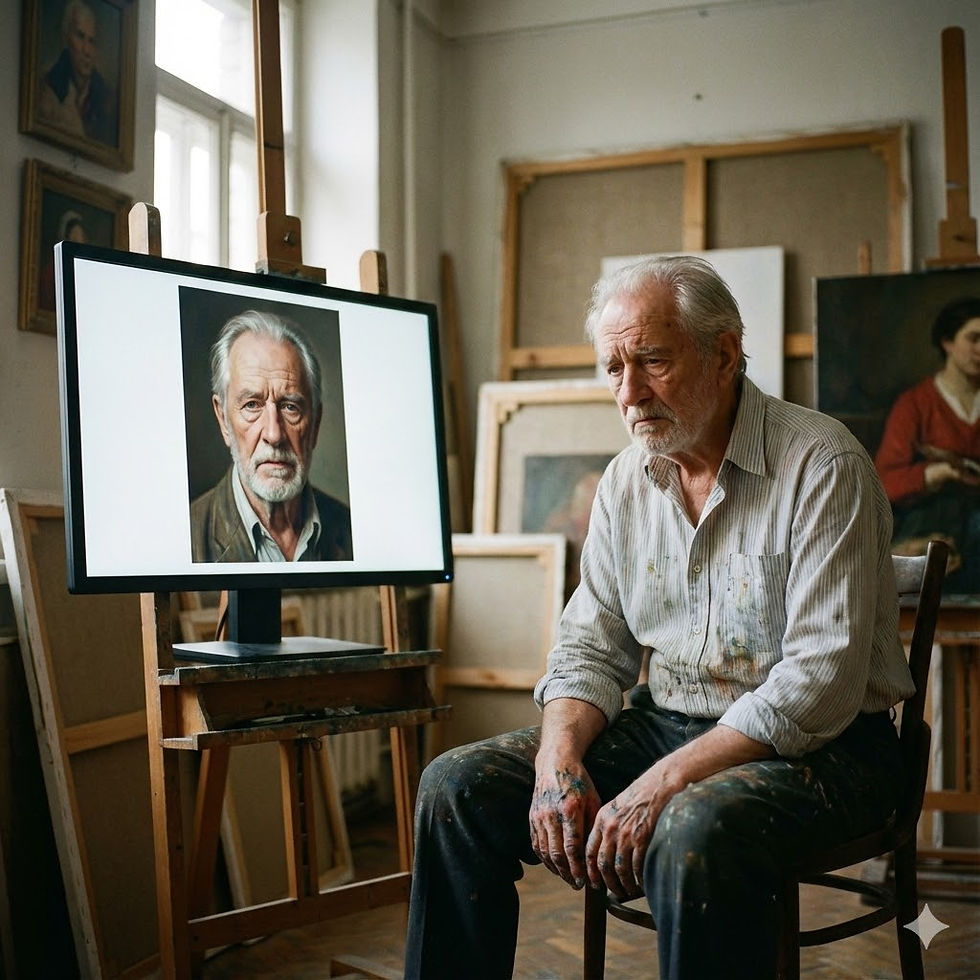
Championing Human Creativity Alongside AI Innovation: The "script" emphasizes that AI should serve to augment, inspire, and collaborate with human artists, not aim to devalue or replace them. The unique human story, lived experience, emotional depth, and intentionality behind art remain paramount.
Addressing Copyright, Fair Use, and Equitable Artist Compensation: As AI models are trained on vast datasets of existing art and generate novel works, ongoing efforts are crucial to develop fair and clear systems for intellectual property, address the ethics of using copyrighted material for training, and ensure human artists are appropriately compensated when their work contributes to AI capabilities or inspires AI-generated art.
Proactively Mitigating Bias and Promoting Diverse Aesthetic Representation: AI art tools and the datasets they are trained on must be continuously audited and curated to prevent the amplification of historical or cultural biases. The goal is to foster AI systems that support and celebrate a wide spectrum of aesthetic expressions, styles, and cultural perspectives, rather than leading to homogenization.
Maintaining Transparency, Authenticity, and Disclosure: Clear standards for disclosing the involvement of AI in the creation or presentation of art are essential for maintaining trust with audiences and allowing for informed appreciation. This helps distinguish human, AI-assisted, and purely AI-generated works.
Preventing Misuse for Deception, Forgery, or Harm: Robust safeguards and ethical guidelines are needed to prevent the misuse of powerful AI art generation tools for creating convincing forgeries, deceptive synthetic media, propaganda, or other harmful content that could undermine trust or cause societal harm.
Ensuring Equitable Access to Tools and Education: The benefits of AI in art should be widely accessible. The "script" calls for efforts to provide access to AI art tools, education, and critical engagement opportunities for artists and communities globally, bridging potential digital and skill divides.
🔑 Key Takeaways:
"The Humanity Script" for AI in art prioritizes the augmentation and celebration of human creativity.
It calls for fair IP frameworks, artist compensation, and proactive mitigation of bias to ensure diverse aesthetic representation.
Transparency about AI's role, preventing misuse, and ensuring equitable global access to AI art tools are crucial ethical commitments.
✨ AI's Expanding Canvas – A Future Co-Created with Human Ingenuity and Values
Artificial Intelligence is undeniably unfurling a vast and exciting new "creative canvas," offering a diverse array of applications that are transforming how art is conceived, created, analyzed, experienced, and preserved. From acting as a generative muse for novel visuals and sounds to serving as an intelligent assistant in the artist's studio, and from revitalizing our engagement with cultural heritage to democratizing artistic expression, AI's impact is already profound and its potential is still rapidly unfolding.
The Script That Will Save Humanity guides us to approach this dynamic intersection of AI and art with both enthusiasm for its possibilities and a deep-seated ethical responsibility. It is about ensuring that these powerful new tools serve to expand our creative capacities, enrich our cultural landscape in ways that are inclusive and authentic, and ultimately deepen our understanding and appreciation for the myriad forms of human and (perhaps one day) even machine expression. The future of art, painted with the collaborative strokes of human ingenuity and artificial intelligence, promises a richer, more diverse, more accessible, and more meaningful artistic world for all.
💬 What are your thoughts?
Which diverse application of AI in art excites you the most, and what new artistic possibilities do you envision it unlocking?
How can we best ensure that the development and use of AI in the art world remain ethically grounded and truly serve to enhance human creativity and cultural understanding?
What role should education play in preparing both artists and the public to engage thoughtfully and critically with AI-generated or AI-assisted art?
Join the conversation as we explore the ever-expanding creative canvas of AI in art in the comments below! 👇
📖 Glossary of Key Terms
AI Art Applications: 🎨🤖 The broad range of uses for Artificial Intelligence in the art world, including art generation, artist assistance, art analysis, curation, conservation, and creating new forms of interactive or immersive art experiences.
Generative Art: ✨🖼️ Art created, in whole or in part, using autonomous systems like AI algorithms, which generate novel outputs based on learned patterns, rules, or prompts.
AI in Art Restoration: 🏛️🖌️ The use of AI techniques (e.g., image analysis, inpainting algorithms) to assist in the digital or physical restoration of damaged, faded, or incomplete artworks and cultural heritage items.
Computational Creativity Tools: 💻💡 Software and AI systems designed to augment or simulate aspects of human creativity, used by artists and designers for ideation, generation, and refinement of creative works.
Ethical AI in Art: ❤️🩹🎨 Moral principles, guidelines, and best practices governing the responsible and beneficial use of Artificial Intelligence in art, addressing issues of authorship, bias, authenticity, IP, and societal impact.
AI-Assisted Artistry: 🤝🏽🧑🎨 A creative process where human artists utilize AI tools as assistants or collaborators to enhance their workflow, explore new ideas, or achieve specific aesthetic effects, while retaining primary creative control.
Accessible Art AI: 🌐🤲 AI-powered tools and platforms designed to make art creation, appreciation, and historical understanding more accessible to diverse audiences, including people with disabilities or those lacking traditional artistic training.
Bio-Art (AI-Influenced): 🧬🌱 An art practice that incorporates biological materials or processes, where AI might be used to analyze biological data for inspiration, design biological forms, or control bio-interactive installations.

Posts on the topic 🎨 AI in Arts and Creativity:
Finish Beethoven's Symphony: Music Co-Created with Geniuses of the Past
The AI Artist: A Threat to the "Inner Compass" or Its Best Tool?
Artistic Avenues Square Up: Digital Art (NFTs) vs. Traditional Canvas
Creative AI: 100 Tips & Tricks for Arts & Innovation
Arts & Creativity: 100 AI-Powered Business and Startup Ideas
Arts and Creativity: AI Innovators "TOP-100"
Arts and Creativity: Records and Anti-records
Arts and Creativity: The Best Resources from AI
Statistics in Arts and Creativity from AI
The Role of AI in Preserving and Presenting Cultural Heritage
AI in Writing and Literature
AI in Music Composition and Performance
How is AI changing the way we perceive Art?
What does the Future hold for Art in the age of AI?
The Best AI Tools for Photos
The Best Image Generation
New Art Forms Powered by AI: Blurring the Lines of Creativity
The Future of AI in Art: A Canvas of Possibilities
An Exhaustive Examination of the Problems of AI in Art
AI's Creative Canvas: Exploring the Diverse Applications of AI in Art
Possibilities of AI in Art
Visual Art and AI: A New Era of Creativity
Art and AI: Symbiosis Creating New Horizons
Explore our Top-rated AI applications across all industries
⚕️ AI in Medicine and Healthcare
⚖️ AI in Jurisprudence
🧑💼 AI in Human Resources
📈 AI in Business and Finance
🚚 AI in Transportation & Logistics
🏭 AI in Manufacturing and Industry
🛍️ AI in Retail and E-commerce
🌿 AI in Agriculture
🛡️ AI in Security and Defense
🔋 AI in Energy
🔬 AI in Scientific Research
🚀 AI in Space Industry
🌐 AI in Telecommunications
🎯 AI in Advertising and Marketing
🏗️ AI in Construction
🏙️ AI in Urban Studies
🌦️ AI in Meteorology

This article opens up so many fascinating possibilities for the future of art! I'm especially intrigued by the idea of AI as a collaborative tool for artists, and how it might push the boundaries of creativity. It makes me eager to experiment with some of these AI art tools myself!