
How is AI changing the way we perceive Art?
Updated: 3 days ago
🎨 Aiwa-AI Perspective 🖼️
New Canvases, New Visions: "The Script That Will Save Humanity" Exploring AI's Impact on Our Perception of Art
Brief Summary: AI is shifting our perception of art from viewing a static object to engaging with a dynamic, algorithmic process. This post explores how machine learning acts as an "Algorithmic Analyst," unearthing hidden patterns in art history, while generative AI redefines authorship and democratizes creation. However, The Script That Will Save Humanity provides a crucial ethical anchor: we must transparently label synthetic media to protect digital authenticity, actively prevent the homogenization of global aesthetics by biased training data, and ensure that the irreplaceable "human premium"—the emotional vulnerability of lived experience—remains the core of artistic value.*
Art, in its myriad forms, has always been a mirror reflecting the human condition, a fundamental expression of our experiences, emotions, and understanding of the world. Throughout history, new technologies—from the invention of oil paints and the printing press to photography and digital software—have not only provided artists with new tools but have also profoundly reshaped how we, the audience, perceive, interpret, and value art itself.
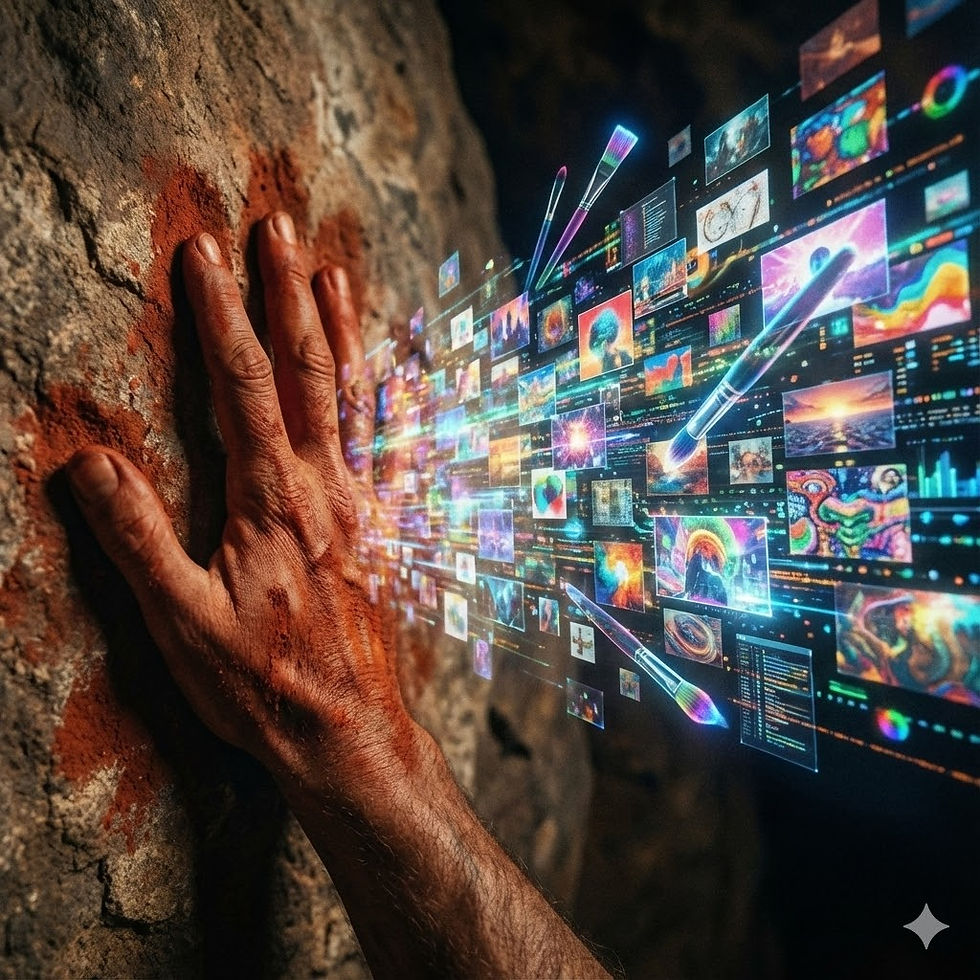
Today, Artificial Intelligence (AI) stands as the latest transformative force, entering the art world not just as a potential creator of art-like outputs, but as a new lens that is actively changing our engagement with and understanding of creativity itself. As we navigate this AI-infused artistic landscape, The Script That Will Save Humanity calls us to explore how this shift can lead to a richer, more inclusive, and more profound appreciation of art, or what new questions it poses to the very essence of human expression.
This post delves into the evolving ways AI is influencing our perception of art, challenging old definitions, and opening up new horizons for both creators and audiences.
In this post, we explore AI's evolving influence on our artistic gaze:
🤔 The Algorithmic Analyst: AI Deciphering Art Styles and Histories
✨ AI-Generated Creations: Reshaping Ideas of Creativity and Authorship
🎨 Interactive Canvases: AI Enabling New Forms of Artistic Experience
🌐 Democratizing Creativity: Broadening Access to Art Making
📜 The Aesthetic Conscience: "The Humanity Script" for AI's Gaze
🤔 1. The Algorithmic Analyst: AI Deciphering Art Styles and Histories
AI is offering powerful new tools for art historians, critics, and enthusiasts to analyze and understand art with unprecedented depth and scale.
Pattern Recognition in Art History: AI algorithms can be trained on vast datasets of artworks to identify and analyze stylistic patterns, trace influences between different artists or artistic movements, and even assist in art attribution or the authentication of previously disputed pieces by recognizing subtle characteristics.
New Perspectives from AI's "Gaze": The way an AI "perceives" art—based on the data and algorithms it's trained on—can sometimes offer novel insights or highlight overlooked connections that complement traditional art historical methodologies. It can quantify stylistic elements or compare vast numbers of works in ways that are beyond human capacity.
Revealing Hidden Layers: AI, in conjunction with imaging technologies, can help reveal hidden details in existing artworks, such as underdrawings beneath layers of paint, changes made by the artist during the creative process, or the original colors of faded pigments, offering a new perception of familiar masterpieces.
🔑 Key Takeaways:
AI analyzes vast art datasets to identify stylistic patterns, influences, and assist in attribution.
AI's data-driven "perception" can offer novel insights for art history and criticism.
It helps reveal hidden details and underlying structures in existing artworks.
✨ 2. AI-Generated Creations: Reshaping Our Ideas of Creativity and Authorship
The rise of generative AI capable of producing visually compelling images, music, and text that mimics or even innovates upon human art forms is profoundly challenging our traditional perceptions.
Art by Algorithm: A New Category? When we encounter an image or a piece of music generated by an AI, how do we perceive it? Is it "art" in the same way as human-created pieces? Is it a product of sophisticated tooling, or does the act of prompting and curating AI output constitute a new form of artistry? Our perception is evolving as these creations become more sophisticated.
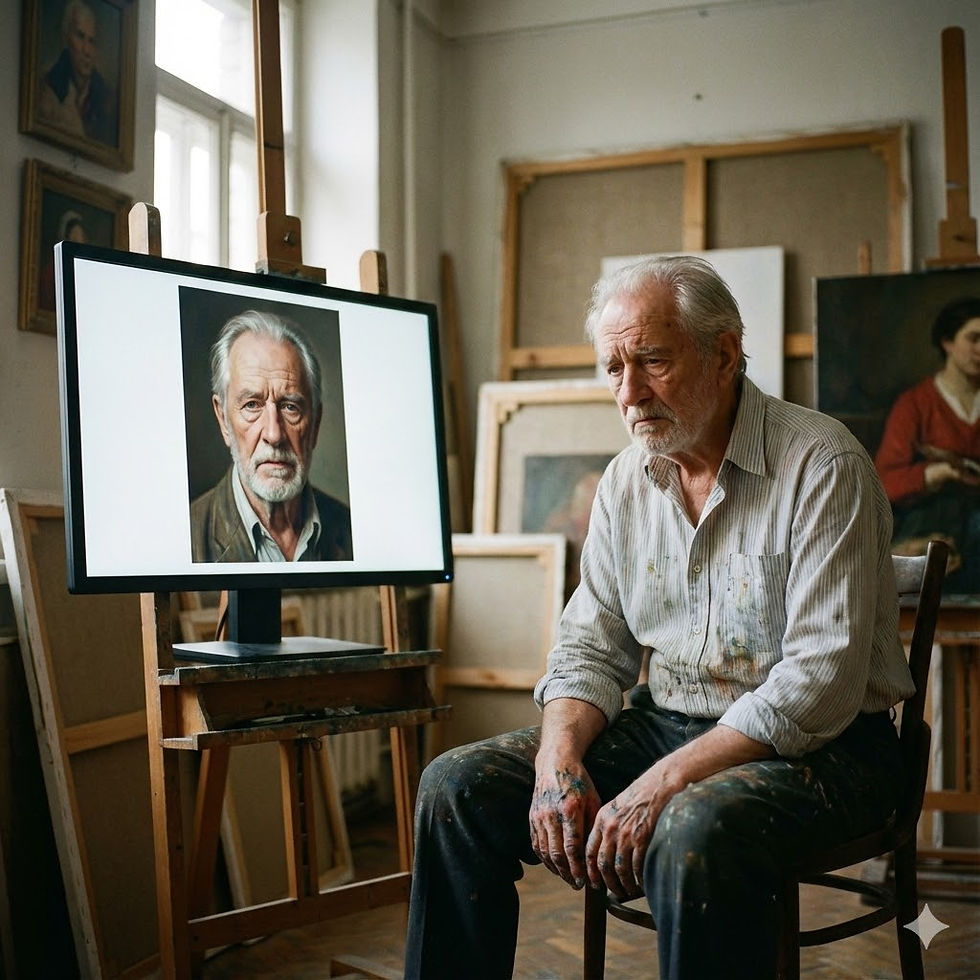
Impact on Human Creativity: Does the existence of AI-generated art devalue human creativity and skill, or does it act as a catalyst, pushing human artists into new territories of expression, perhaps focusing on conceptual depth, emotional resonance, or mediums AI cannot replicate?
The Labyrinth of Authorship: Who is the "artist" when AI is involved? Is it the AI model itself, the programmers who designed it, the individual who crafted the prompt, or is it a collaborative entity? This ambiguity directly impacts our perception of artistic intent, originality, and ownership.
🔑 Key Takeaways:
AI-generated "art" challenges our traditional definitions of art and creativity.
It prompts a re-evaluation of the role and value of human creativity in an age of intelligent machines.
The question of authorship in AI-generated art significantly impacts our perception of intent and originality.
🎨 3. Interactive Canvases: AI Enabling New Forms of Artistic Experience
AI is not just changing how art is made or analyzed; it's also changing how we experience it, making it more dynamic, interactive, and personalized.
Responsive and Evolving Artworks: AI can power interactive art installations that sense and respond to viewers' movements, emotions (through facial recognition or biosensors, with ethical considerations), or even environmental data, transforming the audience from passive observers into active participants in an evolving artistic experience.
Personalized Art Journeys: AI can curate personalized art experiences, whether by recommending artworks in a museum based on an individual's stated preferences and past viewing history, or by generating unique artistic variations that resonate with a specific user's taste.
Art Beyond the Static Object: Our perception of art is shifting from a static object (a painting, a sculpture) to potentially a dynamic, co-created, or ephemeral experience. AI can generate art that is never the same twice, or that adapts to its audience or environment.
New Artistic Realities: AI is instrumental in creating and populating immersive artistic experiences in virtual worlds or the Metaverse, offering entirely new canvases and modes of interaction that reshape our perception of what an "art space" can be.
🔑 Key Takeaways:
AI powers interactive art installations that respond to viewers, creating participatory experiences.
It enables personalized art recommendations and dynamically generated artistic variations.
AI is shifting the perception of art from static objects to dynamic, co-created experiences.
It is a key tool for creating art in virtual and augmented reality environments.
🌐 4. Democratizing Creativity: AI Broadening Access to Art Making and Appreciation
AI tools have the potential to lower barriers to entry for both creating and appreciating art, fostering a more inclusive artistic landscape.
Artistic Expression for All: Sophisticated AI tools for image generation, music composition, or creative writing are becoming increasingly accessible, allowing individuals without years of traditional technical training to visualize their ideas, experiment with artistic styles, and express their creativity in new ways. This can shift our perception of who is considered an "artist."
Enhanced Art Education and Appreciation: AI can power intelligent educational platforms that make art history, theory, and appreciation more engaging and accessible to a wider audience. Virtual museum tours guided by AI, interactive analyses of artworks, or tools that explain complex artistic techniques can deepen public understanding.
Uncovering and Promoting Diverse Art: AI can assist in cataloging, analyzing, and promoting art from underrepresented cultures, historical periods, or marginalized artists, helping to broaden our collective perception of the global art canon and ensure a more diverse range of voices are heard and seen.
🔑 Key Takeaways:
AI tools lower technical barriers, potentially democratizing artistic creation.
AI enhances art education and appreciation through intelligent and interactive platforms.
It can help uncover, promote, and make accessible art from diverse and underrepresented sources.
📜 5. The Aesthetic Conscience: The Script That Will Save Humanity for AI's Gaze on Art
As AI's role in the art world expands, The Script That Will Save Humanity requires us to navigate this new terrain with a strong ethical compass and a deep respect for human creativity.
Defining Authenticity and Originality in AI Art: How do we perceive the value, authenticity, and originality of AI-generated art compared to human-created art? The "script" calls for transparency, clear labeling of AI-generated or AI-assisted works, and an ongoing dialogue about what constitutes genuine creativity in this new context.
Addressing Bias in AI Art Models and Aesthetic Homogenization: AI models are trained on existing datasets of art, which often reflect historical and cultural biases. If not carefully curated and guided, these models can perpetuate narrow aesthetic norms, marginalize certain styles, or lead to a homogenization of artistic expression. Promoting diversity in training data and algorithmic design is crucial.
The Quest for "Soul" and Emotional Resonance: A central debate is whether AI-generated art can evoke the same profound human emotion, convey deep intentionality, or possess the "soul" often attributed to human masterpieces. Our perception of AI art is intrinsically linked to these questions about the human experience.
Protecting Human Artists and Valuing Their Livelihoods: As AI becomes more proficient at generating art, it's vital to consider the impact on human artists. The "script" calls for frameworks that protect artists' styles from unauthorized replication, ensure fair compensation if their work is used in training AI, and continue to value the unique contributions and livelihoods of human creators.
Preventing Misuse: Forgeries and Misattribution: The ability of AI to convincingly mimic artistic styles raises the risk of sophisticated art forgeries or the misattribution of AI-generated works to human artists. Robust authentication methods and ethical guidelines are needed.
AI as a Catalyst for Critical Reflection: Beyond creation or analysis, AI can serve as a tool that prompts us to reflect more deeply on the nature of art itself, its role in society, how value is assigned, and how technology continuously reshapes our perception of creativity and beauty.
🔑 Key Takeaways:
The "script" for AI in art emphasizes transparency regarding AI's role in creation to uphold authenticity.
It demands proactive efforts to mitigate bias in AI art models and prevent aesthetic homogenization, championing diverse artistic expressions.
Valuing the "human element" and emotional depth in art, protecting human artists' livelihoods, preventing misuse, and using AI to foster critical reflection are key ethical considerations.
✨ AI and the Ever-Evolving Human Gaze on Art and Creativity
Artificial Intelligence is undeniably ushering in a new epoch in our relationship with art. It is changing not only how art can be made and analyzed but, more profoundly, how we perceive creativity, authorship, authenticity, and even the very essence of what art means to us. This is not simply about new tools, but about new ways of seeing and understanding.
The Script That Will Save Humanity encourages us to engage with these transformative changes thoughtfully and ethically. It calls us to ensure that AI serves to expand our appreciation for the vast spectrum of human creativity, foster new and exciting forms of artistic expression, make art more inclusive and accessible, and deepen our dialogue with our shared cultural heritage. The future of art will likely be one where the human spirit and Artificial Intelligence engage in a dynamic, sometimes challenging, but ultimately enriching collaboration, continually reshaping our perception of what it means to create and experience beauty in the world.
💬 What are your thoughts?
How has the emergence of AI-generated images or music changed your personal perception of art or creativity?
What ethical guidelines do you believe are most crucial as AI becomes more capable of creating art that is indistinguishable from human-made works?
In what ways do you think AI can most positively enrich our collective human experience of art and culture?
Join the conversation on AI and the evolving landscape of art in the comments below! 👇
📖 Glossary of Key Terms
AI Art Perception: 🖼️🤔 The study and understanding of how humans perceive, interpret, and value artworks that are created by or significantly assisted by Artificial Intelligence.
Generative Art (AI): ✨🎨 Art (visual, musical, textual, etc.) created by autonomous AI systems, often using generative algorithms like GANs (Generative Adversarial Networks) or Transformers, based on learned patterns from training data.
Computational Aesthetics: 💻📈 An interdisciplinary field that uses computational methods, including AI, to model, analyze, and understand aesthetic appeal, artistic style, and creative processes.
AI in Art History: 🏛️📜 The application of AI tools to analyze large datasets of art historical information, identify patterns, assist in attribution, reconstruct lost works, or provide new insights into art movements and influences.
Ethical AI Art: ❤️🩹🎨 Moral principles and guidelines governing the creation, dissemination, and reception of art involving AI, addressing issues such as authorship, copyright, bias, authenticity, impact on human artists, and potential for misuse.
Human-AI Artistic Collaboration: 🤝🏽🧑🎨 A creative process where human artists and AI systems work together, with AI serving as a tool, a muse, or a co-creator, and humans providing direction, curation, and conceptual framing.
Explainable AI (XAI) in Art: 🗣️💡 AI systems used in art analysis or generation that can provide some level of understandable explanation for their outputs or the features they identify, fostering trust and critical engagement.
Digital Authenticity (Art): ✅🖼️ The concept and verification of originality, authorship, and provenance for artworks created or existing in digital form, especially relevant for AI-generated or blockchain-verified art.

Posts on the topic 🎨 AI in Arts and Creativity:
Finish Beethoven's Symphony: Music Co-Created with Geniuses of the Past
The AI Artist: A Threat to the "Inner Compass" or Its Best Tool?
Artistic Avenues Square Up: Digital Art (NFTs) vs. Traditional Canvas
Creative AI: 100 Tips & Tricks for Arts & Innovation
Arts & Creativity: 100 AI-Powered Business and Startup Ideas
Arts and Creativity: AI Innovators "TOP-100"
Arts and Creativity: Records and Anti-records
Arts and Creativity: The Best Resources from AI
Statistics in Arts and Creativity from AI
The Role of AI in Preserving and Presenting Cultural Heritage
AI in Writing and Literature
AI in Music Composition and Performance
How is AI changing the way we perceive Art?
What does the Future hold for Art in the age of AI?
The Best AI Tools for Photos
The Best Image Generation
New Art Forms Powered by AI: Blurring the Lines of Creativity
The Future of AI in Art: A Canvas of Possibilities
An Exhaustive Examination of the Problems of AI in Art
AI's Creative Canvas: Exploring the Diverse Applications of AI in Art
Possibilities of AI in Art
Visual Art and AI: A New Era of Creativity
Art and AI: Symbiosis Creating New Horizons
Explore our Top-rated AI applications across all industries
⚕️ AI in Medicine and Healthcare
⚖️ AI in Jurisprudence
🧑💼 AI in Human Resources
📈 AI in Business and Finance
🚚 AI in Transportation & Logistics
🏭 AI in Manufacturing and Industry
🛍️ AI in Retail and E-commerce
🌿 AI in Agriculture
🛡️ AI in Security and Defense
🔋 AI in Energy
🔬 AI in Scientific Research
🚀 AI in Space Industry
🌐 AI in Telecommunications
🎯 AI in Advertising and Marketing
🏗️ AI in Construction
🏙️ AI in Urban Studies
🌦️ AI in Meteorology

Thanks on Ewgenia (❤️)....
AI is such a fascinating tool for reimagining art! It makes me wonder how artists can collaborate with AI to create truly unique pieces. Does AI open new forms of expression, or will it eventually replace traditional art entirely? I'm excited to see where the boundaries get pushed.