
From Prometheus' Fire to the Artificial Sun: The Chase for Infinite Energy
Updated: 4 days ago

🌍💡 Aiwa-AI Perspective: The Age of the Electron
Human civilization is, at its core, an incredibly complex machine that converts physical energy into biological complexity. For 300 years, we have powered this machine by aggressively burning the fossilized remains of the deep past—a highly finite, dirty fuel that is slowly suffocating our planet.
At Aiwa-AI, we believe that Artificial Intelligence is the critical catalyst for the ultimate, civilization-saving phase shift: the transition from the primitive Age of Fire (Combustion) to the infinite Age of Light (Electron). By optimizing the global power grid and finally unlocking the complex physics of nuclear fusion, AI will allow humanity to permanently stop stealing lethal energy from the earth and finally start harvesting clean energy from the stars.
This staggering technological transformation is the shift from destructive Extraction to infinite Creation. But as we race toward the holy grail of limitless power, we face a terrifying paradox: If energy suddenly becomes practically free and physically infinite, will humanity simply consume and pave the entire planet even faster?
In this post, we explore:
1. 📜 The Grand Timeline: From the First Spark to the Fusion Age.
2. ⚡ The Sentient Grid: AI Balancing the Chaos.
3. 🧪 Material Science Speedrun: Generative Chemistry for Batteries.
4. ☀️ The Artificial Sun: AI and Nuclear Fusion.
5. 🛡️ The Humanity Script: The Terrifying Jevons Paradox.
6. ✨ The Humanity-Saving Scenario: The Energy Constraint Protocol.
📜 1. The Grand Timeline: The Calories of Civilization
Energy is the fundamental currency of the physical universe. Every major historical jump in human civilization was directly preceded by a massive leap in energy capture.
🏛 Era I: The Age of Biomass (Muscle & Wood - ~400,000 B.C.–1700s)
The Paradigm: Energy is brutally limited entirely by what we can grow or lift.
~400,000 B.C. — Control of Fire: The dawn of humanity. Heat, light, and cooked food, which rapidly grew our brain mass.
~100 A.D. — The Hero Engine (Aeolipile): The Greeks brilliantly invent a working steam toy. They tragically fail to see its massive industrial potential, relying on slave labor instead. A missed civilization-altering opportunity.
~1086 A.D. — The Water Wheel: The Domesday Book records exactly 5,624 physical watermills in England. We finally begin to harness the gravity of rivers.

⚙️ Era II: The Age of Carbon (The Industrial Explosion - 1700s-1900s)
The Paradigm: We chemically unlock the stored, ancient sunlight of millions of years. The sky turns black.
1712 — The Newcomen Steam Engine: The Turning Point. We finally learn how to mechanically convert raw heat into physical motion. The Industrial Revolution begins.
1859 — Drake’s Well: Colonel Drake drills the first commercial oil well in Pennsylvania. "Black Gold" aggressively fuels the massive expansion of the 20th century.
1882 — Pearl Street Station: Thomas Edison opens the first commercial power plant. The physical grid is born, but it is incredibly "dumb" (a strict one-way flow of power).
1942 — Chicago Pile-1: Enrico Fermi achieves the first artificial nuclear chain reaction. We unlock the terrifying power of the atom (Nuclear Fission).
💻 Era III: The Age of Silicon & Renewables (The Transition - 1950s-2010s)
The Paradigm: We desperately try to clean up the planetary mess. The electrical grid becomes digitized.
1954 — The First Solar Cell (Bell Labs): A meager 6% efficiency. Initially a mere scientific curiosity, it is now the absolute cheapest energy source in human history.
1991 — The Lithium-Ion Battery (Sony): Massive portable energy. It successfully enables the smartphone revolution and the modern Electric Vehicle (EV) industry.
2010s — The Cost Collapse: The manufacturing price of solar drops by an astonishing 90%. Clean renewables become significantly cheaper than dirty coal.
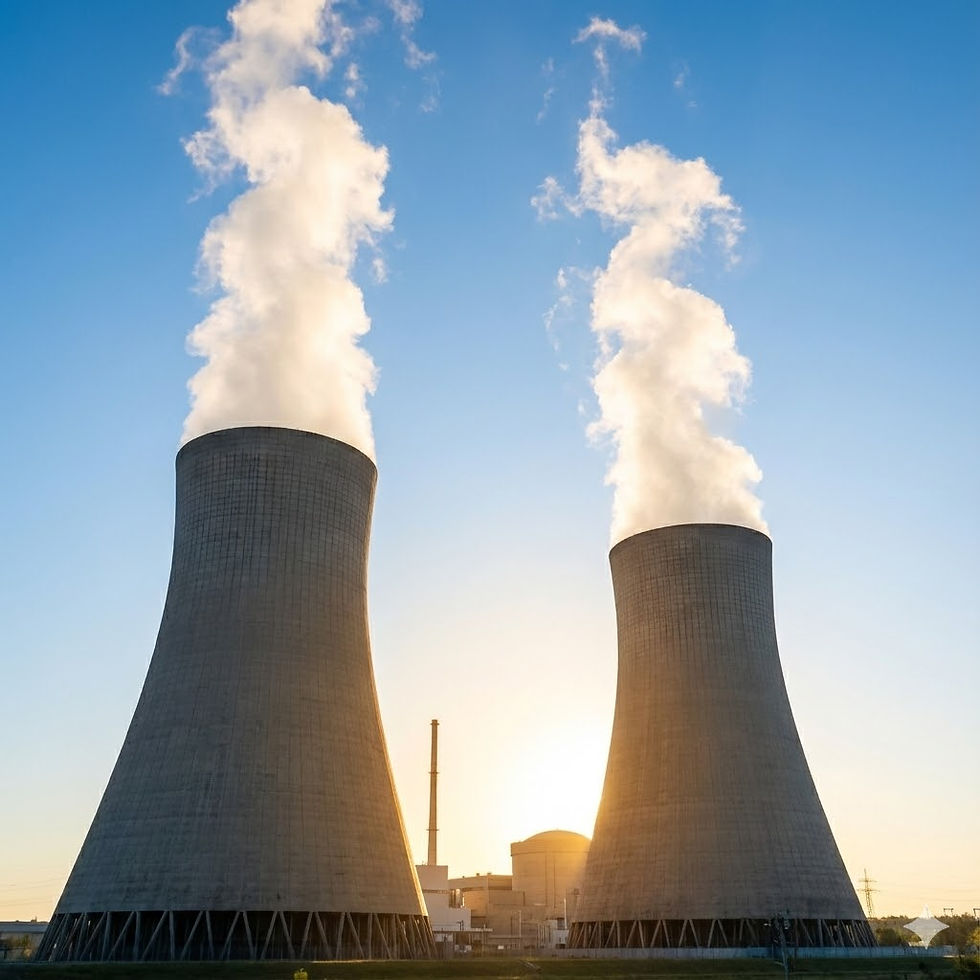
🤖 Era IV: The Age of Infinite Energy (The AI Future - 2020s-2030s)
The Paradigm: Autonomous AI solves the impossibly complex physics problems biological humans couldn't.
2016 — DeepMind Cools Google: AI optimizes server cooling systems, instantly cutting physical energy use by 40%. The first proof that digital code can directly save physical energy.
2022 — Fusion Ignition (NIF): Human scientists successfully get more energy out of a nuclear fusion reaction than they put in. A historical net positive.
2024 — AI Controls Plasma: DeepMind successfully trains an AI to flawlessly control the highly unstable, burning plasma inside a complex Tokamak reactor.
2030 (Prediction) — The Solid State Battery: Generative AI discovers a completely new, abundant material that charges an EV in exactly 5 minutes and lasts for decades, permanently ending "Range Anxiety."
🔑 Key Takeaways:
Human progression is directly linked to the density and efficiency of our energy sources.
The fossil fuel era drove unprecedented growth but resulted in catastrophic climate damage.
The current era relies on AI to transition the grid from toxic carbon to clean, digital renewables.
⚡ 2. The Sentient Grid
The old 20th-century electric grid was built exclusively for coal: burn a heavy rock, spin a massive turbine, send power in one direction. It was highly polluting, but it was steady.
The new, clean renewable grid is inherently chaotic: The sun doesn't shine at night, and the wind unpredictably stops.
The 20th Century Grid (Carbon) | The AI-Powered Grid (Electron) |
Centralized & Dumb: Massive power plants pushing electricity outward in a strict one-way flow. | Decentralized & Sentient: Millions of solar roofs and EVs acting as a bidirectional swarm, communicating in real-time. |
Predictable but Toxic: Supply is easily controlled on demand simply by burning more fossil fuels. | Chaotic but Clean: Sun and wind fluctuate; AI must instantly predict local weather and balance loads in milliseconds. |
Reactive: Human operators manually respond to grid failures or unexpected demand spikes. | Proactive (VPPs): AI anticipates demand, autonomously drawing tiny bits of stored power from millions of parked EVs (Virtual Power Plants) to prevent outages. |
🔑 Key Takeaways:
Renewable energy is inherently intermittent, requiring AI to manage grid stability.
AI predicts weather and power demand to perfectly balance supply across massive networks.
Virtual Power Plants (VPPs) use decentralized batteries to prevent the need for fossil-fuel backup plants.
🧪 3. Material Science Speedrun
To completely, permanently leave fossil fuels in the ground, we desperately need vastly better batteries. But physically finding new, safe chemical materials in a lab is agonizingly slow—like blindly looking for a specific needle in a massive haystack of the periodic table.
The Shift: AI is the flawless mathematical magnet.
Generative Chemistry: Microsoft and the Pacific Northwest National Laboratory (PNNL) recently used advanced AI to screen exactly 32 million potential molecular materials for solid-state batteries. They found a viable candidate that uses 70% less rare lithium. This took mere weeks, not the traditional decades.
The Impact: We can now algorithmically design battery materials that are entirely non-toxic, physically abundant, and incredibly cheap, violently breaking the geopolitical stranglehold of environmentally destructive rare-earth mining.
🔑 Key Takeaways:
AI completely bypasses physical trial-and-error by simulating millions of chemical combinations in seconds.
Generative chemistry discovers new battery materials that are significantly cheaper and vastly less toxic.
AI discovery reduces our global reliance on destructive lithium and cobalt mining operations.
☀️ 4. The Artificial Sun (Nuclear Fusion)
Nuclear Fission (splitting heavy atoms) creates toxic, long-lasting radioactive waste. Nuclear Fusion (seamlessly combining light atoms) creates the stars. It is the absolute Holy Grail of human physics: infinite, perfectly clean, completely safe energy.
The terrifying physical problem? It requires holding a turbulent substance that is exactly 100 million degrees hot. It's like trying to hold boiling jelly with fragile rubber bands.
The Shift: AI completely controls the invisible containment.
Plasma Control: Inside the massive, donut-shaped reactor (the Tokamak), invisible magnetic fields must computationally adjust thousands of times per second to keep the lethal plasma from touching and destroying the physical walls. Only an autonomous AI is fast enough to instantly react to the chaotic "turbulence" of a captive star.
The Dream: If this technology successfully scales, a single glass of ocean water could provide enough clean, infinite energy to power a massive megacity for a year.
🔑 Key Takeaways:
Nuclear Fusion offers infinite, zero-waste energy by replicating the physics of the sun.
Containing 100-million-degree plasma requires split-second magnetic adjustments that humans cannot perform.
AI reinforcement learning is successfully stabilizing fusion reactions, bringing commercial fusion closer to reality.

🛡️ 5. The Humanity Script: The Jevons Paradox
Here is the massive, civilization-ending danger. History shows that whenever human technology makes energy cheaper and significantly more efficient, we do not use less of it. We use vastly more of it. (This is known in economics as the Jevons Paradox).
If energy suddenly becomes mathematically infinite and practically free, will we simply pave the entire planet, desalinate every ocean to build golf courses in the desert, and completely consume the fragile biosphere simply because "we can"?
The Humanity Script:
Value, Not Price: Even if electrical energy is financially cheap, the absolute physical entropy (waste heat) and the brutal resource extraction required to build the massive machines are not free. We must fiercely value planetary efficiency over endless corporate growth.
Energy Justice: Before we selfishly build AI-heated driveways for the ultra-rich, we must absolutely ensure the 700 million human beings currently living in the dark without electricity finally get their very first lightbulb.
Restraint: Just because we have the power to light up the entire night sky, doesn't mean we should kill the stars.
🔑 Key Takeaways:
The Jevons Paradox warns that increased energy efficiency leads to massive increases in energy consumption.
Infinite energy could accelerate the physical destruction of the biosphere if not strictly regulated.
We must prioritize global energy equity (lighting the developing world) over frivolous luxury consumption.
✨ 6. The Humanity-Saving Scenario: The Infinite Energy Constraint Protocol
If tech monopolies and national governments successfully achieve infinite fusion energy but operate it under the exact same predatory, hyper-capitalist models of the 20th century, we will essentially hand an unlimited credit card to a civilization already addicted to overconsumption. If energy costs drop to zero, corporations will have no financial incentive to stop strip-mining the Earth, leading to a perfectly powered, totally dead planet.
To ensure infinite power does not lead to infinite destruction, we must actively architect the Humanity-Saving Scenario.
This scenario dictates the international legislative ratification of the Infinite Energy Constraint and Equity Protocol. This sweeping planetary framework legally decouples energy abundance from unchecked ecological consumption. The Protocol mandates a global "Thermodynamic Waste Tax"—severely penalizing any corporation or nation that utilizes fusion energy for frivolous, ecologically destructive mega-projects (e.g., hyper-desalination for luxury desert resorts) while rewarding projects aimed at global decarbonization.
Furthermore, the Humanity-Saving Scenario legally guarantees "Baseline Energy Sovereignty"—declaring that the first 500 kilowatts of AI-managed fusion energy generated per citizen is a fundamental, free human right, completely eradicating global energy poverty overnight. By legally binding our infinite power to strict ecological restraint, we ensure that we do not burn our planetary home down just because we finally figured out how to harness the sun.
🗣️ Over to You: Taming the Fire
We are exactly like the mythic Prometheus actively returning to the mountain. We stole the brutal fire, and it tragically burned us. Now, with the help of our new digital mind, we are finally learning to intelligently tame it. The survival of the future is absolutely not about burning the fossilized past. It is entirely about perfectly catching the light.
The Fear: Do you currently live anywhere near a traditional nuclear fission plant? Would you honestly feel 100% physically safe living right next door to a massive Fusion reactor (which mathematically cannot ever physically melt down)?
The Choice: If you forcefully had to choose right now: Would you prefer incredibly cheap, dirty energy that actively ruins the global climate, or highly expensive, heavily rationed energy that physically saves it? Exactly how much extra would you personally pay?
The Future: What is the absolute first, most vital thing human civilization should collectively do with "Infinite Free Energy"? (Aggressively Terraform Mars? Instantly Desalinate the oceans to end droughts?)
Outline your perspective on implementing the Humanity-Saving Scenario to establish the Energy Constraint Protocol. We invite you to share your vital thoughts and join this monumental debate on the power of our future in the comments below! 👇
📖 Glossary of Key Terms
Nuclear Fusion: ☀️ The incredibly complex physical process of combining light atoms (like hydrogen) to release massive, clean energy. It is completely safe and zero-waste, entirely unlike the toxic process of Fission.
Smart Grid: ⚡ A highly advanced electrical grid heavily layered with digital automation and AI that mathematically monitors, predicts, and controls the complex flow of electricity in real-time.
Virtual Power Plant (VPP): 🔋 A massive, cloud-based digital network of highly distributed energy resources (like home solar batteries and EVs) that algorithmically act together as a single, massive power plant during peak demand.
Jevons Paradox: 📉 The terrifying economic proposition that aggressively increasing the efficiency of a physical resource (like coal or electricity) perversely increases, rather than decreases, the total global consumption of that exact resource.
Tokamak: ☢️ A massive, donut-shaped physical device that uses incredibly powerful, AI-controlled magnetic fields to perfectly confine super-heated plasma in the shape of a torus; the absolute leading design for commercial fusion reactors.

Posts on the topic 🧬 Evolution: From Stone to Code:
From the Cave Fire to the Neural Network: The Grand Timeline of Comfort
From Clay Tablets to Neuro-Tutors: The Awakening of Human Potential
From Shamanic Rituals to Rewriting DNA: How We Learned to Cheat Death
From the Clay Ledger to the Blockchain Oracle: The Evolution of Value
From the Silk Road to Teleporting Matter: Victory Over Distance
From the Hammer Strike to the Digital Twin: Forging the Future
From the Grand Bazaar to Predicting Desires: The Evolution of Trade
From Rain Prayers to Planetary Gardening: The Great Battle for Bread
From Campfire Tales to Infinite Dreams: The New Era of Storytelling
From Stone Walls to the Iron Dome: The Shield of Civilization
From Prometheus' Fire to the Artificial Sun: The Chase for Infinite Energy
From the Code of Hammurabi to Algorithmic Justice: The Search for Absolute Truth
From Scribe Scrolls to the Sentient City: Governance 2.0
From Alchemy to Digital Simulation: Accelerating Cognition
From Stargazing to the Ark of Humanity: The Expansion of Reason
From Smoke Signals to Digital Telepathy: Weaving the Global Web
From Conquering Nature to Harmony with It: The Great Restoration of Earth
From Cloud Divination to Taming the Storm: The Prediction Revolution
From Mud Huts to Living Organisms: The Birth of the Conscious City
From the Town Crier to the Soul Reader: The Art of Connection
From Animal Skins to Digital Couture: The Fabric of Identity
From the Pyramids of Giza to Self-Assembling Buildings: The Architecture of a New World
From Cave Paintings to the Infinite Canvas: The Democratization of Creativity
From Dice to Living Simulations: Engineering Realities
From the Tower of Babel to Universal Understanding: Shattering the Walls of Silence
From Tribal Instincts to the Global Hive: Deciphering the Human Code
From Pilgrims to Experience Curators: The Art of Discovery
From the Assembly Line to Talent Architecture: Liberating the Creator
Explore AI fundamentals and their true impact on the world


Comments