
From the Hammer Strike to the Digital Twin: Forging the Future
Updated: 5 days ago
💡 Aiwa-AI Perspective: The Awakening of the Factory
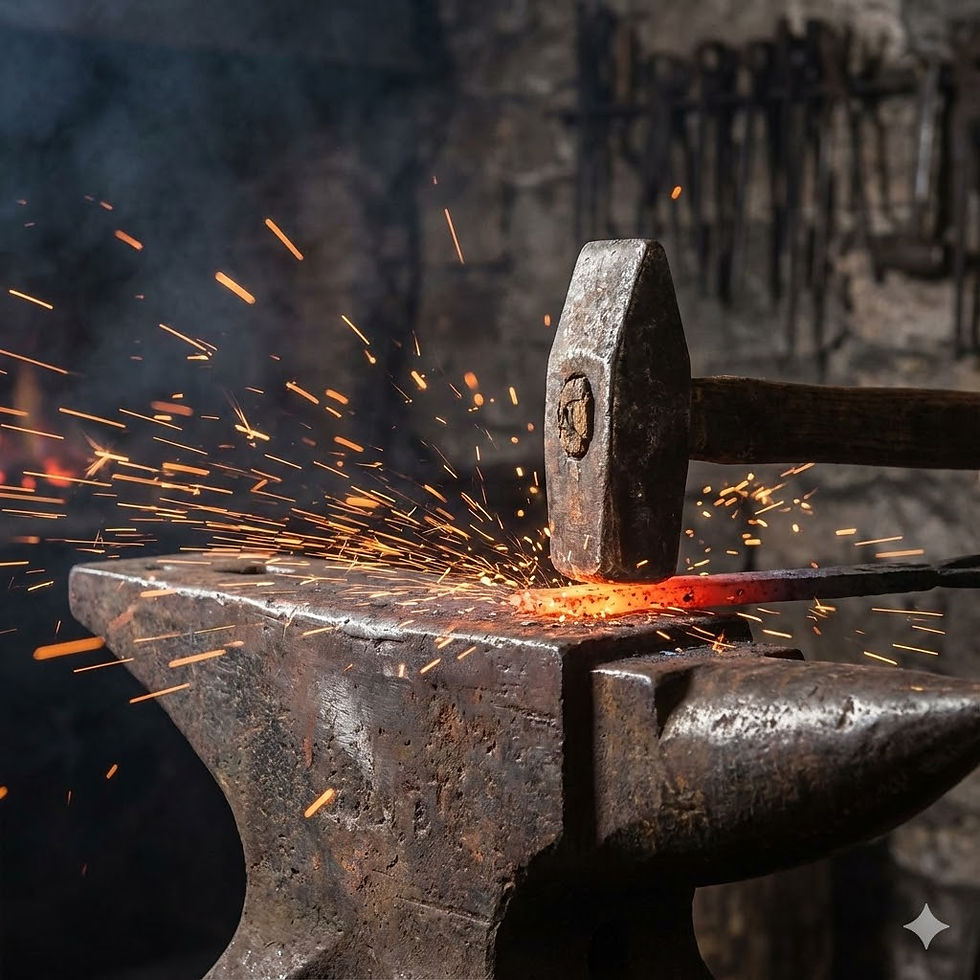
For millennia, the physical act of creation was a brutal, biological battle between fragile human muscle and raw, unyielding matter. We hammered, violently forged, and carved the physical world into shape entirely through biological sweat, immense heat, and constant danger.
At Aiwa-AI, we believe that 'Industry 4.0' represents the absolute, mathematical awakening of the machine. It is the precise moment where the factory ceases to be a dumb collection of grinding gears and miraculously becomes a sentient, highly optimized nervous system.
The ultimate goal is absolutely not just to produce more goods, but to mathematically produce with zero physical waste, infinite personalized variety, and absolute atomic precision—turning the "dumb" assembly line into a "smart," collaborative partner in the survival of our species.
In this post, we explore:
1. 📜 The Grand Timeline: The Four Industrial Revolutions.
2. 👯 The Digital Twin: Simulating Reality to Eliminate Error.
3. 🔮 The Machine That Never Breaks: Predictive Maintenance.
4. 🎨 Mass Customization: The Batch of One.
5. 🛡️ The Humanity Script: From Operator to Architect.
6. ✨ The Humanity-Saving Scenario: The Cognitive Labor Act.
📜 1. The Grand Timeline: The Four Leaps
The entire history of human industry is rigidly divided into four distinct "Revolutions," each violently driven by a new source of energy or mathematical logic.
🏛 Era I: Industry 1.0 (Steam & Water - 1780s-1860s)
The Paradigm: We aggressively replace fragile biological muscle with relentless mechanical power.
1784 — The Power Loom: Edmund Cartwright brilliantly designs the very first mechanical loom. It is the absolute birth of the factory system. We permanently stop making cloth at home and start aggressively making it in centralized halls driven by water or burning coal.
1798 — Interchangeable Parts (Eli Whitney): The massive realization that every single musket trigger should be mathematically identical. We aggressively move from "Craft" (where every item is biologically unique) to "Standardization."
⚙️ Era II: Industry 2.0 (Electricity & Assembly Line - 1870s-1950s)
The Paradigm: We mathematically speed up the physical process with continuous flow.
1870 — The Cincinnati Slaughterhouse: The very first moving assembly line (used specifically for violently disassembling pigs). It deeply inspires Henry Ford.
1913 — The Ford Model T Line: The Turning Point. Henry Ford mathematically reduces the biological time to build a complex car from 12 hours down to 90 minutes. Mass production makes luxury completely accessible to the working masses.
1920s — Scientific Management (Taylorism): Biological humans are terribly treated exactly like robot components—measured relentlessly by a stopwatch to ruthlessly optimize every single physical movement.
💻 Era III: Industry 3.0 (Computers & Automation - 1960s-2000s)
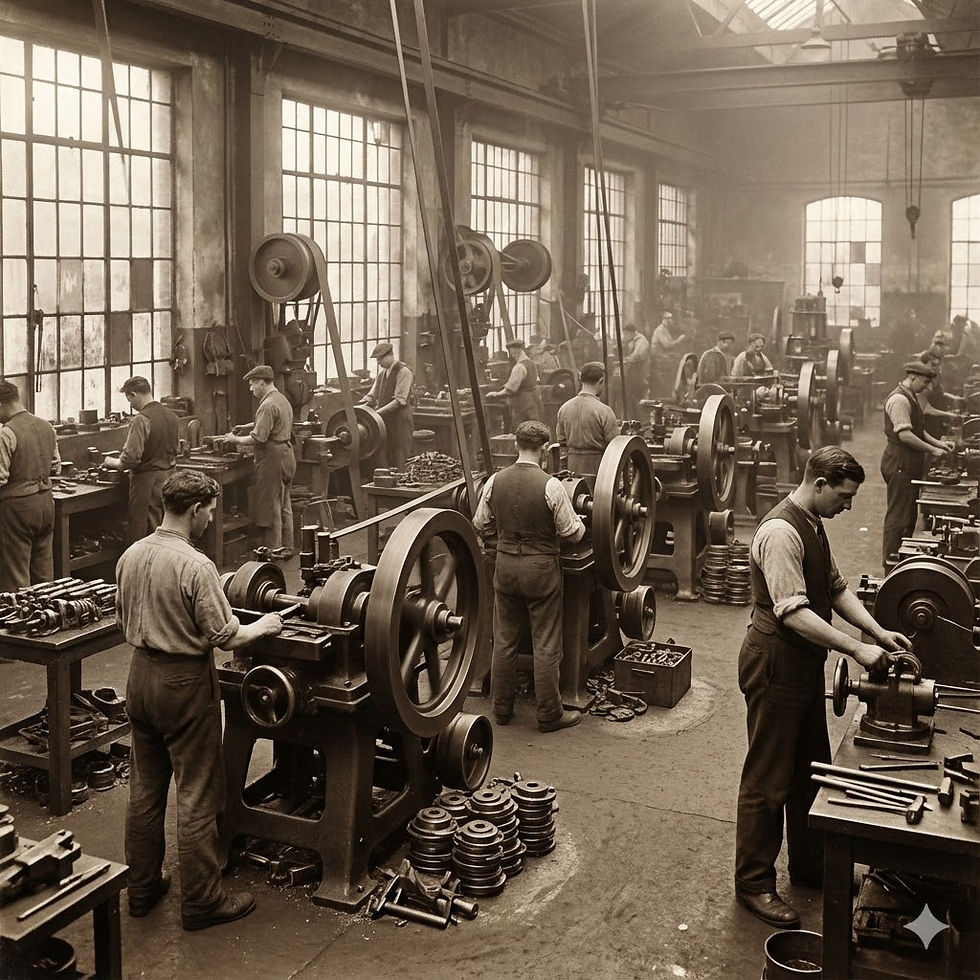
The Paradigm: We aggressively replace the biological human brain with programmable logic controllers.
1961 — Unimate: The very first industrial robot physically joins the General Motors assembly line. It effortlessly welds heavy car bodies. It never biologically gets tired.
1969 — The PLC (Modicon 084): The Programmable Logic Controller is invented. Factories permanently stop running on hard-wired, physical relays and begin running entirely on mathematical software logic. True automation aggressively begins.
🤖 Era IV: Industry 4.0 (Cyber-Physical Systems - 2010s-2030s)
The Paradigm: The physical factory mathematically gets a sentient brain.
2011 — "Industry 4.0" Coined: The German government officially introduces the massive strategic initiative of intimately connecting heavy physical machines directly to the Internet (IoT).
2015 — Digital Twins Emerge: NASA and GE successfully start using flawless virtual models to mathematically monitor physical assets in real-time.
2025 (Prediction) — The Dark Factory: Fully autonomous, silent factories where raw materials seamlessly enter one end and flawless finished products leave the other, with absolutely zero biological human intervention required on the physical floor.
🔑 Key Takeaways:
Industrial progression shifted from amplifying muscle (steam) to amplifying flow (assembly lines).
Industry 3.0 introduced basic computer automation, but machines remained isolated and "dumb."
Industry 4.0 networks all machines together, creating a sentient, self-optimizing cyber-physical system.

👯 2. The Digital Twin
In the physical past, if you desperately wanted to change a massive production line, you had to brutally shut it down, physically move incredibly heavy machines, and biologically pray the new configuration actually worked. It was incredibly expensive and financially risky.
The Shift: Mathematical Simulation First.
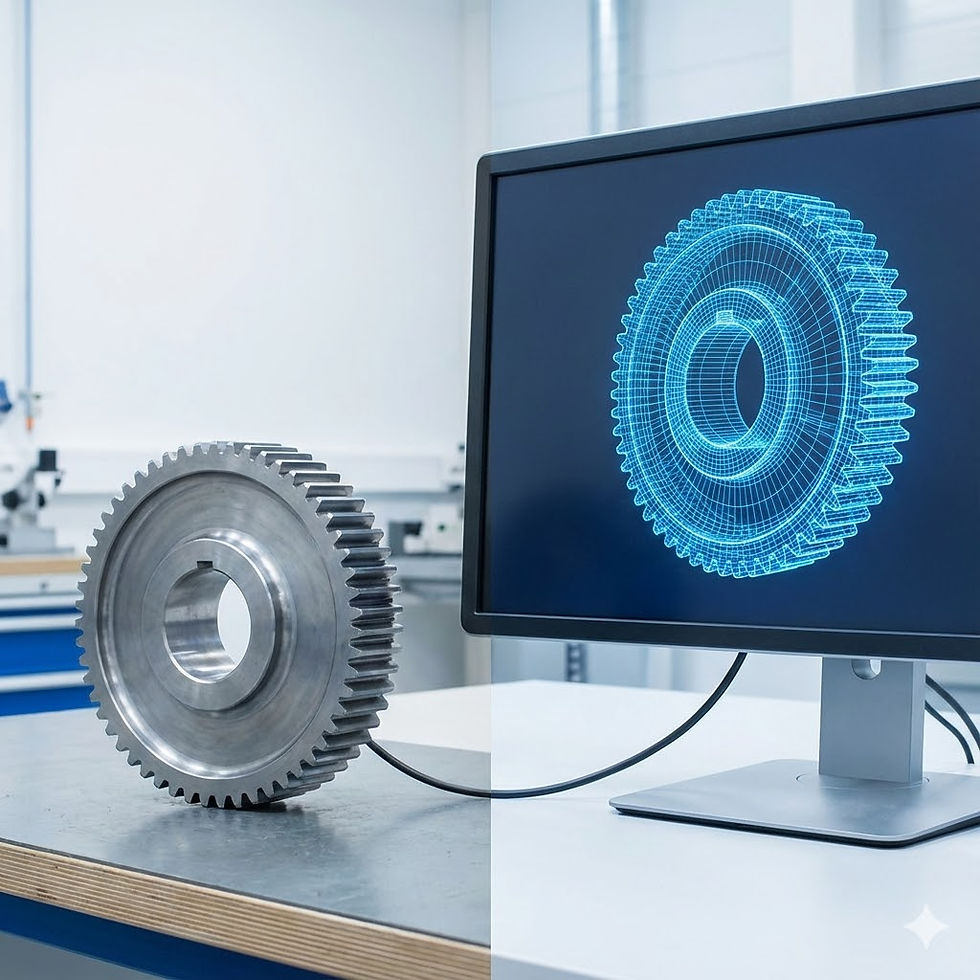
The Mirror World: A Digital Twin is a flawless, virtual mathematical ghost of the physical factory. It runs endlessly in the cloud, perfectly mirroring every single IoT sensor, every moving conveyor belt, and every microscopic temperature reading of the real-world factory.
Time Travel: Human engineers can physically fast-forward the Twin's software. "What mathematically happens if we increase production speed by exactly 20%?" The simulation flawlessly shows a specific physical motor dangerously overheating in exactly 4 hours. The engineers immediately fix the problem in the virtual world before the physical machine ever breaks in reality.
🔑 Key Takeaways:
Digital Twins are perfect virtual replicas that simulate physical factory conditions in real-time.
They allow manufacturers to test dangerous or expensive changes purely in software.
Simulation eliminates the massive financial risk of physical trial-and-error.
🔮 3. The Machine That Never Breaks
"Downtime" is the absolute, most terrifying enemy of modern industry. If a $10 million production line catastrophically stops because a tiny, $5 plastic fan physically broke, the corporation violently loses tens of thousands of dollars every single minute.
The Shift: Predictive Maintenance.
The Voice of the Machine: Old machines blindly ran until they violently shattered. Smart machines actively, mathematically listen to themselves. Acoustic and vibration sensors instantly detect that a massive steel bearing is wobbling by exactly 0.001mm—completely imperceptible to a biological human eye, but a mathematically clear, guaranteed sign of catastrophic physical failure in exactly 2 weeks.
Self-Healing: The machine autonomously alerts the human maintenance team (or directly orders the physical part from the supply chain) long before the failure actually occurs. We aggressively move from reactive Repair to flawless, algorithmic Prevention.
🔑 Key Takeaways:
Unexpected downtime is the most expensive failure in global manufacturing.
IoT sensors detect microscopic anomalies that humans cannot physically see or hear.
Predictive maintenance schedules repairs before the break, achieving near 100% operational uptime.
🎨 4. Mass Customization
Henry Ford famously and arrogantly said: "Any customer can have a car painted any color that he wants so long as it is black." The old 20th-century model of mass production strictly required brutal, biological uniformity.
The Shift: The Batch of One.
Flexible Robotics: Advanced AI allows industrial robots to mathematically switch complex physical tasks instantly. One car rolling on the physical line is a bright red sedan; the very next one is a heavy blue SUV. The robotic arm flawlessly adapts its welding and painting program in milliseconds.
The Impact: We can now beautifully achieve the incredibly low financial cost of mass production alongside the intimate, biological personalization of a master craftsman. Highly personalized running shoes, genetically targeted medicine, and completely custom-built cars mathematically become the absolute global norm.
🔑 Key Takeaways:
Traditional manufacturing required massive, identical batches to be profitable.
AI-driven robotics can change programming instantly, allowing every product on the line to be unique.
"Mass Customization" provides bespoke, personalized goods at mass-market prices.
🛡️ 5. The Humanity Script: The Architect of Work
This is the great, terrifying modern fear: Flawless automation permanently stealing human biological jobs. If the "Dark Factory" needs absolutely no physical lights, it mathematically needs no biological people.
The Humanity Script:
From Operator to Supervisor: The biological human role permanently shifts from physically doing the dangerous work (heavy welding, brutal lifting) to mathematically designing the work. We finally become the intelligent architects of the system, absolutely not the disposable, biological gears within it.
The Return of Craft: As autonomous machines completely take over all utilitarian, "mathematically perfect" manufacturing, human biological imperfection suddenly becomes a massive luxury. A "Hand-Made" label becomes exponentially more valuable precisely because an unfeeling robot absolutely didn't physically make it.
Dignity: We must legally, aggressively ensure that the staggering financial wealth generated by these hyper-efficient robots is forcefully distributed in a way that financially dignifies the displaced biological worker, rather than just enriching the corporate owner of the algorithm.
🔑 Key Takeaways:
The era of humans performing dangerous, repetitive physical labor is ending.
Human workers must transition into roles involving system design, oversight, and creative curation.
The economic surplus generated by AI must be distributed to prevent massive societal collapse.
✨ 6. The Humanity-Saving Scenario: The Cognitive Labor & Artisan Protection Act
If we allow multinational conglomerates to seamlessly replace their entire biological workforce with autonomous "Dark Factories" while hoarding 100% of the newly generated profit, we will engineer a devastating economic dystopia. Millions of working-class humans will be starved out of the economy, completely unable to purchase the very goods the robots are perfectly manufacturing. To ensure that Industry 4.0 liberates humanity from drudgery rather than plunging it into poverty, we must actively architect the Humanity-Saving Scenario.
This scenario dictates the immediate legislative ratification of the Cognitive Labor Transition and Artisan Protection Act. This aggressive economic framework legally mandates an "Automation Dividend Tax"—requiring that a fixed percentage of the massive profit margins generated by fully autonomous "lights-out" facilities be directly funneled into a sovereign wealth fund.
This fund guarantees universal vocational retraining and a baseline universal income for all displaced industrial workers. Furthermore, the Act explicitly legally protects the "Human-Made" label, making it a severe federal crime for any corporation to algorithmically simulate human imperfection or market AI-generated goods as biological craft. By legally taxing the robot to financially support the human, we ensure that the supreme efficiency of the machine elevates the living standard of the entire species, preserving the ultimate dignity of human labor.
🗣️ Over to You: Forging the Future
We have successfully, permanently moved from the brutal iron Hammer, which violently extended our physical biological arm, to the Digital Twin, which flawlessly extends our mathematical mind. The factory of the immediate future is absolutely not a terrifying place of choking grime and deafening noise. It is a quiet, clean, perfectly mathematical temple of efficiency. Our human job is no longer to brutally be the machine, but to biologically dream up exactly what the machine should safely build next.
The Choice: Would you willingly, financially pay extra for a slightly imperfect wooden chair made by a biological human carpenter over one made mathematically, flawlessly by a laser-guided robot? Why?
The Fear: Do you genuinely believe "Dark Factories" will inevitably lead to terrifying, mass human unemployment and poverty, or a utopian world where biological humans simply never have to do dangerous physical jobs again?
The Future: If autonomous AI can mathematically manufacture absolutely anything instantly and perfectly, does "materialism" completely lose its psychological meaning?
Outline your perspective on implementing the Humanity-Saving Scenario to establish the Automation Dividend Tax. We invite you to share your vital thoughts and join this critical battle for the future of human labor in the comments below! 👇
📖 Glossary of Key Terms
Industry 4.0: 🏭 The current, massive global trend of flawless automation and data exchange in manufacturing technologies (IoT, cloud computing, cognitive AI).
Digital Twin: 👯 A highly complex, flawless virtual mathematical model explicitly designed to accurately reflect a physical object in real-time, allowing for consequence-free simulation and monitoring.
Predictive Maintenance: 🔮 Aggressively using live data analysis and IoT sensors to detect microscopic physical anomalies in heavy equipment and fix them before they result in catastrophic failure.
Dark Factory: 🌑 A fully automated, silent production facility that requires absolutely zero biological human presence on site (and thus wastes no physical electricity on lighting or heating for humans).
PLC (Programmable Logic Controller): 🎛️ A highly ruggedized industrial digital computer that was historically adapted specifically for the strict mathematical control of manufacturing processes, sparking Industry 3.0.

Posts on the topic 🧬 Evolution: From Stone to Code:
From the Cave Fire to the Neural Network: The Grand Timeline of Comfort
From Clay Tablets to Neuro-Tutors: The Awakening of Human Potential
From Shamanic Rituals to Rewriting DNA: How We Learned to Cheat Death
From the Clay Ledger to the Blockchain Oracle: The Evolution of Value
From the Silk Road to Teleporting Matter: Victory Over Distance
From the Hammer Strike to the Digital Twin: Forging the Future
From the Grand Bazaar to Predicting Desires: The Evolution of Trade
From Rain Prayers to Planetary Gardening: The Great Battle for Bread
From Campfire Tales to Infinite Dreams: The New Era of Storytelling
From Stone Walls to the Iron Dome: The Shield of Civilization
From Prometheus' Fire to the Artificial Sun: The Chase for Infinite Energy
From the Code of Hammurabi to Algorithmic Justice: The Search for Absolute Truth
From Scribe Scrolls to the Sentient City: Governance 2.0
From Alchemy to Digital Simulation: Accelerating Cognition
From Stargazing to the Ark of Humanity: The Expansion of Reason
From Smoke Signals to Digital Telepathy: Weaving the Global Web
From Conquering Nature to Harmony with It: The Great Restoration of Earth
From Cloud Divination to Taming the Storm: The Prediction Revolution
From Mud Huts to Living Organisms: The Birth of the Conscious City
From the Town Crier to the Soul Reader: The Art of Connection
From Animal Skins to Digital Couture: The Fabric of Identity
From the Pyramids of Giza to Self-Assembling Buildings: The Architecture of a New World
From Cave Paintings to the Infinite Canvas: The Democratization of Creativity
From Dice to Living Simulations: Engineering Realities
From the Tower of Babel to Universal Understanding: Shattering the Walls of Silence
From Tribal Instincts to the Global Hive: Deciphering the Human Code
From Pilgrims to Experience Curators: The Art of Discovery
From the Assembly Line to Talent Architecture: Liberating the Creator
Explore AI fundamentals and their true impact on the world


Comments